


At 8:16 PM Eastern on Friday, worldwide search interest in “Cabo Verde” went from flat to 100 on Google’s scale in under three hours.
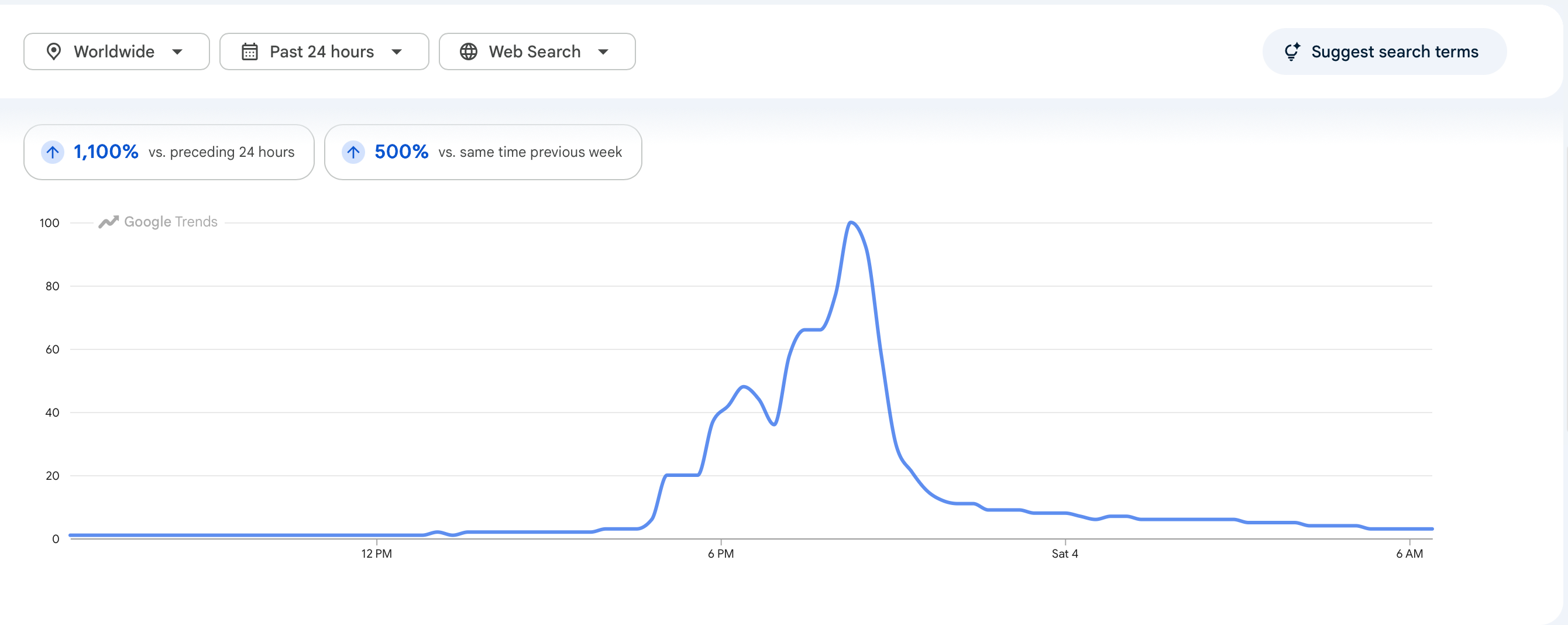
Zoom out to the last month, and you see the same shape three times in miniature — small bumps around June 15, June 21, June 26 — before the line goes vertical on July 3.

Cabo Verde stole our attention, and our Google search behavior tells us we wanted to learn more. Does this attention matter? Attention is not revenue after all. So what, specifically, has to happen between “the world just searched your name” and “money actually shows up” for a 40-year-old goalkeeper or a country of 525,000 people?
As we watched the game on Friday, that question was on our minds. What does Cabo Verde’s recent success on the world stage mean moving forward? How do we turn a viral moment into something sustainable?
SO WHAT IS CABO VERDE, ACTUALLY
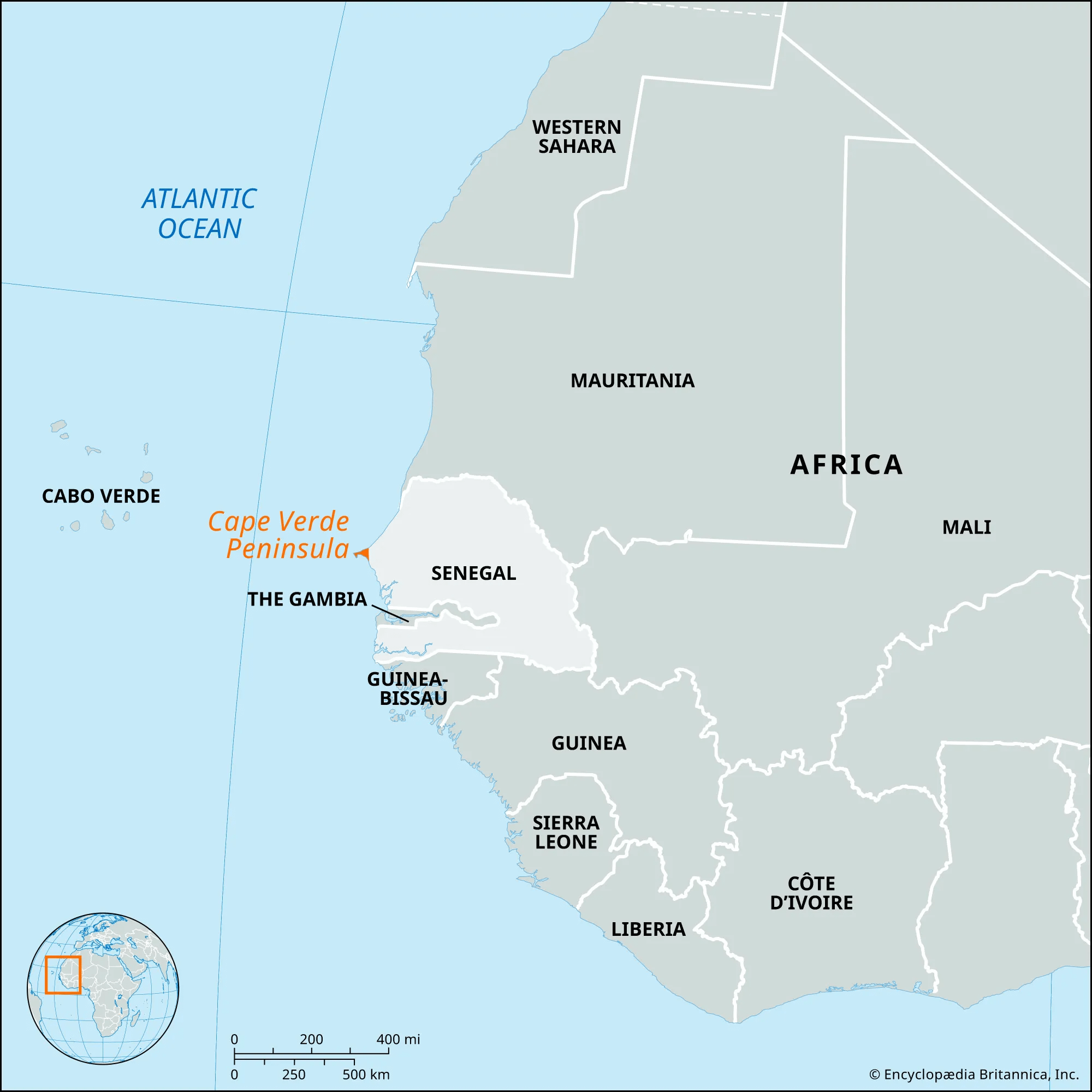
Before this month, if I’d asked you to place Cabo Verde on a map, could you have done it? No shame if not; that’s the point. It’s a cluster of ten volcanic islands off the coast of West Africa, a former Portuguese colony that’s been independent since 1975. Roughly 525,000 people live there. More Cabo Verdeans live outside Cabo Verde than inside it. The diaspora, spread mostly across the U.S., Portugal, and France, is larger than the country itself.
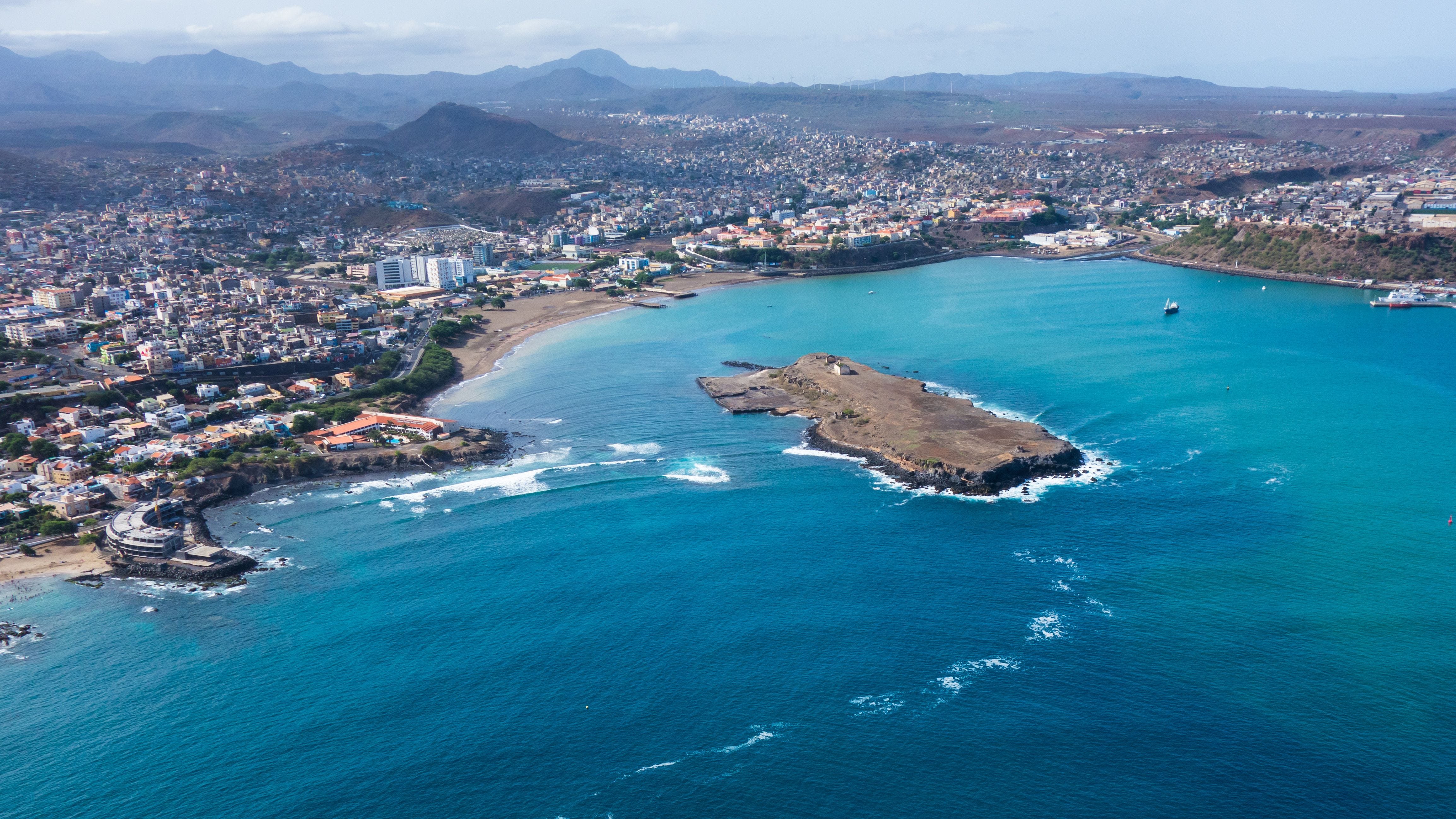
Only 10% of its land is arable, and it imports 80–90% of its food; this is not a country that can fall back on natural resources or agriculture. What it has built instead is an economy that depends almost entirely on outside visitors: tourism drives about 25% of GDP directly and closer to 40% of all economic activity when you count everything downstream. In 2024, 1.18 million tourists visited.
The other pillar is remittances: money sent home by Cabo Verdeans living abroad, worth more than 10% of GDP. Because more Cabo Verdeans live outside the country than in it, money flows into the country to help family and friends.
Put those two pillars together and you get an economy that grew 5.3% in 2025, one of the fastest rates in the region, on a base of about $3 billion. For scale, Argentina, the team that eliminated Cabo Verde on Friday, runs a $660 billion economy. GDP per capita sits around $6,000. Poverty has been falling, down to roughly 14.4% in the most recent estimate, and the government’s stated goal is to eliminate extreme poverty by 2026.
Regarding the names, “Cabo Verde” and “Cape Verde” refer to the same country. Cabo Verde is the official Portuguese name (meaning "Green Cape"), while Cape Verde is the anglicized version. The country officially requested that the international community use Cabo Verde in 2013
THE VIRAL GOALKEEPER
Josimar José Évora Dias, known to us as Vozinha, was the star of the game. He should have been named player of the game, but the award went to Messi. His story is being celebrated as an overnight success, but it’s a story about working hard when no one sees you and shining bright when the spotlight finds you.
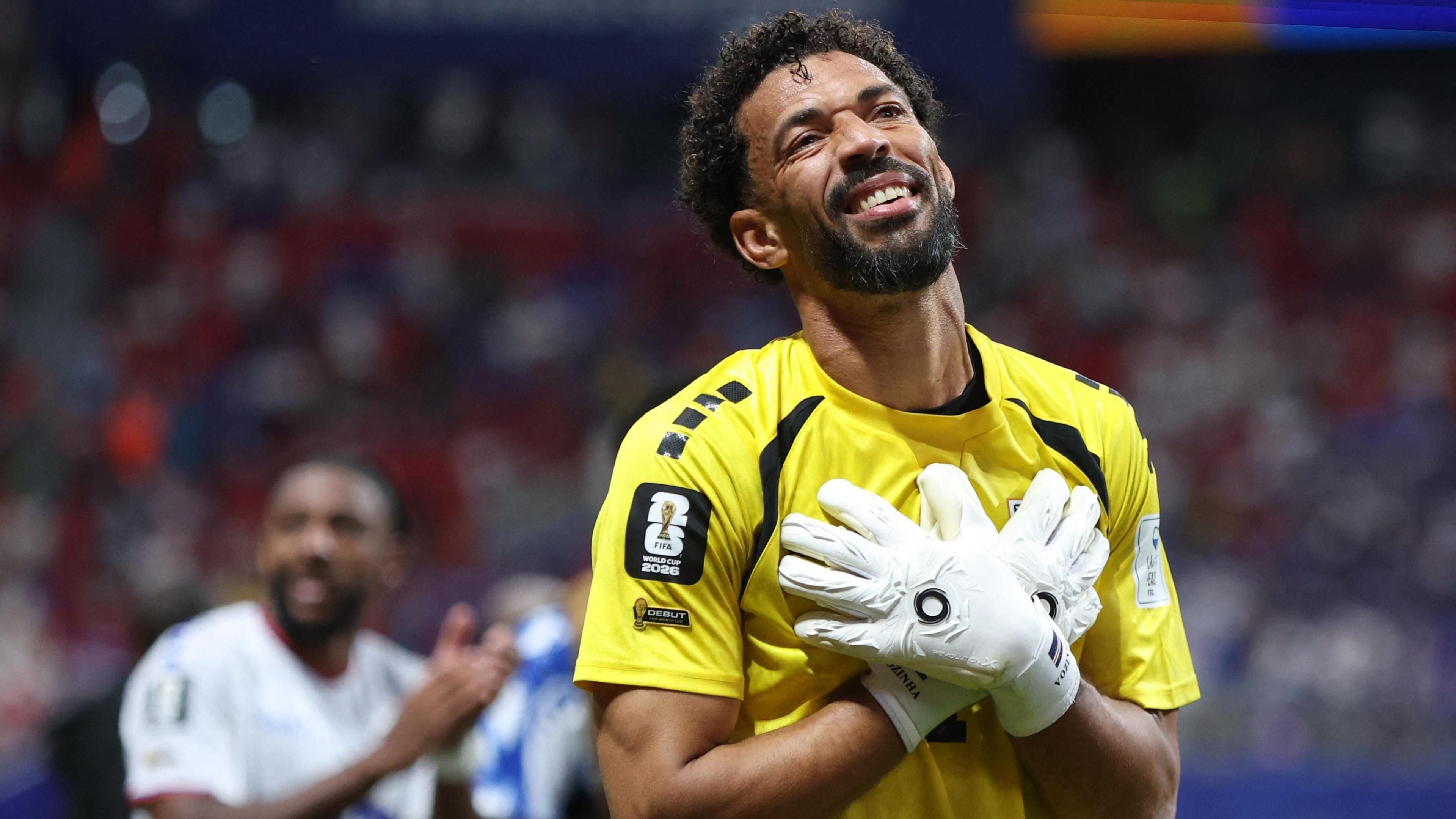
His Instagram went from about 50,000 followers to more than 20 million after his performance against Spain. Marketing analysts at Apex Marketing estimated he generated roughly $17.7 million in brand value in the first eight days.
Advertising Value Equivalent, or AVE, is a standard marketing metric that asks, “What would it cost a company to buy this much media exposure through paid advertising?” It is not $17.7 million sitting in Vozinha’s bank account. It’s an estimate of what his exposure is worth to someone else if they decide to buy it.
THE ATTENTION ECONOMY
We live in the attention economy. Everyone is vying for your time, eyeballs, and interest. But attention alone does not turn into money; there has to be a strategic approach to turning that attention into transactions. Vozinha needs to turn this into a brand that pays him to wear their gear, a sponsor pays for his name in a campaign, and his club renegotiates his contract because he now sells jerseys he didn’t sell in May. Every one of those requires someone on the other side to actually sign something. Until that happens, 20 million followers are only a vanity metric.
CABO VERDE’S CHALLENGE
The country-level version of this question has actually been studied. A 2020 economics paper examined national teams that overperformed expectations in past World Cups — Costa Rica’s 2014 run is the closest comparison to Cabo Verde this year — using panel cointegration regressions to trace the effects on tourist arrivals afterward.
Gholipour, H. F., Arjomandi, A., Marsiglio, S., & Foroughi, B. (2020). “Is outstanding performance in sport events a driver of tourism?” Journal of Destination Marketing & Management, 18, 100507. https://doi.org/10.1016/j.jdmm.2020.100507
The result: a significant increase in tourist arrivals followed. But it showed up roughly one to two years later, not in the weeks after the tournament.
A search spike reflects curiosity, and curiosity has to travel through trip planning, flight availability, and a tourism board’s marketing campaign before it becomes a booked vacation. None of those steps is automatic. If nobody in Praia spends a marketing budget at the moment, interest reverts to baseline exactly as the 24-hour graph is already starting to show, and two years from now, there’s no bump to measure.
Specifically on foreign direct investment, I want to be honest: I don’t have solid evidence that a single tournament run moves FDI numbers on its own. What the tourism data supports is that sustained demand, if it materializes, can eventually justify hotel and infrastructure investment, but that channel runs through the lag above, not straight from a Google Trends chart to a wire transfer.
There’s a second point worth investigating, and it comes from Usamah Alfarhan, who is a colleague, coauthor, and friend of mine at the Haile College of Business at Northern Kentucky University. He and his co-authors just published a paper examining how digital information affects what tourists actually spend, using survey data from the U.S. and Chinese tourism sectors.
Alfarhan, U. F., Nusair, K., Karatepe, O. M., Shi, F., & Okumus, F. (2026). “Digital information, utility, and tourism expenditure: a neoclassical extension.” Current Issues in Tourism. https://doi.org/10.1080/13683500.2026.2685313
Their finding: when digital platforms shift what travelers know and expect, the additional economic surplus tends to improve the profitability of hotels, platforms, and tour operators through higher prices.

What’s the actual pricing lever doing that work? Usamah has a second paper that names it, and it’s a term worth knowing: third-degree price discrimination. That’s the practice of charging different groups different prices for the same thing, based on what each group is willing and able to pay — the reason a movie ticket costs less for a student than for a working adult in the same seat.
Alfarhan, U. F., Olya, H., & Nusair, K. (2023). “How do prosperity and aspiration underlie leisure tourism expenditure patterns?” Tourism Economics, 29(3), 842–849. https://doi.org/10.1177/13548166211064215
The paper shows tourists can be sorted along two lines: how prosperous their home country is, and how much they personally aspire to the trip. And here’s the part that matters for Cabo Verde: those two things predict how much a traveler will spend, which means a hotel or tour operator that reads them correctly can charge the eager, well-off visitor more than the budget backpacker for the identical room. A viral moment doesn’t just bring more tourists. It brings a wave of high-aspiration ones, people like you and me, who just Googled Cabo Verde and discovered we wanted to go. High-aspiration travelers are exactly the segment a smart operator marks up.
So layer that onto Cabo Verde. Even in the best case, where the tourism board spends the marketing budget and Gholipour’s tourism bump actually shows up in 2027, there’s a second question sitting underneath the first one: whose margins grow when it happens?
The wave of newly curious, high-aspiration travelers is exactly the segment that gets marked up, and a resort chain headquartered in Lisbon captures that markup differently from a family-run guesthouse in Mindelo. More information reaching more travelers doesn’t automatically mean more money staying on the islands. It means more money changing hands, and where it lands after that depends on who owns the property taking the booking and who’s sophisticated enough to price the moment.

DR. A’S TAKE
What I do believe is that Cabo Verde is structurally positioned to convert this into something real, because it already has the tourism infrastructure. Hotels, an airport, and a functioning marketing apparatus that has already attracted tourists. Whether they actually get the tourism bump the research would predict depends entirely on whether their tourism board treats this month as a marketing opportunity worth funding, right now, while the world is still looking. And even if they do, Alfarhan’s research is a reminder not to assume the money automatically benefits the islands themselves — that depends on who owns what gets booked. Vozinha faces the individual version of the same test: he has followers now, but whether this is a career-altering event or just a great month depends on which agent calls him back this week.
WHAT TO DO WITH THIS
If you or your organization ever gets an unplanned moment of visibility- the search spike, the mention, the viral post- don’t celebrate the number. Ask immediately: what is the specific action, this week, that turns this into a signed contract, a booked customer, or a committed dollar?
Most organizations seek attention, but they aren’t prepared to act on it when they do receive it.
MBA 600 at Haile College of Business
Dr. Aron Levin (Marketing) and I (Economics) are building a course on exactly this gap between brand, attention, and the economics behind it. Marketing is awareness, and brand is product differentiation. The mistake almost everyone makes with a moment of visibility, whether it’s a viral goalkeeper or a LinkedIn post an algorithm suddenly decides to push, is treating the attention itself as the win. It isn’t. It’s raw material. How do you turn this into a sustained brand and product differentiation?
Most viral moments generate less value than they could because nobody on the other end was ready to convert them into anything.
I hadn't thought about it before, but your article reminded me a lot of the impacts you see on universities when their teams make Cinderella runs in football and basketball. I'm not more likely to visit, but I'm not surprised more people would consider a trip next summer.
A true underdog story one that I love.