


It is the beginning of the semester, which means I am discussing belongingness, how to retain students, and how to guide them through higher education.
Dr. Jeni Al Bahrani and I spend a lot of time thinking about our students’ journey and experience. In a LinkedIn comment on one of her posts about her teaching, she asked me a question recently that I get in almost every faculty workshop I run: how do you actually build connection in the classroom?
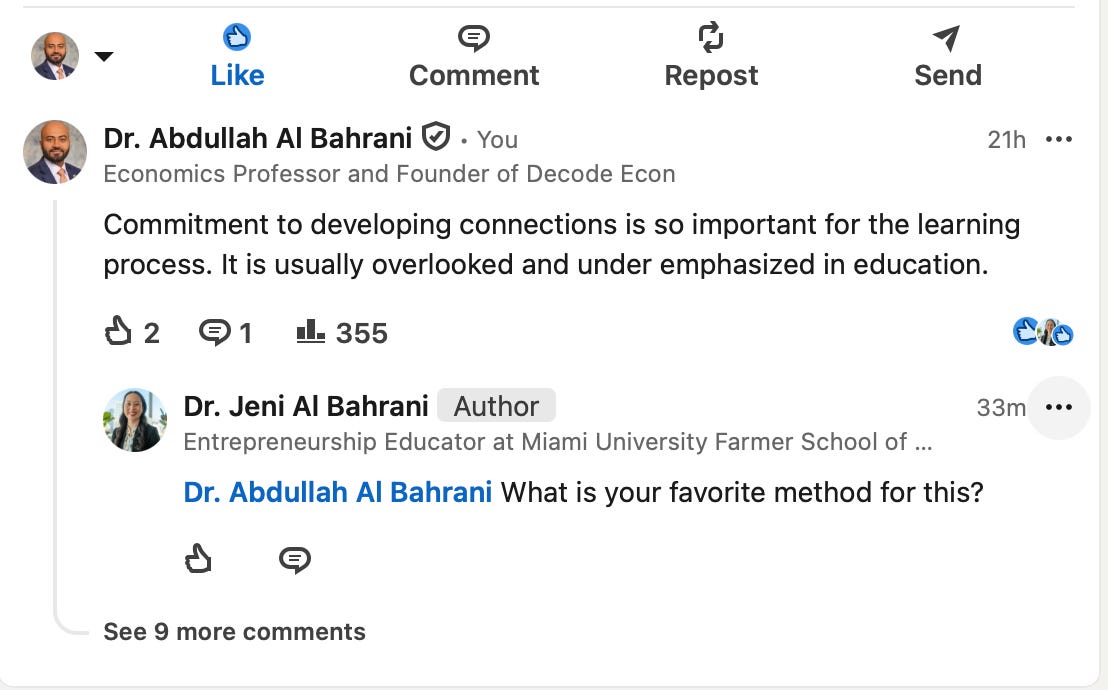
Here’s my punchline upfront: creating belonging and connections must be intentional. Suggesting that some faculty are “natural” at building connections and others lack the ability to do so absolves instructors from putting in the effort. Just like everything else, if you aren’t good at something, invest more time learning and practicing it. You will get better at it.
To help, I am sharing 5 tips to get started. These are low-cost, deliberate interventions I make in my class before content ever starts. I wrote a whole paper on this (Al-Bahrani 2022) because I got tired of “just be welcoming” being the entire advice faculty get.
Being welcoming is a behavior, not a feeling. So here are five things I actually do. I am sure you have your own approach; leave it in the comments.
1. Send the welcome email before the semester starts
Most instructors’ first contact with a student is the syllabus, on the first day, in a room full of strangers. I believe that’s too late. A welcome email sent before the semester begins does wonders. It will lower the anxiety of walking into your classroom.
I send my welcome email two weeks before classes start. It takes fifteen minutes to write, and it changes how the whole first week feels for students. You can also do this well through your Learning Management System. I use Canvas, and I spend a lot of time thinking about how my students will experience my class when they first click on it. Not the assignments, but how they will feel about being in the class.
I usually make the welcome content available 2-3 weeks before the course starts so that students can poke around, get books, watch some of my videos, and read some of my articles. This lets them build a parasocial relationship and eventually use it to build a stronger IRL relationship.
2. Use the fifteen-minute rule
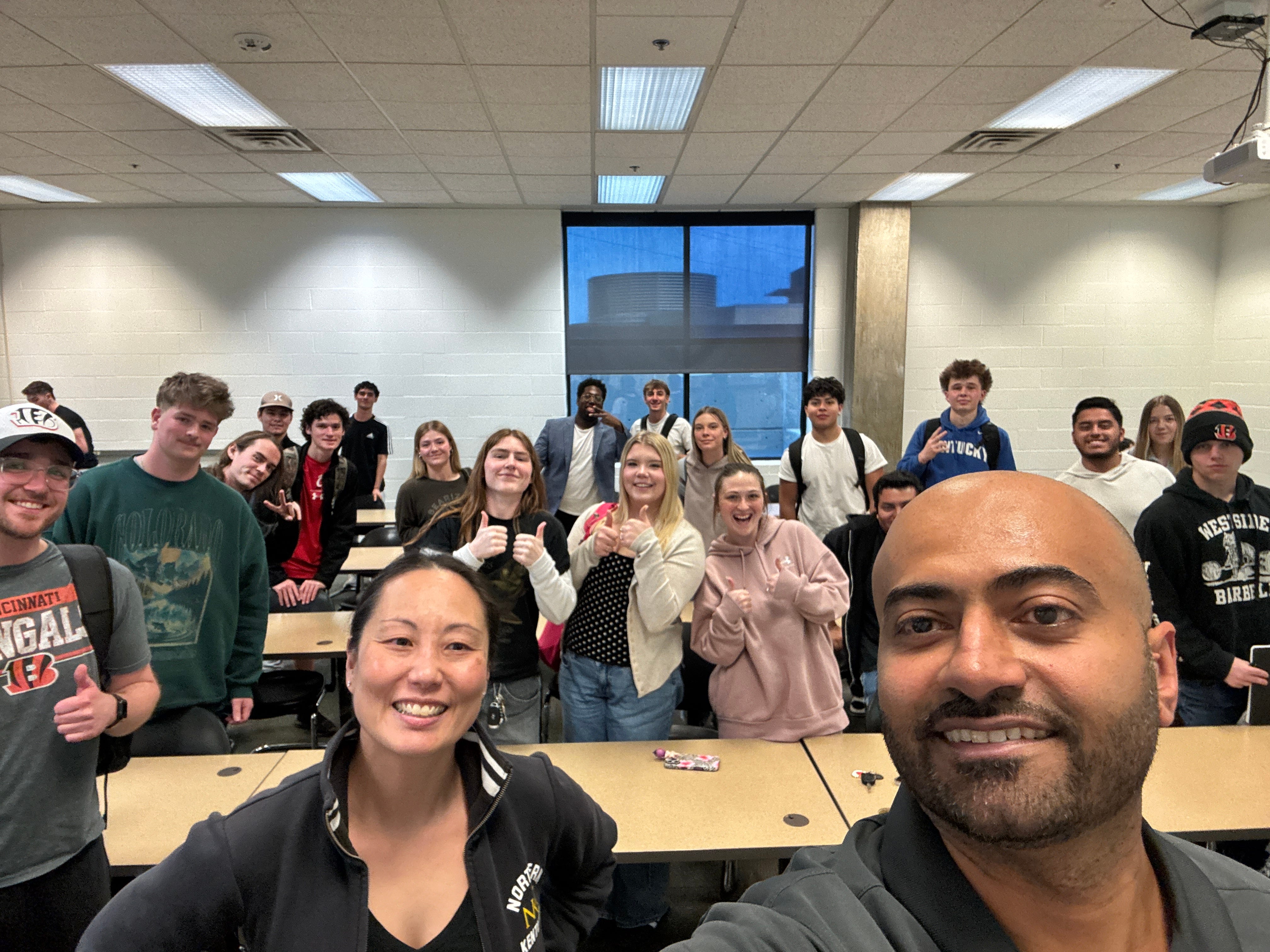
I arrive to class fifteen minutes early. It is the most important 15 minutes of my teaching. I don’t use it to set up technology and slides; I use it to talk to the students who are already there or as they walk in. It feels like a small change, but this is where relationships are built. If you don’t have 15 minutes, do 5 minutes! It isn’t about the time as much as showing your students that you aren’t rushing in and out of class and that you do have time for them.
3. Rename your office hours
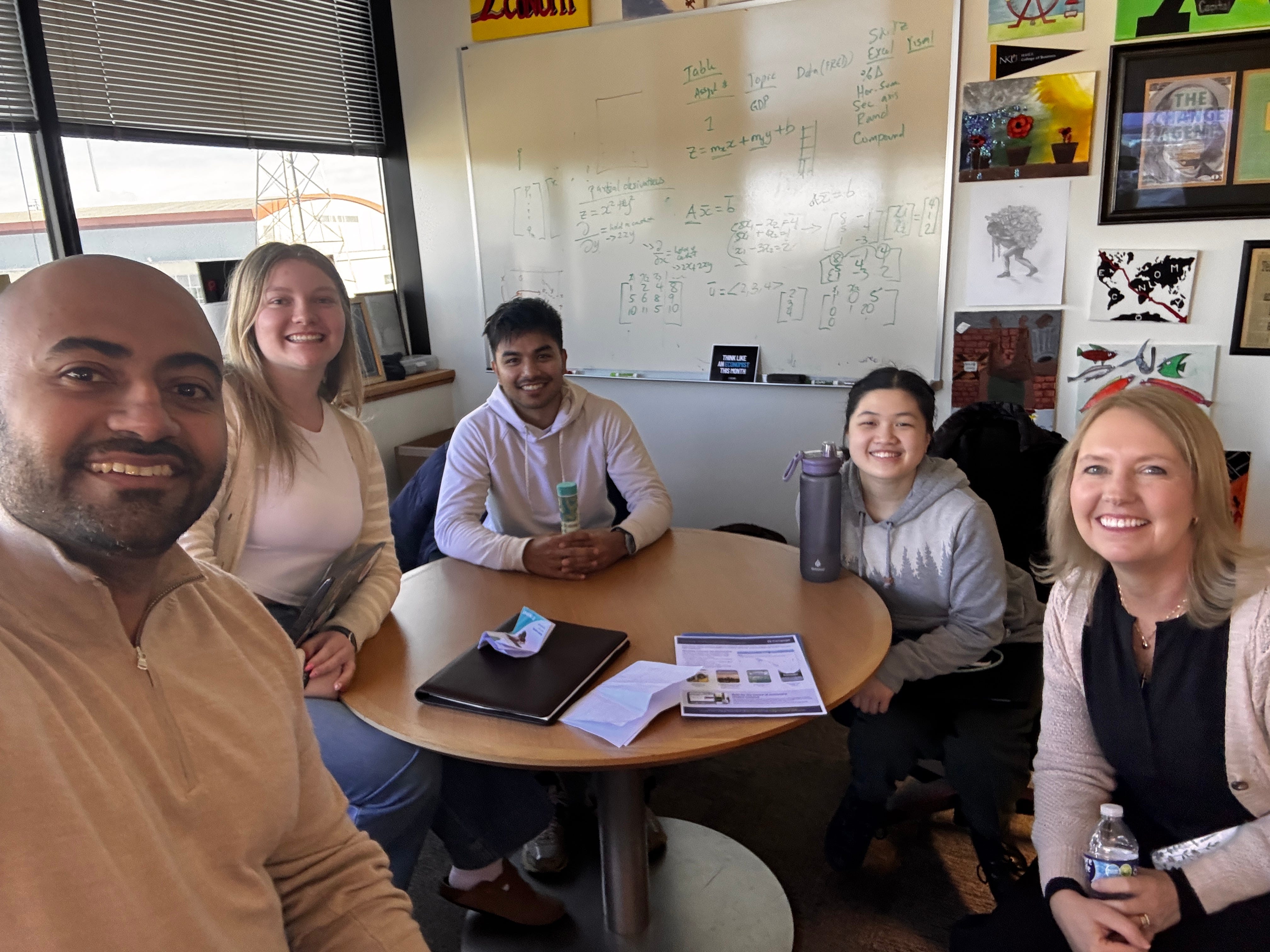
This advice gets a lot of hate from instructors— I have some screen captures to share with you next time we meet. They don’t believe that changing the name makes a difference. That might be their experience, but I can tell you that Dr. A (Jeni) and my office hours are ALWAYS busy. Maybe it’s a combination of things we do, but we start by calling them discussion hours.
To your students, office hours sound like it's time for you to do your work, not time for them. Calling them discussion hours signals that they can continue the conversation from class at your office, during discussion hours!
If your initial inclination is to push back and say this doesn’t work, this recommendation is for you. Try it, and maybe try some others on this list too.
4. Rebuild your syllabus around “this could be me”
Last year, David Raska and I wrote a paper about syllabi. I know, “no one reads the syllabus”. That is true, but maybe it’s because our syllabi read like what you can’t do and how to manage liability. It is a list of late policies, academic integrity boilerplate, and grading tables; who wants to read that?
Our syllabi should help show students that they can make it through this class. In our paper, we argue the syllabus itself can be a self-efficacy tool. It is a place where students see a version of their own future, not just a list of rules.
Concretely: add a section with former students’ career paths. Name where this course has actually taken people. A syllabus that shows a possible future answers the question, what can I do with this class? Show them the value!
5. Close the loop with a midsemester check-in — and actually report back
The midsemester evaluation is the most critical tool I deploy. I love it so much, I use a variation of it in leadership and with my team. Here is how it goes.
I give students three anonymous questions at midsemester:
What’s working for you— What am I doing that is helping you learn?
What’s hurting your learning— Is there something in this class or my lectures that harms the learning experience for you?
What would you change— Is there something that you have seen in another class that I should incorporate here?
Then, and this is the most important part, is closing the loop. I return the next class, and I tell them what I heard, including what I will change and what I’m not going to change and why. The feedback shows the students that they are heard and that you are willing to change. It models a growth mindset. I have been teaching for 20 years, and I still learn something new from my students!
Final Take
“Being welcoming” is not a personality trait; it is a skill. We approach it like some professors are naturally warm and others aren’t. I don’t buy it. Maybe we do start off with different innate abilities, but each one of us can invest more; it's a choice. I understand if it is not a choice you want to make, but don't marginalize the effort others put in by calling it a trait!
Each of these five items I shared is a decision I make and invest in. If your classroom doesn’t feel like a place students belong, try out something that will improve how students navigate the space and possibly improve their learning.
Be intentional, build a place where your students can thrive, and it will make your job more enjoyable. If you are asking yourself why students aren’t ready for classes or why they don’t care? Maybe it’s time you showed them you are ready for them and that you care!
Papers to Read
Al-Bahrani, A. (2022). Classroom management and student interaction interventions: Fostering diversity, inclusion, and belonging in the undergraduate economics classroom. The Journal of Economic Education, 53(3), 259-272.
https://www.tandfonline.com/doi/abs/10.1080/00220485.2022.2075507
Raska, D., & Al Bahrani, A. (2026). “hey, this could be me in just a few years”: re-inventing the syllabus as a self-efficacy booster in an era of academic uncertainty. Marketing Education Review, 1-13. https://www.tandfonline.com/doi/abs/10.1080/10528008.2026.2667816
Books to Read
Guidara, W. (2024). Unreasonable Hospitality: The Remarkable Power of Giving People More Than They Expect-The New York Times Bestseller. Random House.
