


One challenge facing the U.S. economy is the widening divide in the K-economy. As wealth and income gaps continue to grow, firms must decide which side of the economy to focus on. Economically, it makes sense to focus on the consumer segment that can afford your product and is willing to pay a premium.
The low-profit consumer has historically been a loss leader. Firms sell them a product below the cost of production, hoping they will become future consumers who buy higher-profit products.
This shift is both economic and financial, and it affects you and our society as a whole. We must address it to help solve the affordability crisis.
Shifting Trends
As firms face increased pressure from tariffs, competition, and a greater emphasis on market gains, they are more likely to drop the entry-level option. Fewer options make it harder for you to enter the market.

Take a look at what just happened with Volkswagen. Volkswagen’s board approved a cost-cutting plan that would cut 50,000 jobs and reduce its model line by half. The CEO said this was due to tariffs, as expected, and increased competition from Chinese automakers.
It is not clear which models will be cut yet, but based on what is happening in the market, I predict it will be entry-level models with smaller profit margins.
Housing
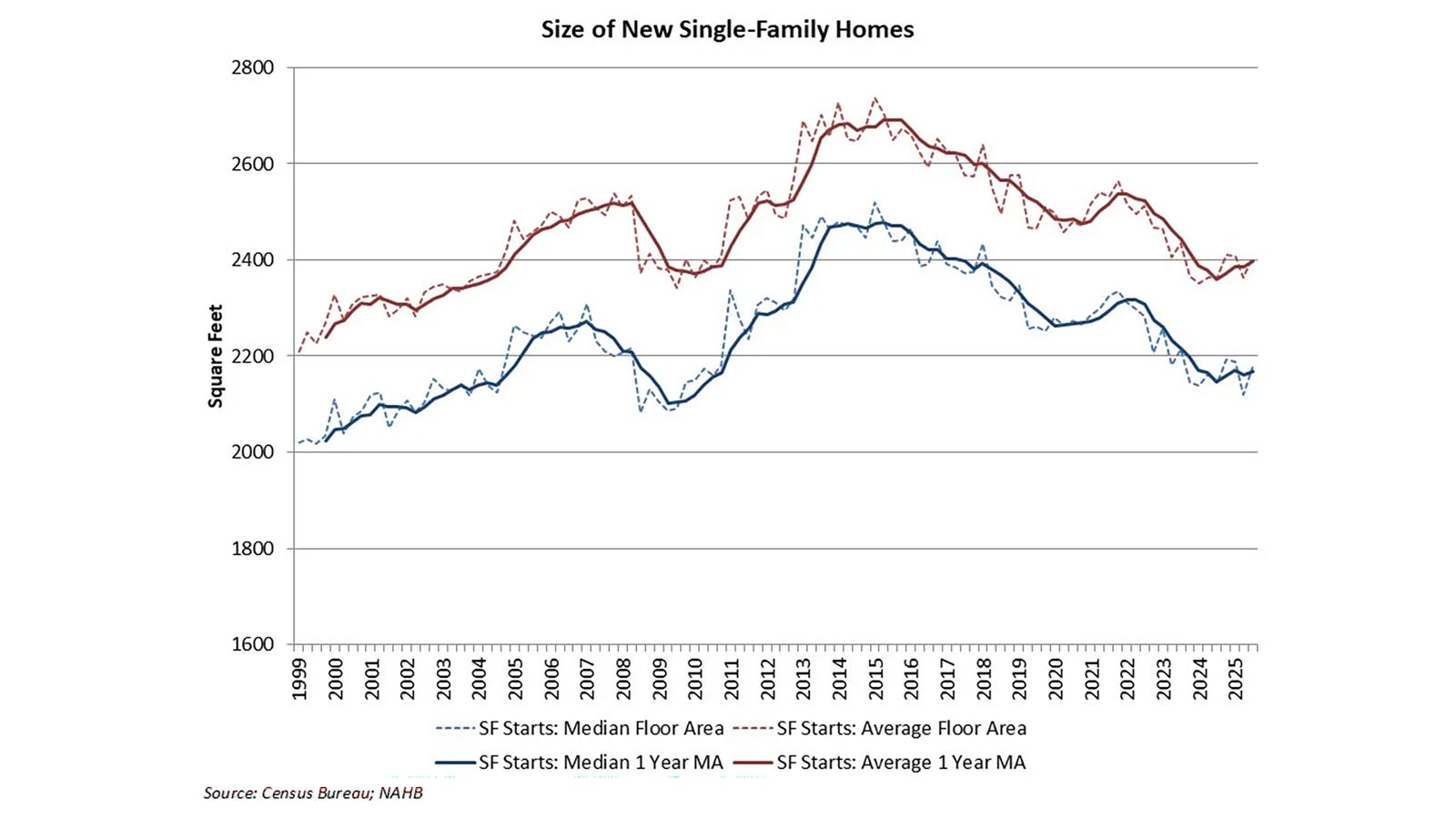
We have seen this happen with housing. Since 1980, the average home has grown from 1595 to more than 2600 sq. ft. in 2015. The average number of bedrooms has increased to 4. Firms focused on the premium home, and dropped the entry level option with low profit margins.
As the affordability crisis has taken shape, home sizes have dropped. The average (mean) square footage for new single-family homes built in 2025 was 2,405 square feet.
The K-Shaped Economy and Age
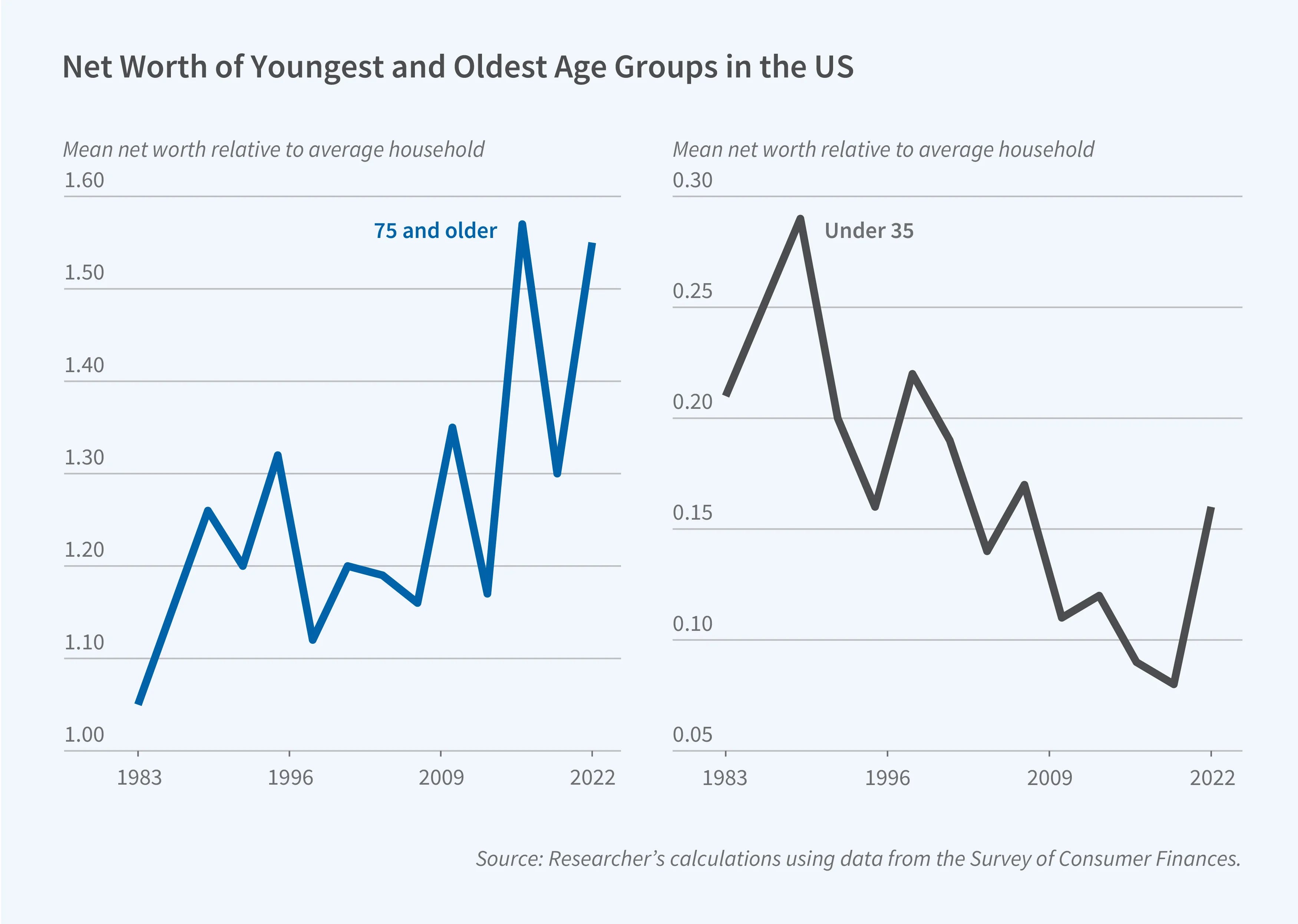
The K-shaped economy is closely tied to age. Wealth accumulation has been mostly stock market-driven, which rewards people with stock market portfolios. Older Americans have benefited the most. Since the 1980s, the mean net worth relative to the average household has increased for those 75 and above while it has decreased for those 35 and below.
In 1983, the average wealth of American households headed by someone aged 75 or older was 5 percent greater than the national average; in 2022, it was 55 percent greater. Gains in owner-occupied housing and the stock market, and reduced mortgage debt, were key contributors.
For the Young
You are seeing attention shifting towards the old and rich. This wealth concentration lets firms focus on that segment of the economy without hurting their bottom line. Unfortunately, firms are reluctant to cater to low-profit segments. However, this segment needs to start accumulating assets and needs to gain access to more affordable options. The entry-level home and entry-level car are both parts of the financial growth experience I was able to leverage, but I don't see those options available to young consumers today.
Dr. A’s Take
Firms’ actions make total sense here. With limited resources, it is efficient to deploy them toward high-profit products and services. However, eliminating the entry-level, usually low-profit segment has social consequences. This becomes a bigger problem when this trend correlates with age, squeezing young people out of taking their first steps toward financial freedom.
Will we see more firms emerge to address this problem?