


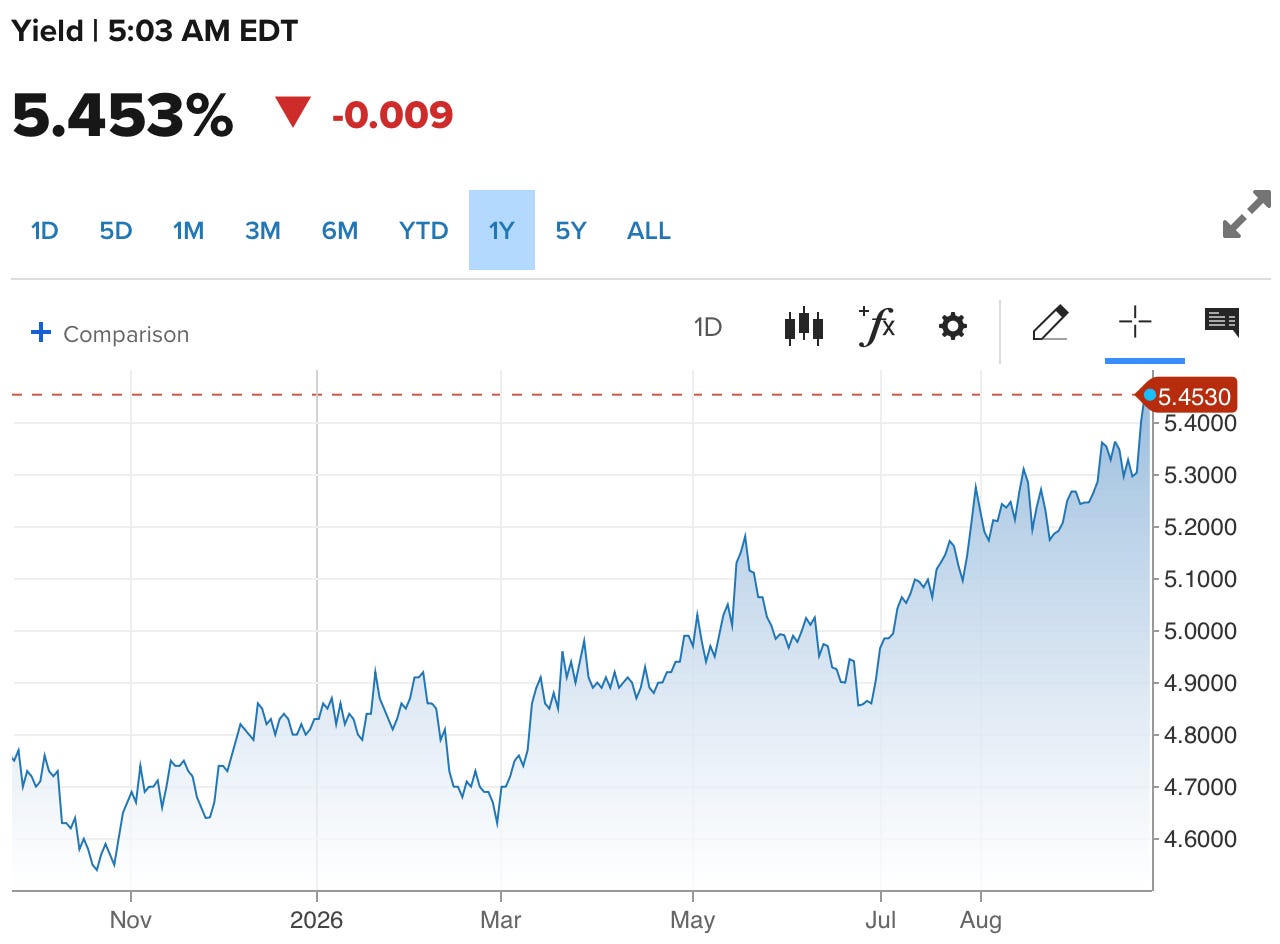
The U.S. 30-year Treasury yield hit 5.48% this week, the highest since 2004. And it’s spilling into the rest of the economy: the average 30-year mortgage is above 7% for the first time in about two years.
Today, I'll discuss why this is happening and why you should care.
What is a bond, really?
When you buy a U.S. bond, you’re lending money to the U.S. government. In return, the government promises to pay you interest.
Here’s an example. You buy a $100 bond that pays 4%. That transaction means that you lent the government $100, and it will pay you $4 a year. That $4 is locked in and won’t change.
But the bond itself is an asset, and you can sell it in the market. Suppose the market cools on U.S. bonds and therefore the price falls. If you sell your bond to me for $90, I still collect $4 a year. Except now I’m earning $4 on $90, which is a 4.44% yield.
That’s why bond prices and yields move in opposite directions. When yields rise, it means investors will only buy bonds at lower prices. So the real question is: why won’t they pay more?
What’s causing the shift?
Three things are driving this.
Inflation fear is back. CPI has come in hot for the last couple of months, and markets are worried inflation is here to stay. That same fear pushed the Federal Reserve to raise rates last week, and markets expect another hike this fall. Put yourself in an investor’s shoes. Why lock up your money for 30 years at today’s rate when short-term rates keep climbing and inflation keeps eating into your payments? You won’t, unless the long-term bond pays you more to take that risk.
There’s a lot more debt to sell. The government has shown no fiscal restraint. It keeps borrowing, so it keeps selling Treasuries. When you flood the market with bonds, prices fall even if demand holds steady. And Washington isn’t the only one borrowing. Tech firms are issuing corporate bonds by the billions to keep feeding the AI machine, and they’re competing for the same investors.
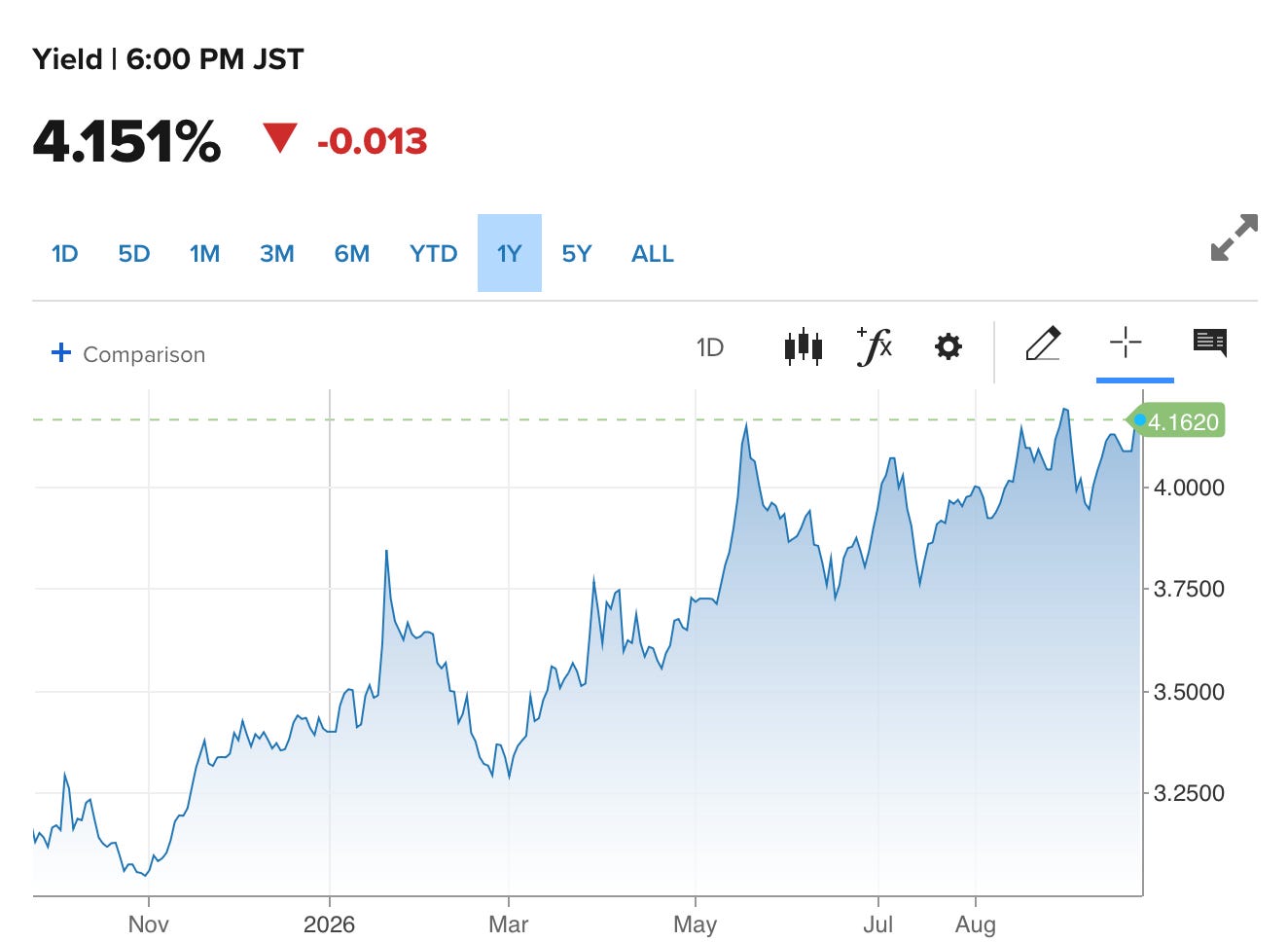
It’s global. Germany’s 10-year yield hit a 17-year high. Japan’s hit its highest since 1996. If investors were just fleeing the U.S., money would pour into those bonds and their yields would fall. They’re rising too. What we’re seeing is a global distaste for long-term commitments.
What does a rising yield mean for other markets?
The 10-year and 30-year Treasury yields are the base rate for a huge share of the economy. Every loan priced off them moves too.
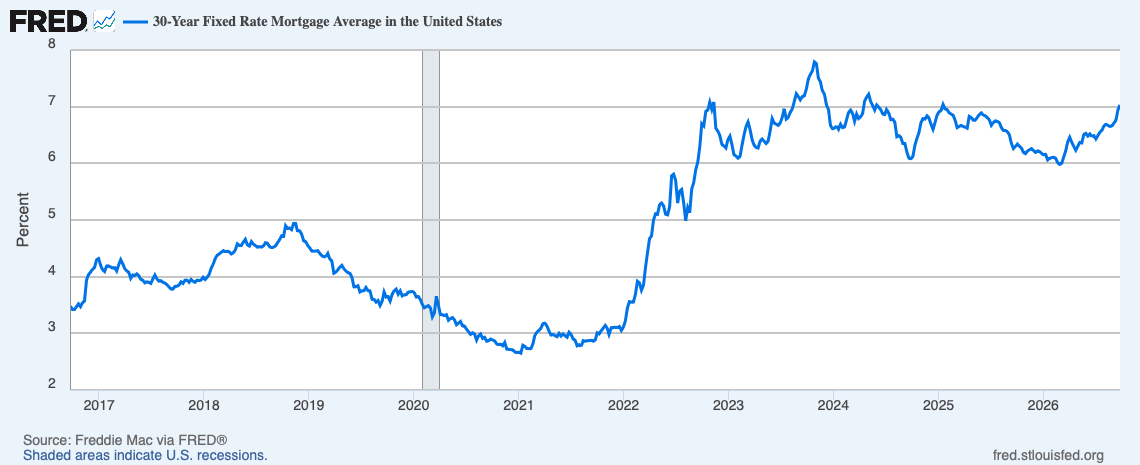
Mortgages. Lenders set mortgage rates off the 10-year Treasury. On a $400,000 loan, going from 6% to 7% raises the monthly payment from about $2,400 to $2,660. That’s an extra $263 a month, or more than $3,100 a year, for the same house. Fewer buyers can make that work, and the mortgage brokers I’ve talked to are already feeling it.
Stocks. When a Treasury pays over 5% with basically no risk, stocks have to work harder to win your money. Higher yields also shrink what future profits are worth today. That’s why growth stocks tend to feel this first. Check out the market over the past couple of weeks, it has felt the pain.
Business borrowing. Companies that borrow to expand, hire, or refinance now face higher costs, and some of those projects stop making sense. The riskiest borrowers get hit hardest. Small businesses and early-stage firms will have to fight for funding.
The government’s own bill. This is the loop that worries me. Higher yields mean the government pays more interest on new debt. More interest means bigger deficits. Bigger deficits mean more bonds to sell, which pushes yields up again. And every dollar spent on interest is a dollar that doesn’t go to education, healthcare, or anything else.
Dr. A’s Take
Last month I argued the government’s bond buyback backfired because it signaled to markets that Washington was nervous. I think this week shows the problem runs deeper than messaging. Inflation, deficits, and a war are pushing long-term rates up worldwide. I don’t see long rates coming down quickly until one of those three pressures clearly eases, and right now none of them is.
What it means for you
If you’re house hunting and waiting for rates to “go back to 6%,” I wouldn’t build your plan around that happening this year. Figure out what monthly payment you can afford at 7% and shop within it. If rates do fall later, refinancing is an option. Planning around a guess isn’t.
More importantly, I am concerned that the Bond market blues will spill over into other markets and lead to an economic slowdown. It will be an interesting fourth quarter of 2026; how it is managed will shape a lot of what we will expect for 2027.