


This is a guest post by Antowan Batts
When Palantir’s CEO recently claimed that AI will destroy jobs in the humanities, he revealed something more troubling than technological disruption: a fundamental misunderstanding of what the humanities are. His framing treats them as just another labor category—a set of tasks to be optimized or eliminated. But the humanities aren’t a jobs program. They’re the operating system civilization runs on.
The Foundation Beneath the Foundation
Ask what the humanities are, and most people point to philosophy, literature, history, the arts—the subjects’ students either love for their complexity or tolerate as “non-technical” requirements. But this curriculum-based definition misses the point entirely.
Humanities exist because humans need to transfer knowledge across generations. For millennia, we did this through oral tradition—fragile, prone to distortion, limited by memory and geography. Then we learned to write. Literature recorded knowledge, making civilization scalable. Ideas could spread beyond a single storyteller’s reach. Wisdom could survive its original teacher. Future generations could build on foundations they didn’t have to witness being laid.
Without this technology of thought-transmission, there are no holy texts, no legal codes, no histories, no instructions, no sciences. The technical disciplines we value today. They’re downstream from humanities’ core innovation: making human knowledge durable and transmissible. This isn’t ancient history; it’s the active infrastructure of every institution, every law, every shared understanding we take for granted.
The Scholar Across Time
But the humanities’ value isn’t just systemic. Individual scholars create ripples that reach decades, touching lives they’ll never know about in ways no algorithm can predict or replicate.
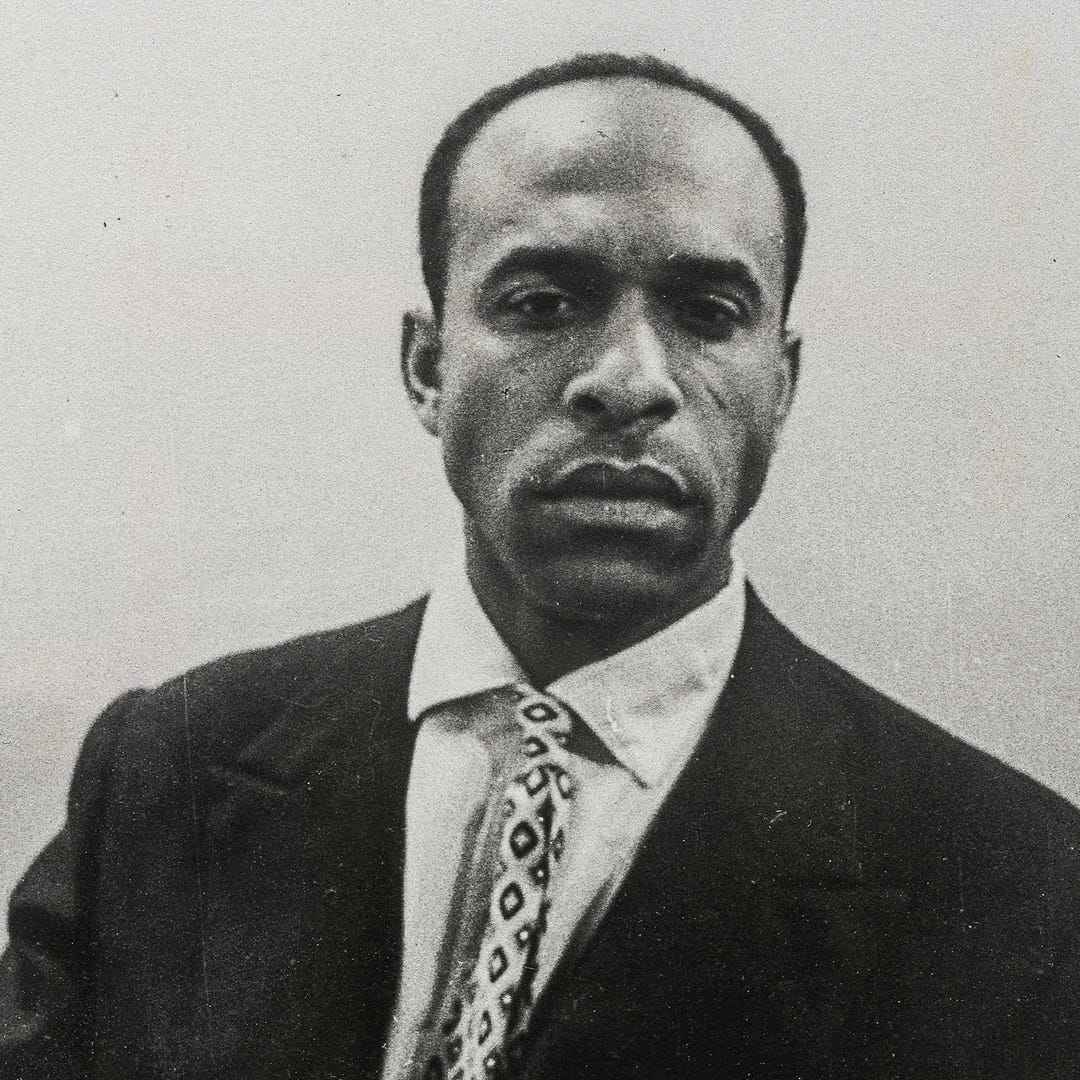
I’ve never met Frantz Fanon. He died in 1961, decades before I was born. Yet I feel a connection to him that transcends that distance—one forged entirely through his written work. Reading The Wretched of the Earth and Black Skin, White Masks wasn’t just an intellectual exercise. It was recognition. Here was someone who understood the psychological violence of colonialism, who articulated the internal warfare that happens when you’re forced to see yourself through the oppressor’s eyes, who mapped the terrain of decolonizing not just territories but minds.
Fanon was a psychiatrist, a philosopher, a revolutionary. His work bridged clinical observation and political theory, personal experience and collective struggle. He wrote about the specific mechanisms of colonial domination—how it doesn’t just exploit resources but reshapes consciousness itself, making the colonized complicit in their own subjugation. And he wrote about liberation not as a simple political reversal but as a profound psychological reconstruction.
A Bridge to Connecting Dots
That synthesis speaks to me across sixty years of silence. When I read Fanon, I’m in conversation with him. His arguments challenge me, his observations clarify patterns I’ve witnessed but couldn’t name, his urgency reminds me that intellectual work isn’t separate from lived struggle—it’s a form of it. This is what the humanities do at their best: they create bridges between individual human experiences separated by time, geography, and circumstance. They let the dead teach the living. They let someone in 2025 find solidarity and insight from someone writing in 1961 Algeria.
No AI can replicate this. Not because the technology isn’t sophisticated, but because what’s happening here isn’t information transfer—it’s meaning-making.
The Economizing Problem: How do we price the intangible?
Here is where the tech gurus’ analysis fails: the humanities have terrible monetization characteristics. You can’t easily price “the ability to think critically about power structures” or “understanding how narratives shape collective behavior.” There’s no quarterly revenue target for “preserving cultural memory” or “creating intellectual kinship across generations.”
This isn’t a failure of the humanities—it’s a category error in how we’re measuring value. We’ve built an economic system that excels at pricing discrete, tradeable outputs: widgets, billable hours, subscription services. The humanities produce diffuse, compounding, societal-level returns that resist this kind of accounting.
The ability to interpret complex texts makes better voters, better jurors, better citizens. Historical literacy prevents societies from repeatedly making catastrophic mistakes. Philosophical training builds people who can reason about problems that don’t have technical solutions. Fanon’s work contributed to decolonization movements worldwide—how do you put that on a balance sheet? What’s the ROI on liberating millions of people from psychological colonization?
These benefits are real, measurable in aggregate, and foundational—but they don’t flow cleanly to individual balance sheets. And so they get dismissed as “nice to have” rather than recognized as the substrate on which everything else depends.
The Fire
The tech gurus aren’t wrong that AI will eliminate some humanities jobs. They’re wrong about what that means. They’re measuring the wrong thing entirely.
The value of the humanities doesn’t come from efficiency gains or monetization potential. It comes from the fire that sparks individual minds across generations, through the chain of human consciousness, passing its hard-won insights forward through time. It comes from a Black psychiatrist in colonial Algeria writing words that would ignite liberation movements and speak to a supply chain analyst in Virginia sixty years later. It comes from the inexplicable, unmeasurable fact that dead voices can still teach, still challenge, still transform the living.
You can’t optimize fire. You can’t put it on a quarterly earnings report. You can’t make it justify itself in market terms. But try building civilization without it. Try building a life worth living without the accumulated wisdom of everyone who came before you, struggling with the same questions of meaning, justice, identity, and liberation.
Spreadsheets will never capture what happens when you read the right book at the right moment and feel yourself understood across an impossible distance. That spark, that sudden ignition of recognition and possibility—is what the humanities are for. And if we lose that because we couldn’t figure out how to monetize it, we’ll have optimized ourselves into a darkness we won’t even have the language left to describe.
The future belongs to those who can connect dots and make sense of things the world struggles to understand.
-Antowan Batts
About the Author
Antowan Batts writes for Business Without Borders, a publication designed for working professionals seeking perspectives beyond the headlines. Each issue breaks down how business and economic shifts cross borders and impact decision-making in companies, careers, and everyday life.

Where is their humanity? There is no dollar value on the human conscience and the fire within it. AI is a great tool, but it will never be able to replace true human spirt. Human intuition and the ability to orchestrate meaning in life will never be substituted by a robot, no matter the amount AI profits. (which isn't very much at the moment lol)