



This is a guest post by Antowan Batts. Today’s post is a personal story and narrative to recognize Juneteenth. You can listen to the audio narration or read the post.
.
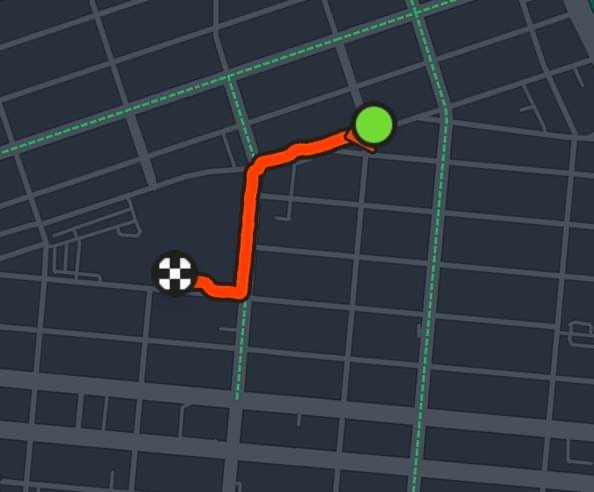
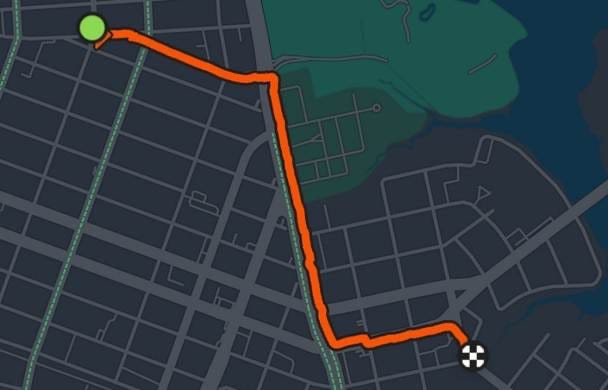
Consider a map of a neighborhood, with a house marked just past the corner of an intersection, and a line leading from that house down the street, heading to the left for a bit, and then picking up a street that forks to the right before ending at its destination. Now, consider another neighborhood map with the exact same house as the starting point. This time, the line leads down the street, past that first intersection and across a busy city street, until it intersects with another busy street. It turns right and continues down another busy city street, moving farther away from the first neighborhood, until it turns left and ends at its destination, in a completely different neighborhood area.
These are simple maps, lines drawn between two points. But what if you knew that these two lines defined a person’s life decades before they were born?
Meet Antowan Batts
Ah, now I have your attention. Allow me to introduce Antowan Batts, a thirty-something Black author who writes about the intersection of sociopolitical topics and economics.
The first map, the one where the line begins and ends in the same neighborhood, traces the distance from Antowan’s mother’s childhood home to the nearest elementary school, a distance of no more than one-third of a mile one way. The second is the distance his mother had to walk to the elementary school she was allowed to attend being, as Antowan describes, a “colored” child in the South. When he went to walk that same distance, a road closure forced him to walk another five blocks, making his one-way journey two and a half miles one way.
In history and daily life, we learn about the shadow of the past and can never fully conceptualize what those facts mean to us. Growing up, his mother tried to shield Antowan and his brother from the hardships that were byproducts of being treated like an ‘other’ in society, but she did make sure to teach them history.
Segregation With a Bureaucratic Costume
Segregation is oftentimes seen as a benign blip in the American historical record. Separate but equal was treated as an obvious wrong in hindsight, but one that wasn’t too bad… at least, until you educate yourself. Today, we’re going to examine the economic effects of segregation and how policy changes shifted the entire foundation of America.
Antowan grew up in Virginia, the same state that organized legal architecture to make sure children like his mother kept walking those two and half miles each way to school. This wasn’t passive resistance. This was a coordinated, government-backed campaign to strangle integration before it could breathe.
In 1956, Senator Harry F. Byrd Sr. called it Massive Resistance. The name was honest, at least. Virginia didn’t drag its feet, it built a machine. The Stanley Plan cut state funding to any school that moved to integrate. The logic was simple: if you comply with Brown v. Board, we will defund you into oblivion. The federal government said to integrate. Virginia said watch us.
When that wasn’t enough, they went further. Pupil Placement Boards were established across the state. Race neutral on paper. Designed entirely to deny Black students’ entry to white schools in practice. The board evaluated students on criteria vague enough to justify any outcome they needed. It was segregation with a bureaucratic costume on.
When They Chose to Close the Schools
And then, there was Prince Edward County. In 1959, rather than integrate its schools, Prince Edward County closed them. All of them. For five years. The county funneled money through tuition grants so white families could send their children to newly created private segregation academies. Black children received nothing. No schools. No grants. No alternatives. Just five years of their education erased. Some of those children never recovered academically. Some never returned to school at all.
Think about what that means. A government did not simply fail to provide equal education. It actively dismantled public education rather than share it. When the cost of integration is apparently worth destroying the institution itself, you have told on yourself completely. Separate but equal was never about equality. It was about separation.
Economically Suicidal
Now here is what makes the resistance even more damning in hindsight. It was economically suicidal. Gavin Wright’s Sharing the Prize makes the case with the kind of rigor that doesn’t leave much room for argument. Wright documents what happened to the Southern economy after integration took hold. The short version is that it grew. Significantly. Black workers who had been locked out of skilled labor markets, professional positions, and decent wages entered them. Consumer markets expanded because the people who had been deliberately kept poor now had more money to spend. Business activity increased. The South began its long convergence toward national economic norms, a convergence that had stalled for decades under the weight of the system it was so committed to protecting.
What Wright identifies is not simply that Black Americans benefited, though they did, substantially and measurably. The broader point is that the Southern economy as a whole moved upward. The white families whose elected officials burned down public schools were also living in a region that was economically stunted by those same choices. Segregation was not just a moral catastrophe. It was a costly one. The South paid in capital, in talent, in wages, in growth that never happened because an entire population was deliberately excluded from contributing and consuming at full capacity.
The Prize That Was Always There
Prince Edward County closed its schools for five years. Virginia built a legal apparatus to make sure integration failed. And the economic argument for doing so was always weak. Wright’s data makes it look weaker still. The prize was always there to be shared. The resistance was a choice to refuse it.
That is the piece of the history that rarely makes it into the popular account. Segregation is taught as a moral failure, which it was. It is taught as a legal failure, which it was. What gets less attention is that it was also a profound act of economic self-sabotage, sustained by ideology so deeply embedded that the people enforcing it were willing to absorb real costs to keep it in place.
This Wasn’t Long Ago
This may all seem like a world long ago. But that was Antowan’s mother, and he is only 32. These lines defined a great deal of his life long before he was.

Innocent Violence - When the "rule maker" proclaims they are unaware of the harms that are created. It's a shield governing bodies use to protect themselves by ignoring the moral ambiguity of their choices negatively affecting those with less political/economic or as in your narrative social status. (which is really how governments decide, those with "value" gets to make the rules.)
Eli Whitney goes to visit a friend in the South, notes that the cotton growing "industry" is labor intensive and looks for potential automation of the process. Cotton Gin!! For those farmers willing to make the investment, gains. Some others have to increase the slave labor to gain the money to invest. Others opt to scale by increasing production.
What Eli thought might reduce the slave trade only increased it by expanding the marketplace to 15 States from the previous 8.
This Yale educated, White Male from MA is in part responsible for the continuation of a horror because he thought he could improve the efficiency of the model.
*I like your narrative... moves the anchor for how I look at my MIL growing up in VA.