


Today’s post is written by Frannie Staley, a Decode Econ research assistant and marketing and entrepreneurship major at Northern Kentucky University. Frannie is also a Haile Research Fellow and an active participant in the Haile Research Lab. As a junior, she’s already doing the kind of applied research and economic storytelling that Decode Econ is all about.
If you find her work valuable, take a moment to leave a comment of encouragement. Supporting young scholars as they learn to think, write, and communicate clearly about the economy is how this community grows.

When people talk about weight loss drugs like Ozempic, the conversation usually stops at healthcare, pharmaceuticals, or vanity. But markets don’t care about categories. They care about consequences and economic outcomes.
And one of the strangest downstream winners of the weight loss drug boom might be airlines.
Airlines’ profitability is directly tied to total flight weight. Every extra pound on a plane—whether it’s luggage, cargo, fuel, or passengers—costs money. More weight means more fuel burned, higher operating costs, and tighter margins in an already unforgiving industry.
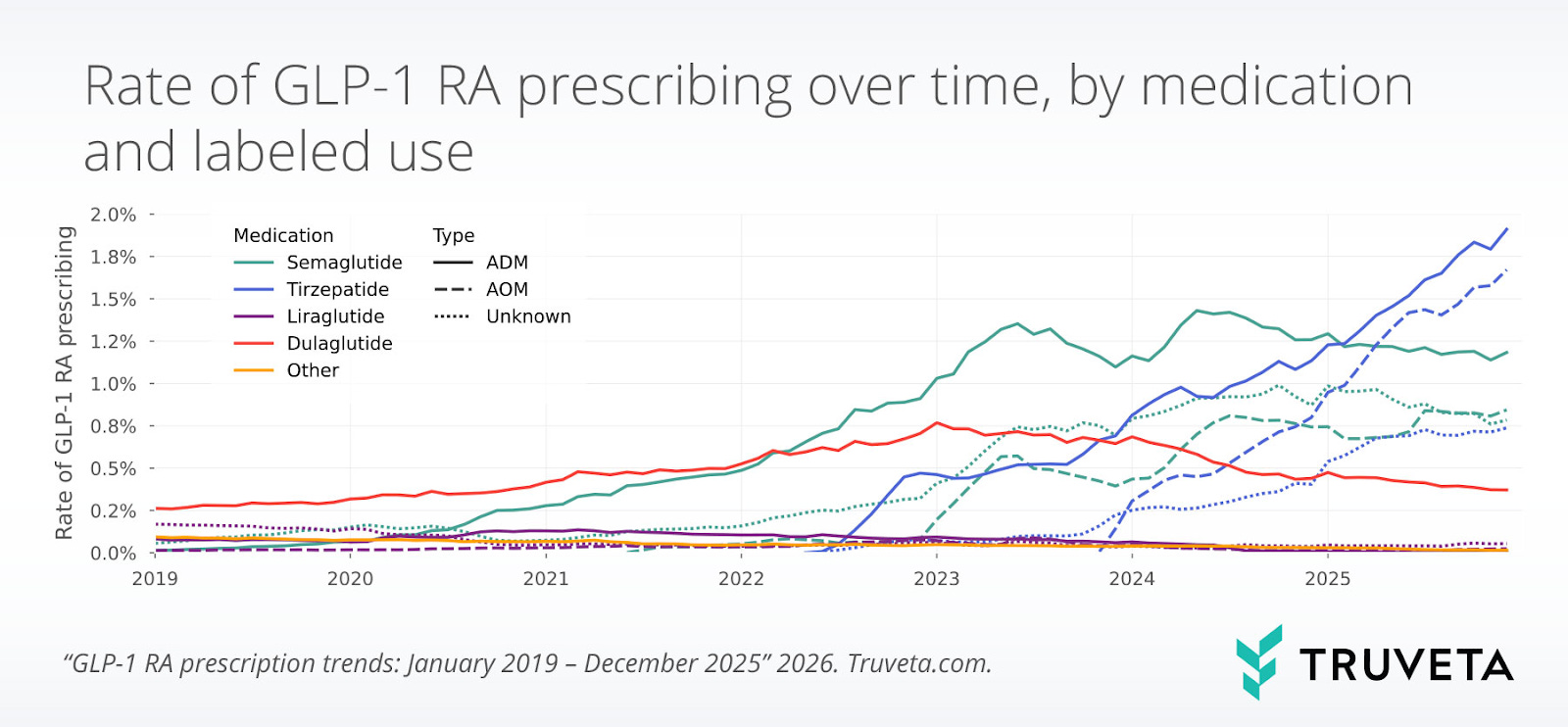
Millions of Americans are using GLP-1 weight loss drugs. According to a KFF healthcare tracking poll, 1 in 8 Americans are taking a GLP-1 drug such as Ozempic or Wegovy. On average, users lose 10% of their body weight. Individually, that doesn’t sound like an airline story. Collectively, it absolutely is.
Why Weight = Money in Aviation
Fuel is one of the largest expenses for airlines, and weight directly affects how much fuel is burned on every flight. The heavier the aircraft, the more fuel it needs to stay in the air. That’s why airlines have spent decades obsessing over weight reduction in ways most passengers barely notice.
This is also why checked bags cost extra, carry-on sizes are tightly regulated, and aircraft interiors are designed with lightweight materials. Even seats, service carts, and tray tables are engineered to shave off ounces. Weight is an economic problem for airlines.
“Airlines have a history of being vigilant around aircraft weight savings, from olives (pitless, of course) to paper stock,” the Jefferies report says. “Passenger waistlines have thus far been out of their control.”
Savings and Profits
Researchers modeled an aircraft with an empty weight of 99,000 pounds, then projected 46,000 pounds of fuel, 36,000 pounds of payload, and 178 passengers averaging 180 pounds each, which added another 32,000 pounds.
If passengers collectively shed 10% of their weight, the plane’s total weight would drop by about 3,200 pounds, or 2%, generating significant fuel savings over time, researchers posited. The savings translate to 4% boost to earnings per share.

So when the average passenger weighs less than they did five or ten years ago, the cost structure quietly shifts. Fewer pounds per seat means slightly lower fuel consumption per flight. Multiply that effect across an airline’s entire network, and those “slight” reductions start to matter.
The same principle applied when airlines slimmed down or removed magazines from seat pockets. It is estimated that American Airlines reduced fuel costs by $352,000 per year by removing Sky Mall magazines. Each magazine weighs roughly 4 ounces, a seemingly minor change that collectively saved hundreds of thousands per airline and millions collectively per year.
Second-Order Effects Matter
This is a classic example of second-order economics: changes that don’t show up where you expect them to.
Weight loss drugs weren’t designed to help airlines. But markets are interconnected. When behavior changes at scale, ripple effects appear in unexpected places.
Healthcare impacts transportation. Pharmaceuticals influence logistics. Personal health decisions alter corporate cost structures.
Most people never think about this. That’s the point.
The Bigger Decode Econ Takeaway
The most powerful economic forces aren’t always loud. Sometimes they’re quiet, slow, and hiding in everyday decisions. Ozempic is changing bodies and balance sheets. We expect this weight-loss drug to have outcomes in other markets as well; some will be positive and others negative. With 12% of the population under treatment, this won’t be the last time this “health trend” shows up in an earnings call somewhere completely unexpected.
About the Author

Frannie Staley is a Decode Econ research assistant and marketing and entrepreneurship major at Northern Kentucky University (Class of 2027). Frannie is also a Haile Research Fellow and an active participant in the Haile Research Lab.

Thank you all so much for the support, feedback, and encouragement on this piece. Writing my first Decode Econ newsletter was both exciting and intimidating, and your comments have helped build my confidence as a writer and researcher. I’m incredibly grateful to be part of a community that values curiosity and learning. I’m looking forward to continuing to explore and share more economic ripple effects in future posts!
This is a beautiful piece about business and solving problems. I wonder if the airlines could pass the savings onto customers!? I’ve been following how Dunkin and Starbucks have started offering protein in response to healthier options driven by Ozempic!