


If you’ve applied to dozens of jobs and heard nothing back, you’re not imagining it.
A meaningful share of those jobs were never real to begin with. It is estimated that one-third of the 7.1 million jobs currently available are ghost jobs.
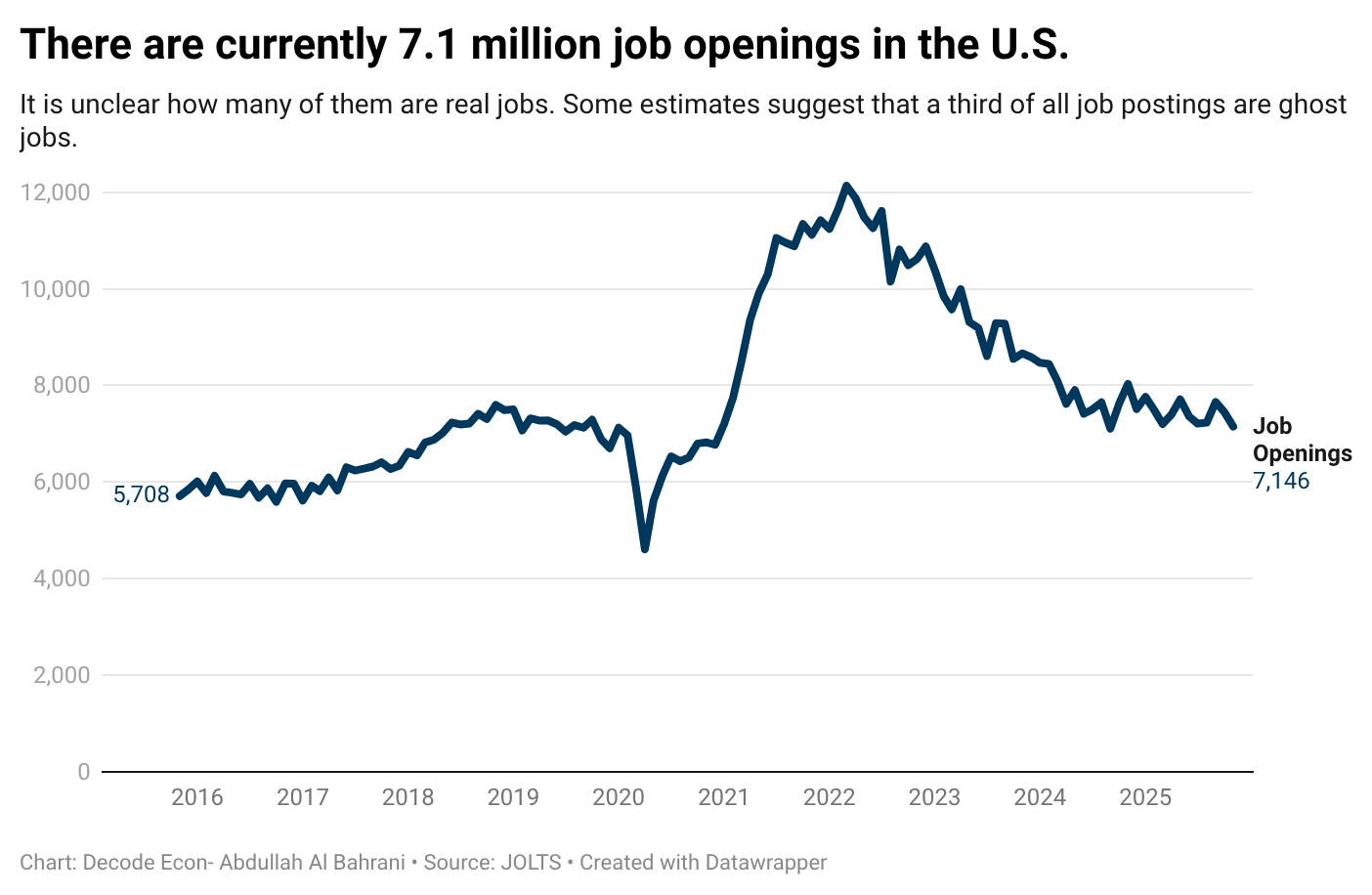
This practice, called ghost posting, has quietly reshaped the labor market and increased job seekers’ frustration. And now, lawmakers are stepping in with proposed rules that would limit fake job ads, require verification that a role actually exists, and force more transparency around hiring intent.
That alone tells you something is broken.
Let’s talk about why ghost postings happened, the incentives that created them, and the real economic damage they’ve done, especially to people entering the labor market. This is an example of how bad information impacts decision-making and market outcomes.
What Is Ghost Posting?
A ghost posting is a job ad that:
Isn’t tied to an active real opening
Has no budget approval
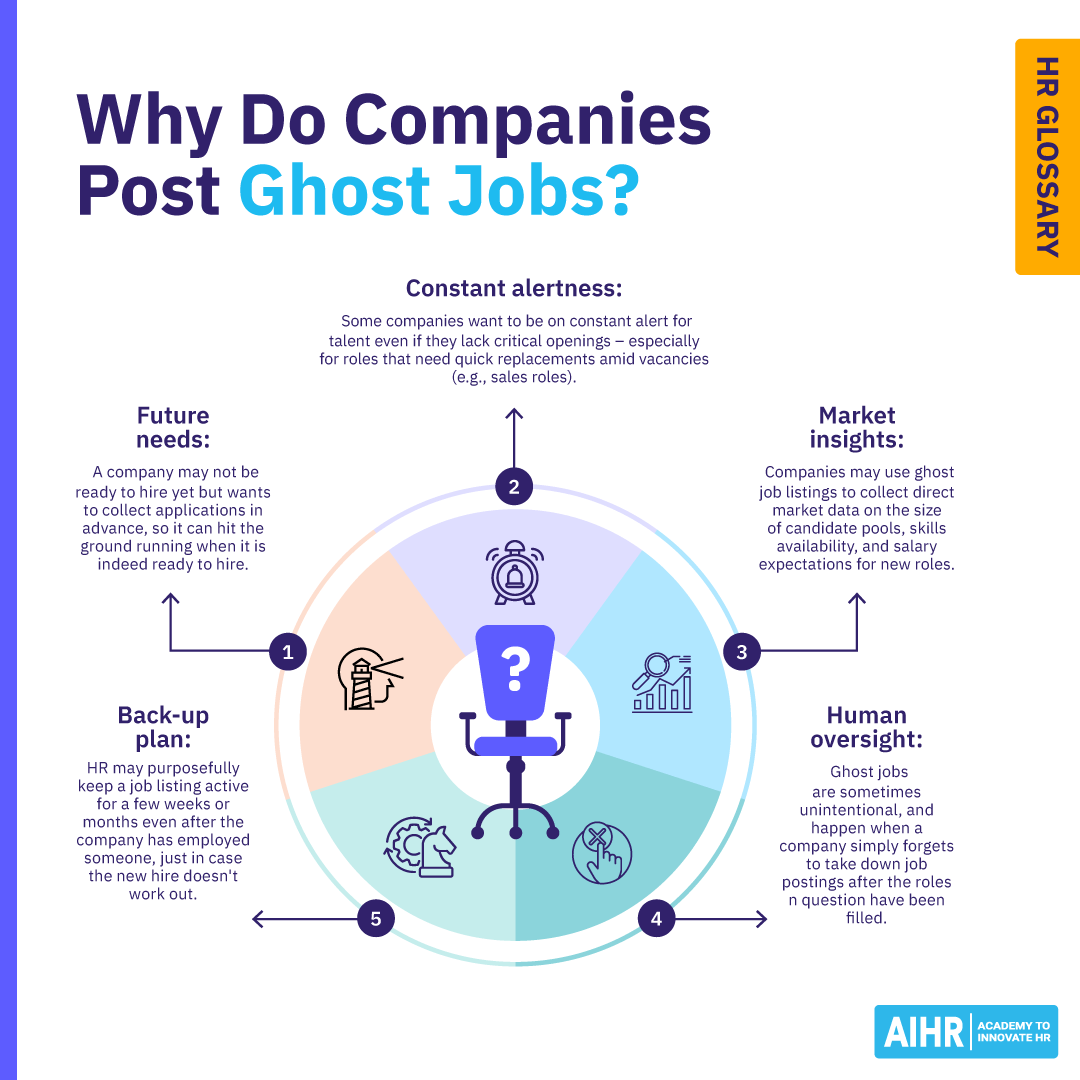
Is posted “just in case,” for optics, or for data collection
From the employer’s perspective, these listings were often described as pipeline-building or evergreen roles. From the worker’s side, they are false signals.
And in economics, bad information leads to undesirable outcomes.
Why Employers Did It: The Incentive Problem
Ghost posting doesn’t happen because employers are malicious; it happens because market incentives reward it.
Here’s the economic logic.
A. Optionality with Zero Cost
Posting a job online is cheap. Often free. Hiring is expensive, time-consuming, and risky.
So firms posted roles to:
Test the labor market
See what skills are available
Build candidate pools without committing
They are extracting information from the market. There is no downside for firms; all the costs are pushed onto workers. Workers incur the cost of misinformation and apply to jobs that lead to no outcome.
B. Signaling Growth to Investors and Employees
Job opening data is a metric followed by investors and economists. Increased job openings signal stronger firms that are seeking to expand. When firms post jobs, the market assumes growth and strength. They are unaware that those jobs are fake.
This illusion matters for stock prices, funding rounds, and internal morale.
C. HR Metrics Gone Wrong
Recruiting teams are often evaluated on how quickly they can fill a job. This pressure leads to performative hiring practices and an incentive to build a large pool of candidates who are available to be tapped when a real job needs to be filled. Ghost jobs and social media engagement help firms build their applicant pool.
The Labor Market Consequences (This Is the Part That Matters)
Ghost postings don’t just waste time; they are bad information signals that lead to bad outcomes. They distorted the labor market itself.
A. False Tightness
Millions of posted jobs make it seem as if labor demand is strong. Workers are told: “Everyone is hiring.”
But hiring isn’t happening. That disconnect leads to delayed wage adjustments, masks hiring slowdowns, and confuses policymakers and analysts.
Bad data leads to bad decisions.
B. Search Frictions Exploded
Job searching already involves uncertainty. Ghost postings multiply it. It creates inefficiencies. Job seekers react by spending hours tailoring resumes, paying for certifications they don’t need, and delaying other life decisions because they think the jobs exist.
That’s real economic cost—unpaid, invisible labor and increased market anxiety.
C. Psychological Damage (Especially for New Entrants)
For students and early-career workers, this is devastating.
You’ve been told to “apply everywhere”, that “it’s a numbers game”, and if you aren’t getting interviews, then “it is you who is the problem”.
But the market is lying to them.
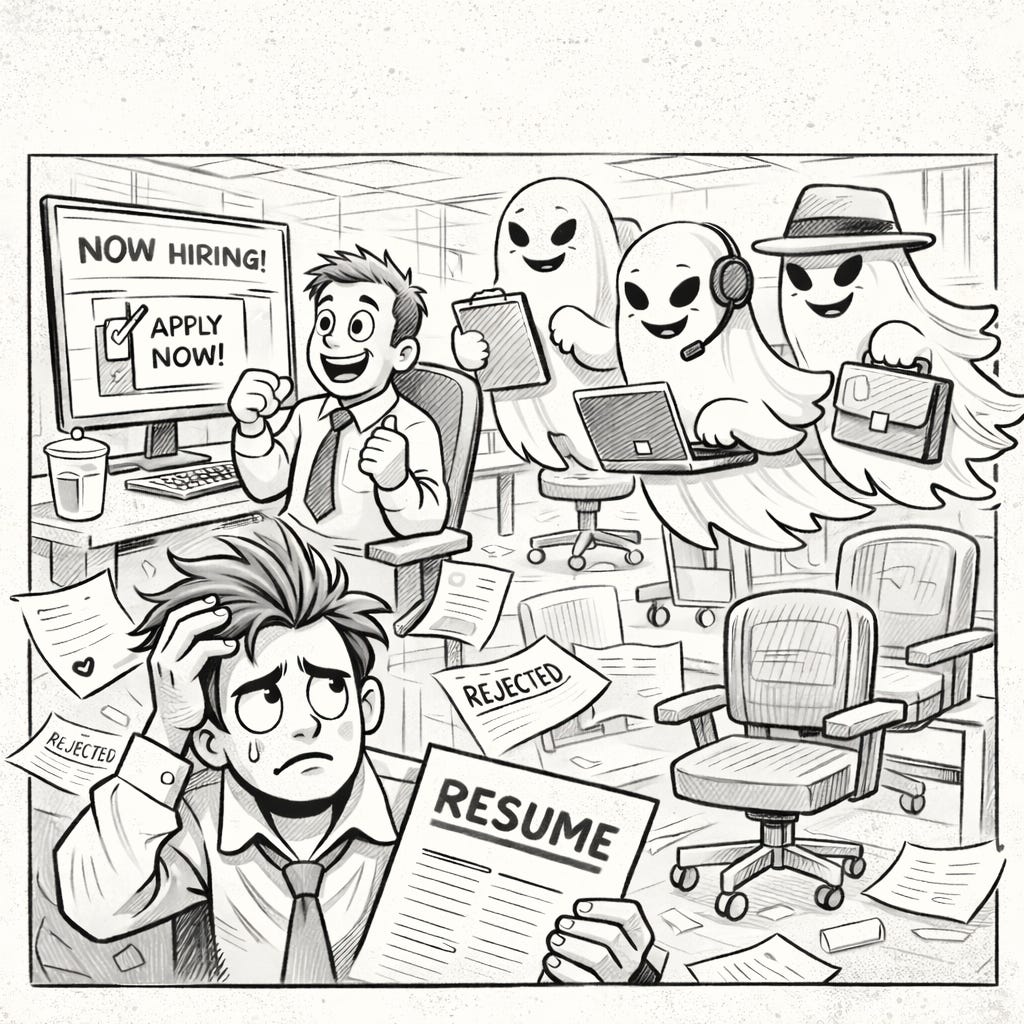
Repeated rejections from fake jobs erode confidence, delay on-the-job skill-building, and push people out of fields entirely. Economists call this scarring—early setbacks that have long-term effects on earnings and career paths.
Why Regulation Is Finally Showing Up
After years of worker frustration, states are starting to treat ghost postings for what they are: a market failure driven by bad incentives and distorted signals.
Several states are now moving to fix the problem.
In New Jersey, lawmakers introduced companion bills in mid-2024 that would require employers to disclose whether a job posting reflects an actual, funded vacancy and provide an estimated timeline for filling it. Employers would also be required to remove listings within two weeks of a position being filled and notify third-party job boards to do the same. For applicants who reach the interview stage, employers must provide updates on the status of the role. Violations would carry civil penalties.
Committee discussions in New Jersey focused on predictable concerns: compliance costs for small businesses, how to handle high-turnover roles with continuous hiring, whether public sector jobs should be covered, and how to define terms like “interviewed” and “filled.”
In Kentucky, a bill introduced in early 2025 would explicitly prohibit ghost job postings and require employers to disclose whether a listing reflects an existing vacancy or a future, anticipated role. Like New Jersey’s proposal, it includes civil penalties for noncompliance.
In California, legislators have taken an even firmer approach. A bill introduced in March 2025 would require all private employers advertising jobs to clearly state whether a posting represents an actual vacancy. Violations would be treated as unfair competition and enforced by the state labor commissioner. The bill has already advanced out of committee, with amendments responding to concerns from business groups.
These proposals aren’t anti-business policy; they’re pro-market.
Markets only work when signals are credible. Job postings are signals about labor demand, opportunity, and economic health. When those signals are fake, the labor market can’t allocate talent efficiently, and workers pay the price, and the overall market struggles.
The Bottom Line
Employers continuously complain about employee loyalty and their attachment to the firm. What they neglect is the erosion of trust caused by employer behavior. Ghost posting isn’t a harmless HR trend. It is a breakdown in trust.
Unfortunately, and I have been critical of this, the user experience in the hiring process creates a lot of mistrust. I wish companies spent more time thinking about how they treat their future colleagues. How firms present themselves, communicate, and engage with applicants says a lot about how much they value their biggest asset, the employee.
If the labor market is going to work again, it needs:
Fewer fake signals
Clearer information
Accountability for those who post jobs that don’t exist
Because looking for work is already stressful enough without having to chase ghost jobs.
If you’ve experienced this, you’re not alone—and it wasn’t your fault.
If this resonated, share it with someone job searching right now. They probably need to hear it.
I am working on a project that collects stories about the job search process and the human experience. If you have recently searched for a job, please share more about your experience. What trends are you seeing in job postings? How are you feeling? What do you wish were different?
Canada was ahead of the curve passing provincial laws over the last few years. I guess only time will tell how effective these will be but early signs have me optimistic.
Good for some states for doing something to regulate this. I’ll be honest — I’m pleasantly surprised that this was such a priority in Kentucky!
There is nothing I loathe more than working on a resume and writing a cover letter.