


If you’ve followed my work, you know I believe in demystifying the professional journey—especially in academia. From the outside, careers look like titles and awards. What you don’t see are the years of experimentation, rejection, collaboration, and persistence behind them.
Yesterday, I taught my students about the power of compound interest and long-term growth. In a quick tangent, I reminded them that this principle doesn’t just apply to money—it applies to careers. We are often obsessed with immediate recognition and visible signs of success. But real impact compounds quietly over time.
Today, I’m reflecting on thirteen years of building a research agenda in economic education—why I chose it, what it required, and what comes next. I hope this inspires young professionals and economists starting out to see that impact takes time, to learn from my path, and to get to know me and my work more deeply.
This is not a brag. It’s an attempt to make the path visible for those coming next.
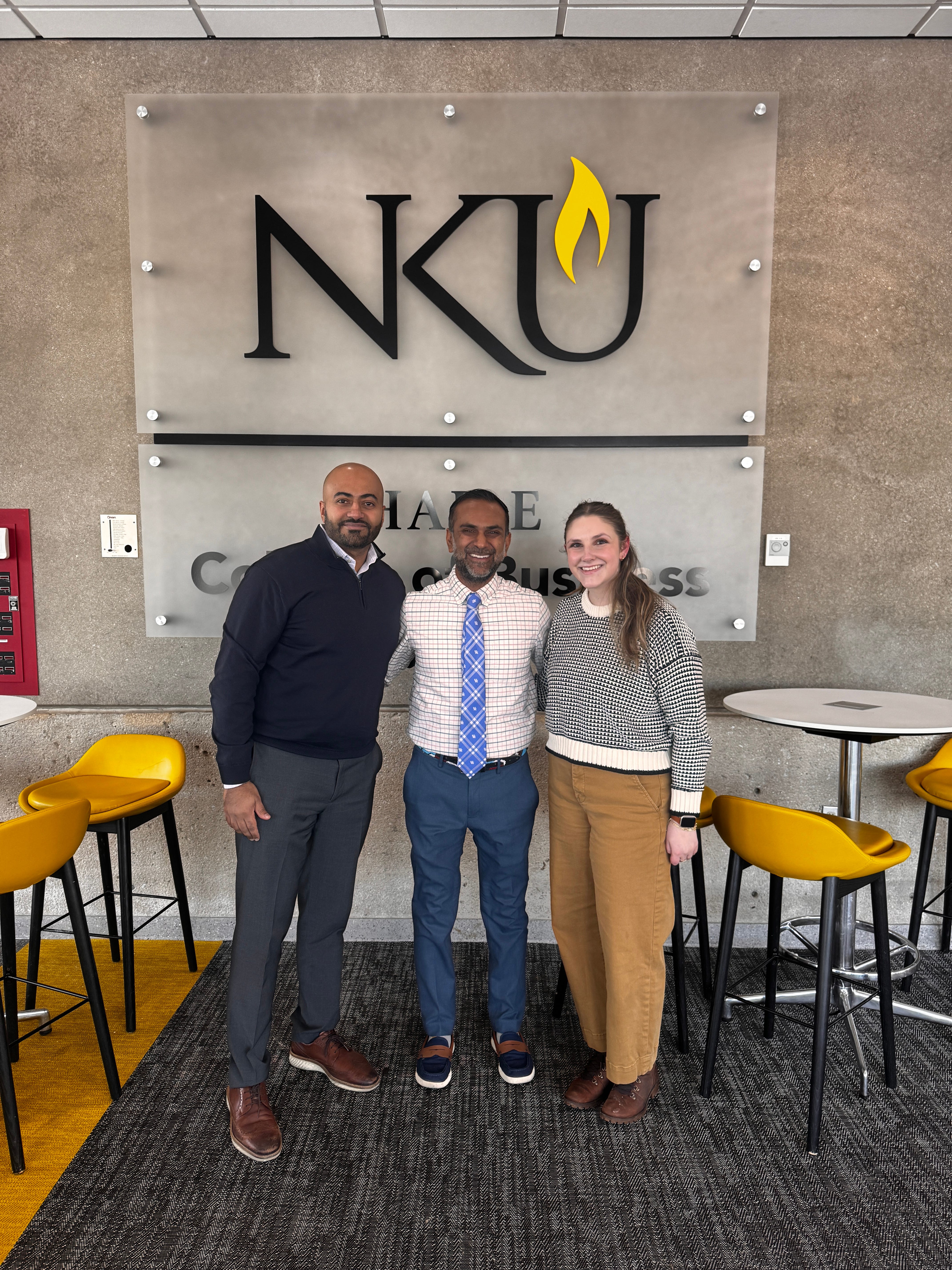
Class of 2010
Thirteen years ago, I came to Northern Kentucky University with a clear and deliberate goal: to build a sustained, rigorous research agenda focused on improving how economics is taught and learned, not as a side project, but as core scholarly work.
The Case for Econ Ed
At the time, economics education research was still often treated as peripheral—something pursued alongside “real” economics. I disagreed then and still do. Economic education is real economics; more economists would benefit from investing in their teaching skills and methods. The profession relies on them being better at what they do. If students cannot reason, apply data, or connect models to lived experience, the models themselves lose meaning. Economics becomes irrelevant. We need economic researchers to be better economic educators, in class and in public.
With that in mind, my work has focused on improving economic literacy in classrooms, communities, among policymakers, and among business leaders.
Economic Education Rising Stars
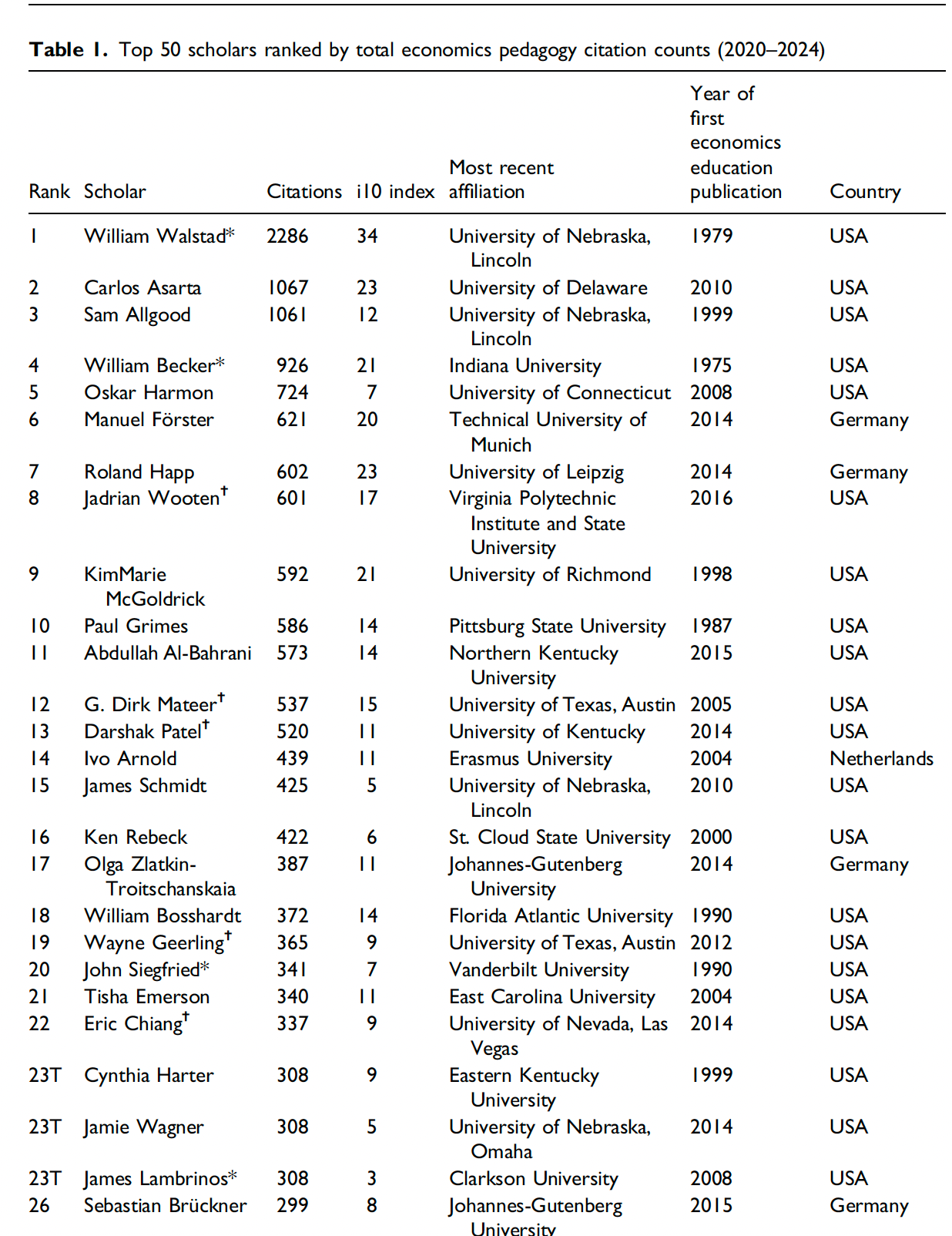
I was honored recently, and it was a good opportunity to reflect on the work I do. A new paper by Wayne Geerling, G. Dirk Mateer, and Jadrian Wooten, published in The American Economist, examines recent citation activity to identify influential and emerging scholars in economics education.
Their analysis places me among the top 50 economics education researchers overall—11th in total citations and 9th in the pedagogy-adjusted i10 index—and among scholars whose work has shaped the field over the past decade.
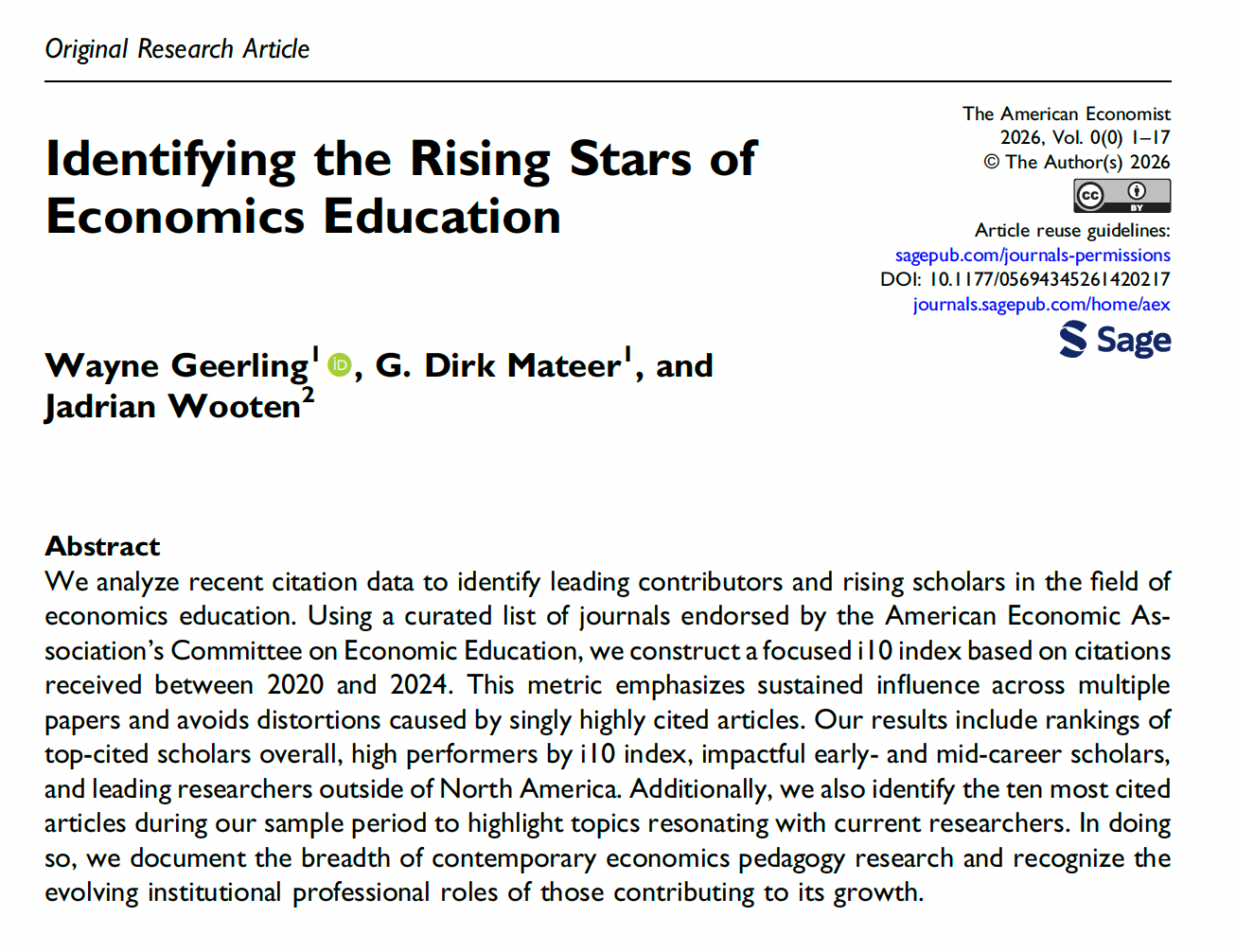
This recognition is not an individual achievement. It reflects the work of coauthors who trusted ideas enough to build them together, reviewers who pushed the work to be better, and scholars who read, cited, taught with, and extended the research. Citations are not awards, but they are evidence that my work is adding to the conversation. I am especially grateful to the collaborators who appear on this list; our collective work is stronger because of one another.
What Makes My Work Possible
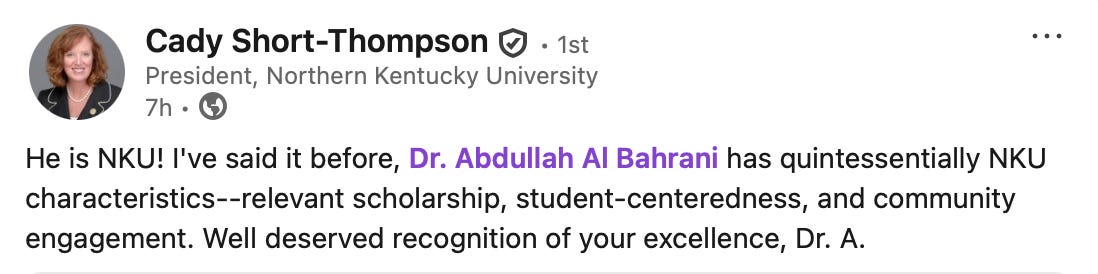
This research trajectory exists first and foremost because of sustained effort. Years of writing, revising, collaborating, submitting, and learning from rejection. It exists because coauthors challenged ideas, sharpened methods, and expanded the scope of what the work could become.
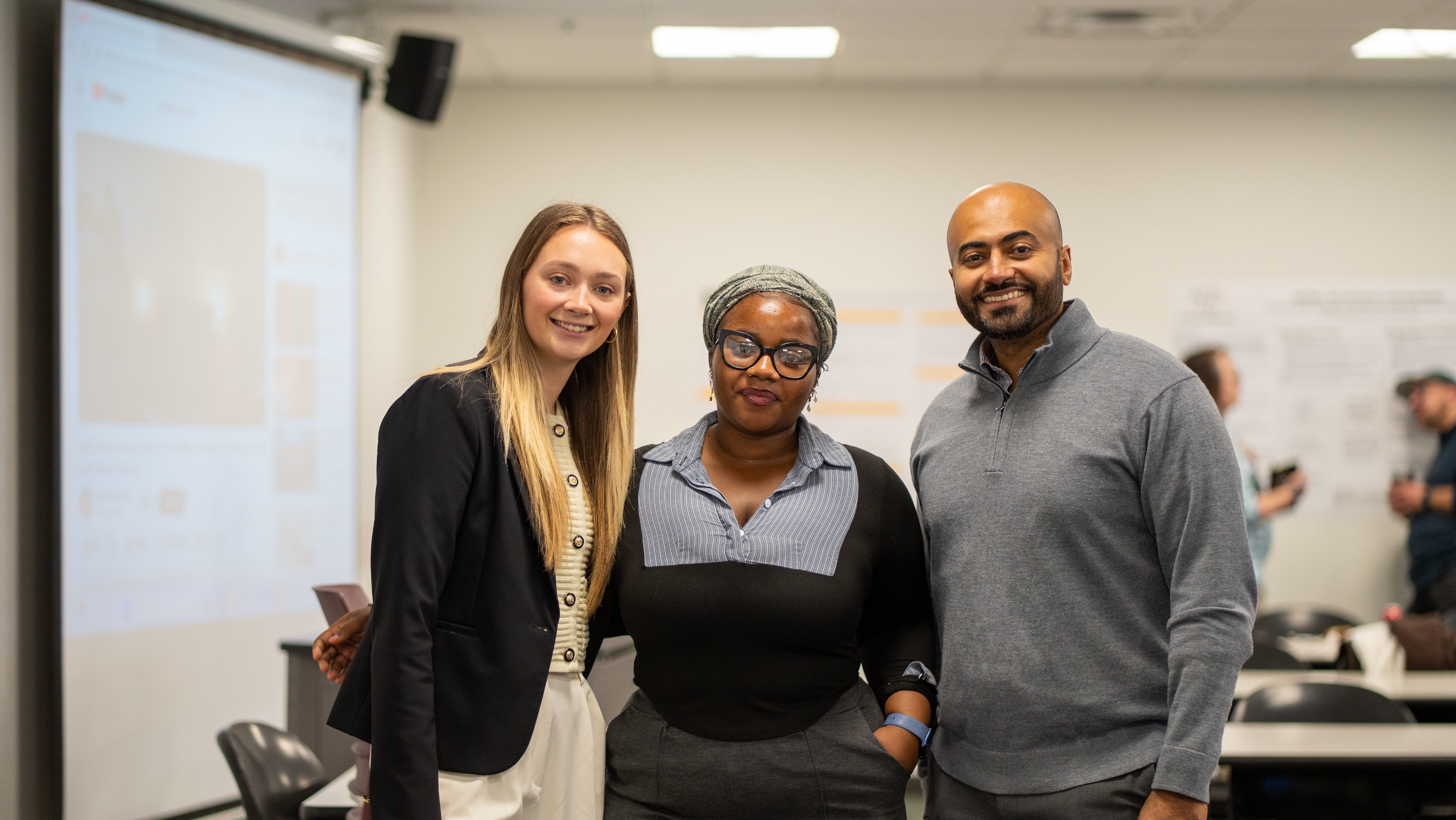
Institutional context matters. Northern Kentucky University and the Haile College of Business provided trust and professional latitude, enabling the pursuit of this agenda in a serious and consistent manner. That freedom allowed me to take intellectual risks early: experimenting with data-driven pedagogy, active learning, classroom technology, and inclusive design before many of these approaches were widely adopted.
Along the way, that work was recognized through national honors, including the Kenneth G. Elzinga Distinguished Teaching Award (2020) and The National Association of Economic Educators Rising Star Award (2021)
The University of Kentucky Economic Teaching Influence
I would be remiss not to highlight my mentor and one of the earliest influences on my teaching. Dr. Gail Hoyt at the University of Kentucky taught me about the power of teaching and communication, and the effort required to be an effective educator. My first teaching assistant role was to support her in the large lecture Principles of Microeconomics course at UK. She trusted me to step in and teach her 500-person course, and that gave me the confidence to lead.
In addition to Gail, my friends and coauthors, Darshak Patel, Emily Marshall, and Bradon Sheridan, appear on the list. All of whom graduated from UK’s Economics Ph.D. program. Here is a press release from Gatton College of Business and Economics. If you are considering a Ph.D and interested in being an effective educator, UK is the place for you.
Trust Matters
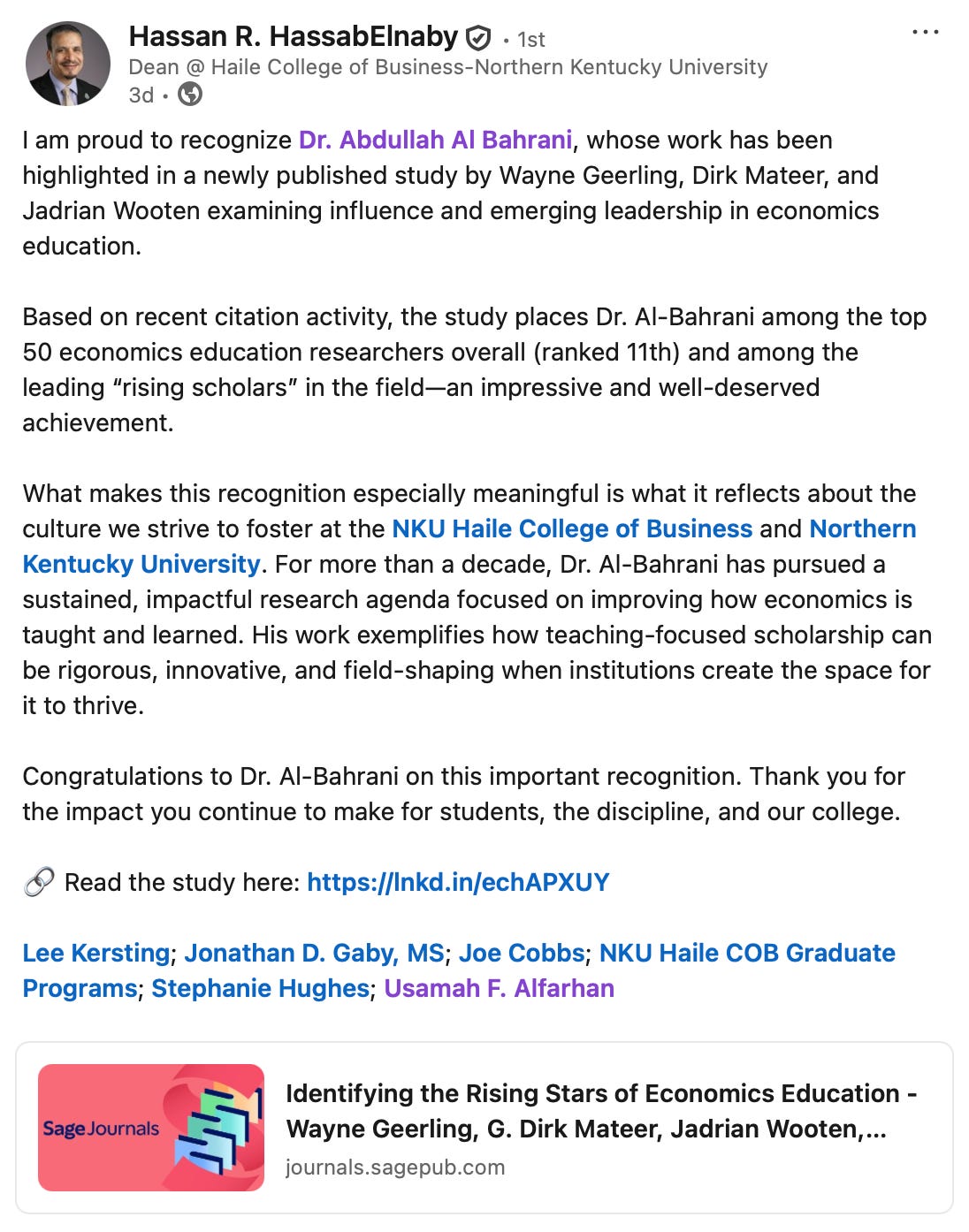
I also want to acknowledge leadership that understands how scholarship actually works. I am grateful to Dean Hassan HassabElnaby for trusting my vision and giving me the professional latitude to pursue this agenda seriously and consistently. That trust made it possible to take intellectual risks early: experimenting with data-driven pedagogy, active learning, classroom technology, and inclusive approaches long before many of these ideas were considered mainstream. I would like to recognize department chairs who celebrated and encouraged this work: Duke Thompson, Doris Shaw, Gary Clayton, and Lee Kersting.
What Comes Next?
I’m grateful for the recognition, but what excites me most is what comes next.
This research stream is accelerating, not slowing down. New projects centered on skills- and competency-based learning with Dr. Jeni Al Bahrani are taking shape, reflecting a broader shift in how we think about student preparation, workforce readiness, and applied economic thinking. Just as important, this work is no longer individual; it’s collective.
Building at Haile College of Business
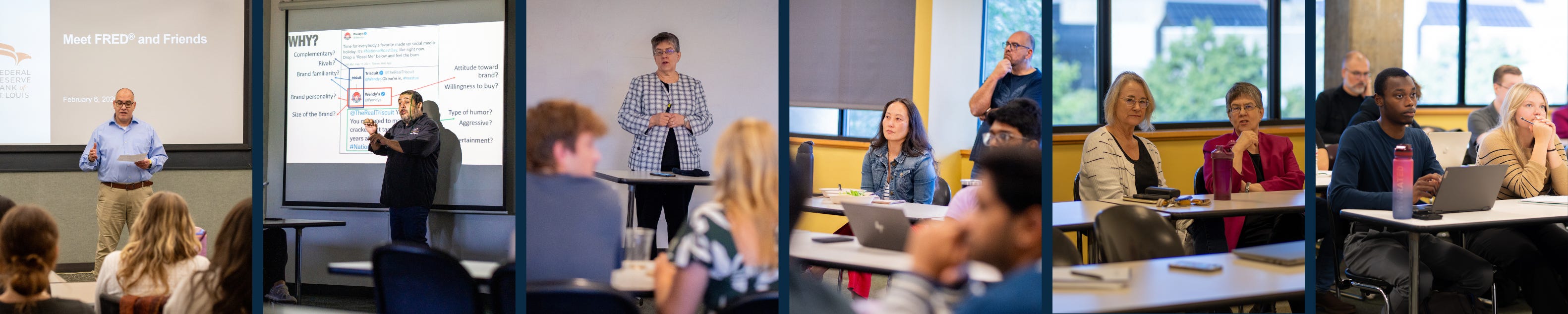
Much of my current work is now explicitly collective. At Haile College of Business, I am directly involved in building a research ecosystem around innovative business education—one that integrates teaching, scholarship, and student experience rather than treating them as separate silos.
Usamah (Sami) Al Farhan’s development of the FREDX teaching innovation is deepening data literacy and applied analysis within the economics curriculum.
The Center for Economic Education’s financial literacy initiatives are extending impact well beyond the university, connecting classrooms to communities and K-12 education.
David Raska’s Underground Agency. The first marketing agency integrated into college classrooms and recognized by AACSB as the Catalyst of Change. Born in 2011, is changing the way student mentorship and skill development are delivered.
CEAD’s use of undergraduate research assistants as part of the learning experience is redefining how students learn economics by doing economics.
The Haile Research Lab is providing the infrastructure to connect students, faculty, data, and real-world questions in a way that sustains long-term inquiry.
Reimagining and disrupting MBA education. More to come on that in the future.
New design for graduate career and professional development.
Decode Econ is growing and reaching people across the globe. Educators are using this resource in their classes.
Relationships and Community at the Center
Over time, this work has reinforced a core belief: economic education—and education more broadly—is fundamentally relational. It is built through trust between collaborators, sustained engagement with students, and intellectual generosity within a scholarly community.
Sixteen years after my Ph.D and thirteen years in at NKU, I’m proud of what has been built—but even more excited about what comes next. This work has never been about a single paper or ranking. It has always been about people and the vision that economic education is critical to the success of our society.
Thank you for being part of the journey. Every time you share, comment, and engage with my work, you give me the energy to keep building this platform. Thank you to all the researchers who cite my work!
Small steps lead to big outcomes. Take the first step.
-Dr. A
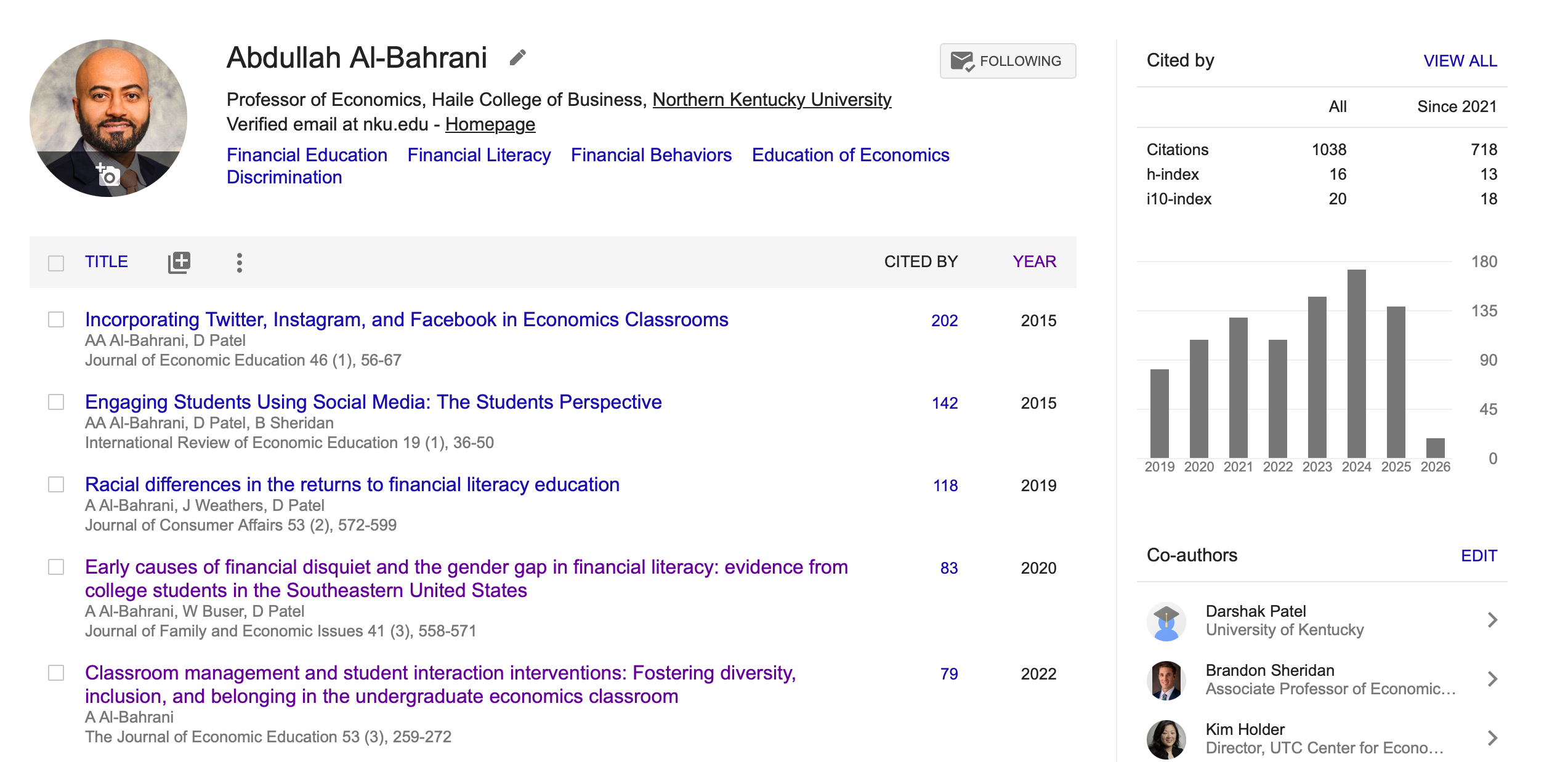
My Google Scholar Page
DEEN
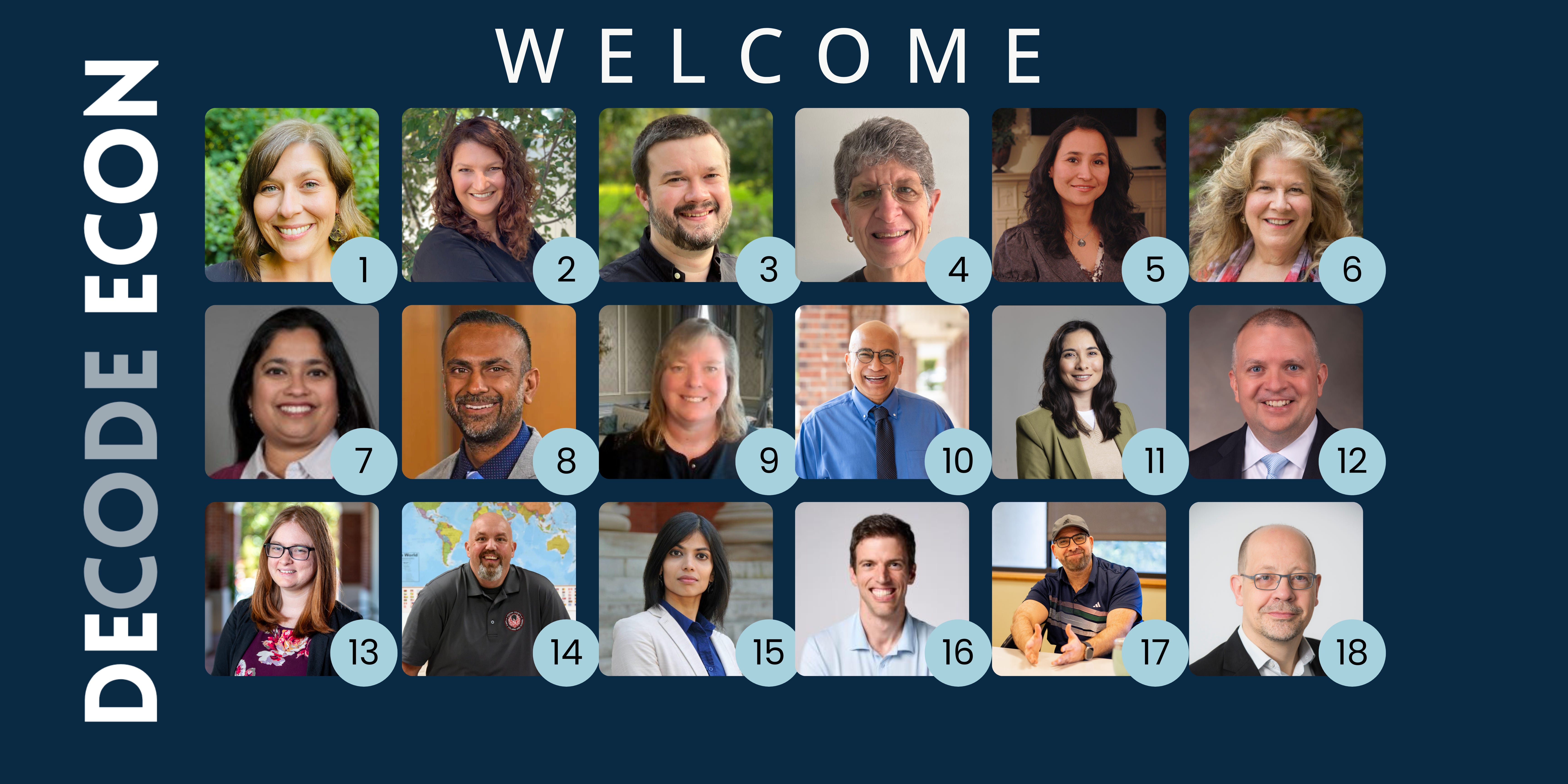
This week I met with the Decode Econ Educator Network. I am excited to build this community and be of service to them. Eighteen educators across the world are now using Decode Econ articles in their classroom and are part of the community that is helping shape the future of Decode Econ—Thank you!
For 20 years the value placed on my research was the billable hours and whether or not it appeared in some legislation or business plan. The measurement for how effective those thoughts were/are? Sustainability of process or outcome. (Some would say the repeat business or requests for opinion.)
This year I started a Research Fellowship and it has been very different. When asked for previous citations, a gentle reminder that private industry doesn't always allow for personal credit. The sponser of the Fellowship has been great in offering to send me to conferences yet I sometimes wonder about the judgement others may raise given the length of my career but lack of scholarly output in the public sphere.
My point? I find your professional sucess a point of pride that you should acknowledge. Low-key bragging about other's research that includes a conclusion that promotes you is the goal. (And in a field where reputation is the measurement, a necesssary evil.)
Congrats on your success and that of those you helped get you there!
Congrats on the well-deserved recognition of your work. You know I'm a big fan.