


A post by Jonathan Marx
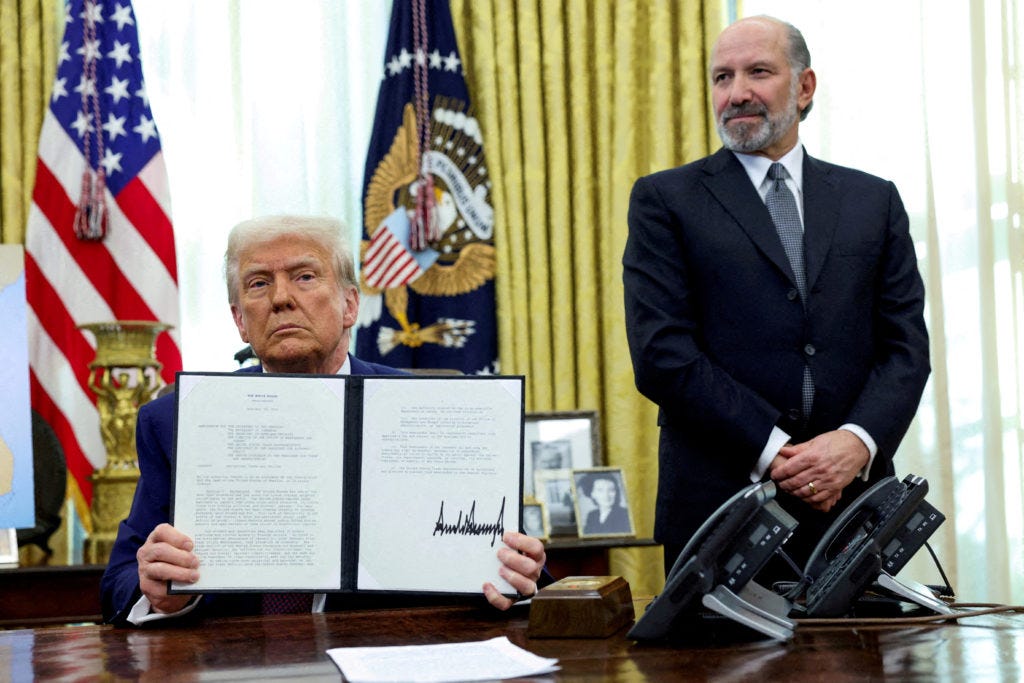
President Trump’s 2024 campaign was filled with many promises to protect U.S interests. One of those many promises was to implement sweeping tariffs across the globe. And on April 2nd, 2025, on “Liberation Day,” he did just that.
A tariff is a tax imposed by a government on imported goods and services, and Trump made tariffs central to his economic agenda.
The Trump administration listed several goals for the tariffs:
To Reduce the Trade Deficit
Protect American Industries
Raise Tax Revenue for the Government
President Trump highlighted the importance of his tariff policy in restoring the American economy. However, economists have been less optimistic about the impact of tariffs on economic growth. The democrats have also warned about the impact of tariffs on consumers.
President Trump has kept his promise to implement his tariff policy and claims America has entered a “golden age.” But the question remains: has America really entered a golden age?
The Trump Tariff Journey - How We Got Here
Liberation Day
April 2nd, 2025, was Trump’s “Liberation Day”, the day the world economy crashed.
The S&P 500, the Dow, and the Nasdaq saw record-setting losses in points in a single day. Markets in Europe and Japan also saw extraordinary losses.
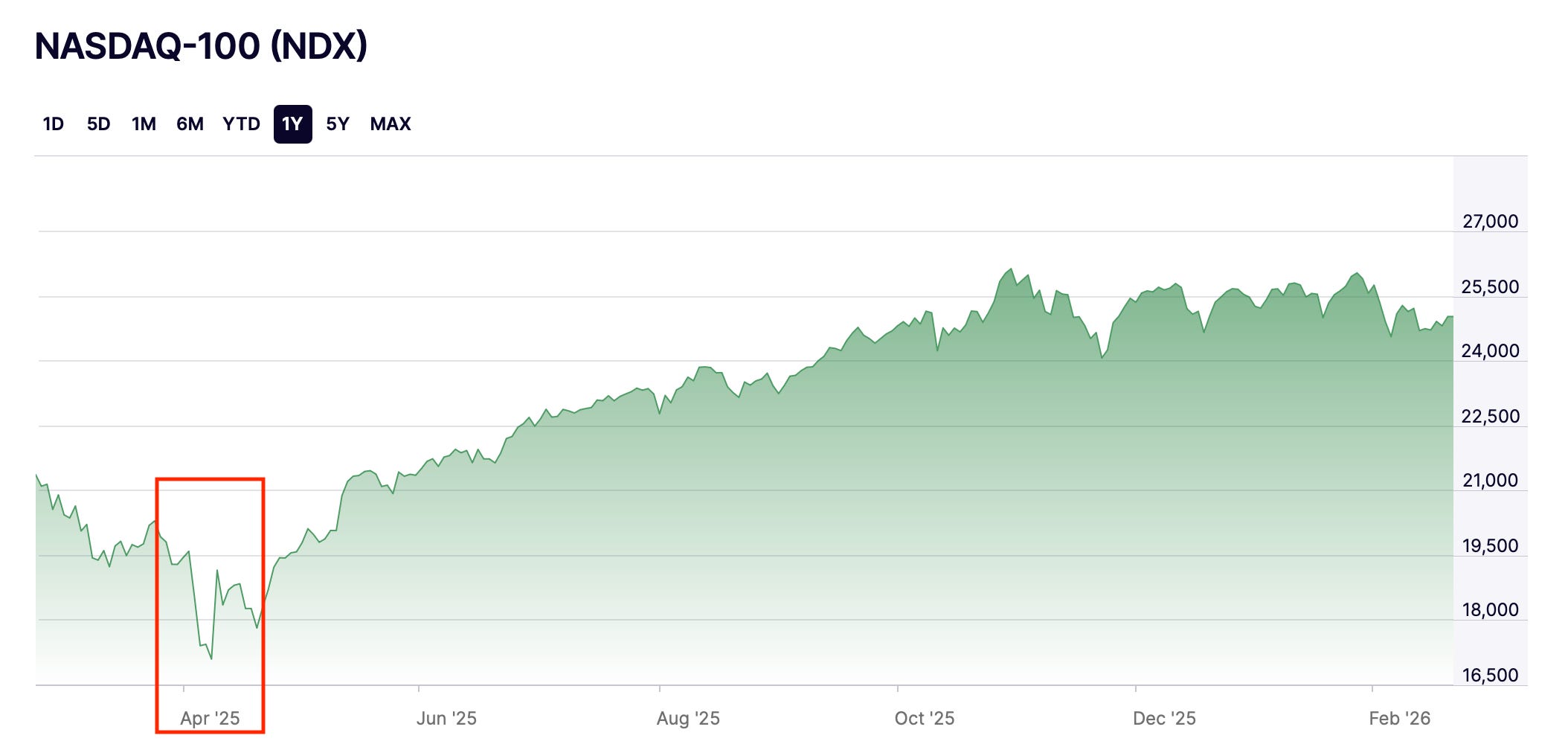
Following the Liberation Day announcement, Trump announced on April 9th that there would be a 90-day delay in implementing the tariffs to allow for negotiations. This was also seemingly intended to allow markets to ease and prepare for the reality of the tariffs.
The 90-day delay allowed the United States to negotiate revised trade agreements with countries such as the United Kingdom, China, and Vietnam. But before the 90-day pause had ended, Trump extended it by a month, ending it on August 1st, 2025.
90-Day Pause
Toward the end of the original 90-day period, the U.S. International Court of Trade ruled that Trump’s use of the International Emergency Economic Powers Act (IEEPA) to impose tariffs was unlawful. Trump appealed the decision to the Supreme Court, setting the stage for a major future ruling.
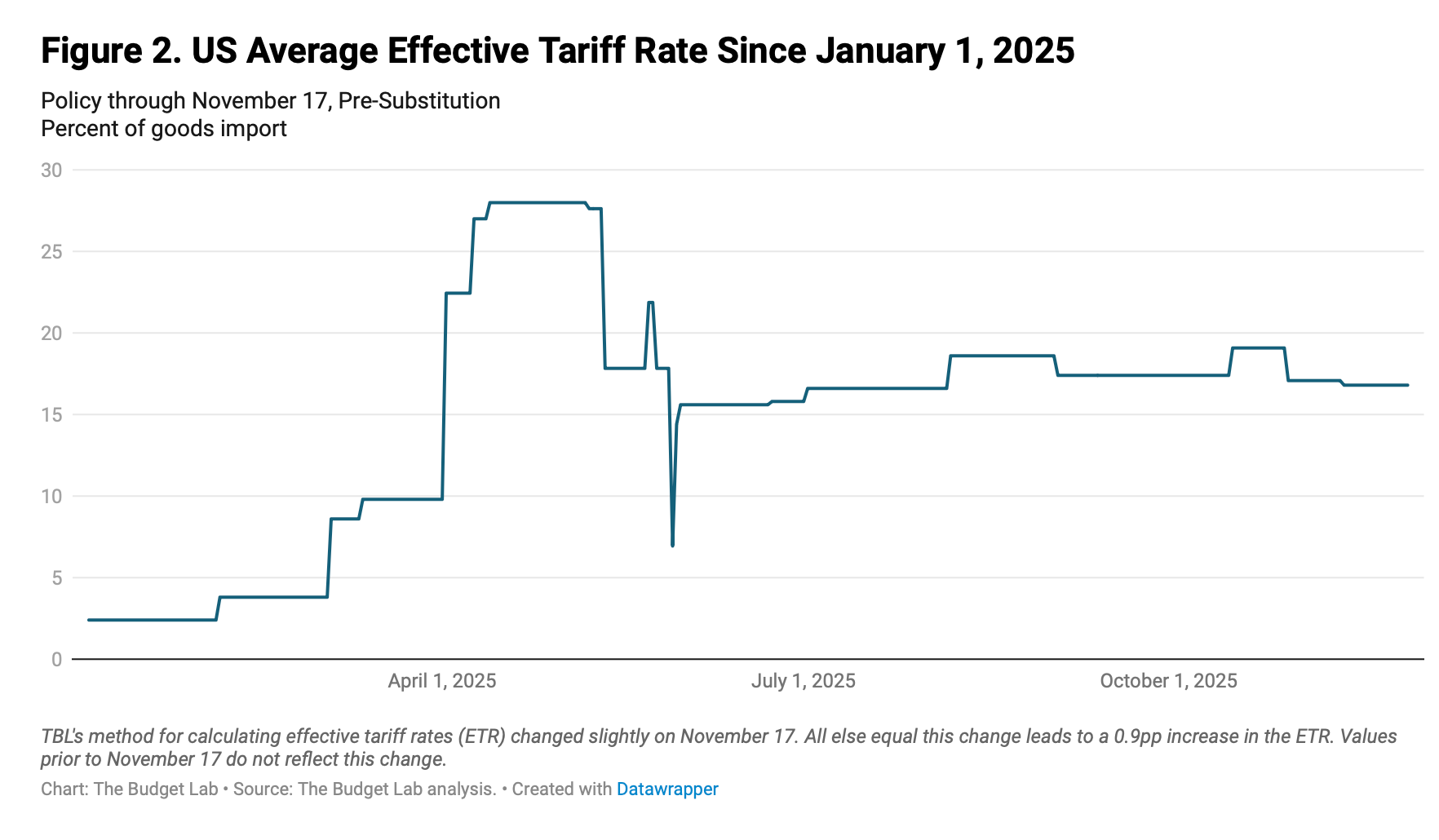
In the end, the tariffs were officially implemented on August 7, 2025. Their implementation pushed the U.S. average effective tariff rate to about 17% — the highest level since the Great Depression, according to a Yale Budget Lab. In practical terms, an average effective tariff rate of 17% means the government collects roughly $17 in tariffs for every $100 of imported goods.
From August 7, 2025, through February 20, 2026, Trump used tariffs as leverage in trade negotiations, making them a defining feature of his administration
Ruled Illegal
But on February 20th, 2026, the Supreme Court ruled that Trump’s use of IEEPA to implement some of his tariffs was unconstitutional. This does not mean the tariffs are gone or that Trump can no longer impose them, but it does somewhat check the President’s power to implement a massive tax without the consent of Congress. Trump will have to find a new law to implement the tariffs under, or seek congressional approval. However, Congress is unlikely to vote for tariffs.
Economic Impact - What Have The Trump Tariffs Done?
It’s been 10 months since the Trump tariffs were officially implemented, so what has actually come of them?
When Trump took office, he promised to restore the American economy and used tariffs to meet that objective. According to the Tax Foundation, the problem is that historically tariffs have been shown to “raise prices and reduce available quantities of goods and services to U.S. consumers.”
We are now 10 months into the tariff policy, and we have studies examining its impact on the economy.
NY Fed Study:
The Federal Reserve Bank of New York recently announced findings that consumers have absorbed 90% of the economic burden of the tariffs since their implementation.
The findings
Kevin Hassett, the National Economic Council Director, criticized the study and said it was “the worst paper I’ve ever seen in the history of the Federal Reserve System.” A bold statement, but he continues by stating that the study fails to account for the positives that have come with the tariffs–wage increases, increased domestic production, and reduced inflation. Whether the tariffs have left consumers in a better position is up for debate, but the questions and uncertainties continue to pile up.
Trade Deficit Numbers:
Attacking the trade deficit was a key objective of the tariffs, so have they done this?
The total trade deficit in January 2025 was approximately $901.5 billion, a figure Trump said urgently needed to be addressed. Stating that America was being “taken advantage of” in the global markets.
A year into the Trump administration, the total trade deficit is now at $901 billion. At first glance, it would seem that the tariffs are not having the impact they were thought to have. That said, tariffs are a long-term policy, and it may still take time to see the positive effects. For tariffs to “work”, production of items we import would have to be established here in the U.S. More importantly, our exports would at least need to remain the same and hopefully increase. That means other countries would not retaliate against U.S made products.
Inflation and GDP Growth:
Inflation
Inflation has fallen over the first year of Trump’s second term, but it still remains above the 2% benchmark set by the Federal Reserve.
In 2025, inflation was about 2.6-2.7%, depending on whether you use PCE or CPI data.
Prices of imported goods rose faster than in prior years in 2025. A major estimate says that the tariff changes accounted for 0.6% increase in price levels in the short run. So, 2025 inflation might have been roughly 0.3-0.6 percentage points lower absent the tariffs.
GDP
Trump touts GDP growth as a sign of the strength of the U.S economy. However, Real GDP growth has been volatile. In the second quarter, GDP increased by 3.8%; in the third quarter, it increased by 4.3%; and the latest estimate indicates it grew by only 1.4% in the fourth quarter.
Tax Revenue
The tariffs have brought in substantial tax revenue for the country. Estimates suggest the Trump tariffs have raised about $264 billion in revenue. Some estimates go as far as to say that the tariffs will bring in about $635 billion in the next decade.
As a tax, tariffs generate revenue, but the question remains whether that revenue offsets the negative effects on consumers, businesses, and the overall economy.
The Bottom Line
With the current state of the U.S. economy, there are still so many questions to behold, and frankly, it’s hard to figure out what’s coming next.
The Trump tariff policy has ushered in a new age of economic reform for the United States. It seems like every day the tariff policy is changing, making it increasingly difficult to predict markets and find stability. Uncertainty affects economic growth and hinders planning.
Here is what has happened so far tariffs have:
Raised revenue ✔
Increased prices ✔
Failed (so far) to reduce the trade deficit ✖
Reduced GDP growth modestly ✖
Increased uncertainty ✔
The Trump tariffs have not achieved the administration's stated goals. The administration urges patients, as tariffs are supposed to urge firms to reshore, and that process takes longer to come to fruition.
Can the U.S. economy wait any longer in hopes that businesses will change their behavior, and will Americans be willing to pay higher prices for more expensively produced American products? These are questions that must be addressed.

The uncertainty is the biggest drag. Tariffs are a tool that can be used as part of a broader strategy. Take the push to onshore chips manufacturing during the previous administration — tariffs were used (with greater precision) along with subsidies and other incentives.
Broadly applying tariffs has created plenty of uncertainty over the past year that we’re seeing show up in capital investment and overall employment data. Businesses don’t like uncertainty and have shown that they’re not keen on a single person wielding tariff authority that gets announced on social media in overnight posting sprees.
Great work Jonathan. Ironic that the policy worsened stuff he promised to improve. Kevin also failed to mention the many business that had to close operations because of being priced out of the market. You did a great job putting this together. The topic is very complicated and we have not sen the end of it. See you in 6 to 12 months for rounds 2 I bet.