


Jacob, one of our long-time readers from Miami University, recently asked me a thoughtful question:
“Dr. A, how viable do you see Zohran Mamdani’s policy proposals to be? What would rent freezes, free buses, and an increase in minimum wage do to taxes and city budgets?”
First, I love audience questions. Please continue to send those in. Second, it’s a fair and timely question. And it allows me to discuss Mamdani from two angles: what I’ve learned from his political style and where I stand on the economic basis of his policies.
This newsletter isn’t about taking sides. It’s about understanding what Mamdani represents, what he gets right, what I question, and what we can all learn from how he communicates, campaigns, and challenges the status quo. Honest conversations about politics, economics, and leadership should always be welcomed.
I will cover the political aspects, then the economic aspects.
The Lesson: Be Yourself, Loudly
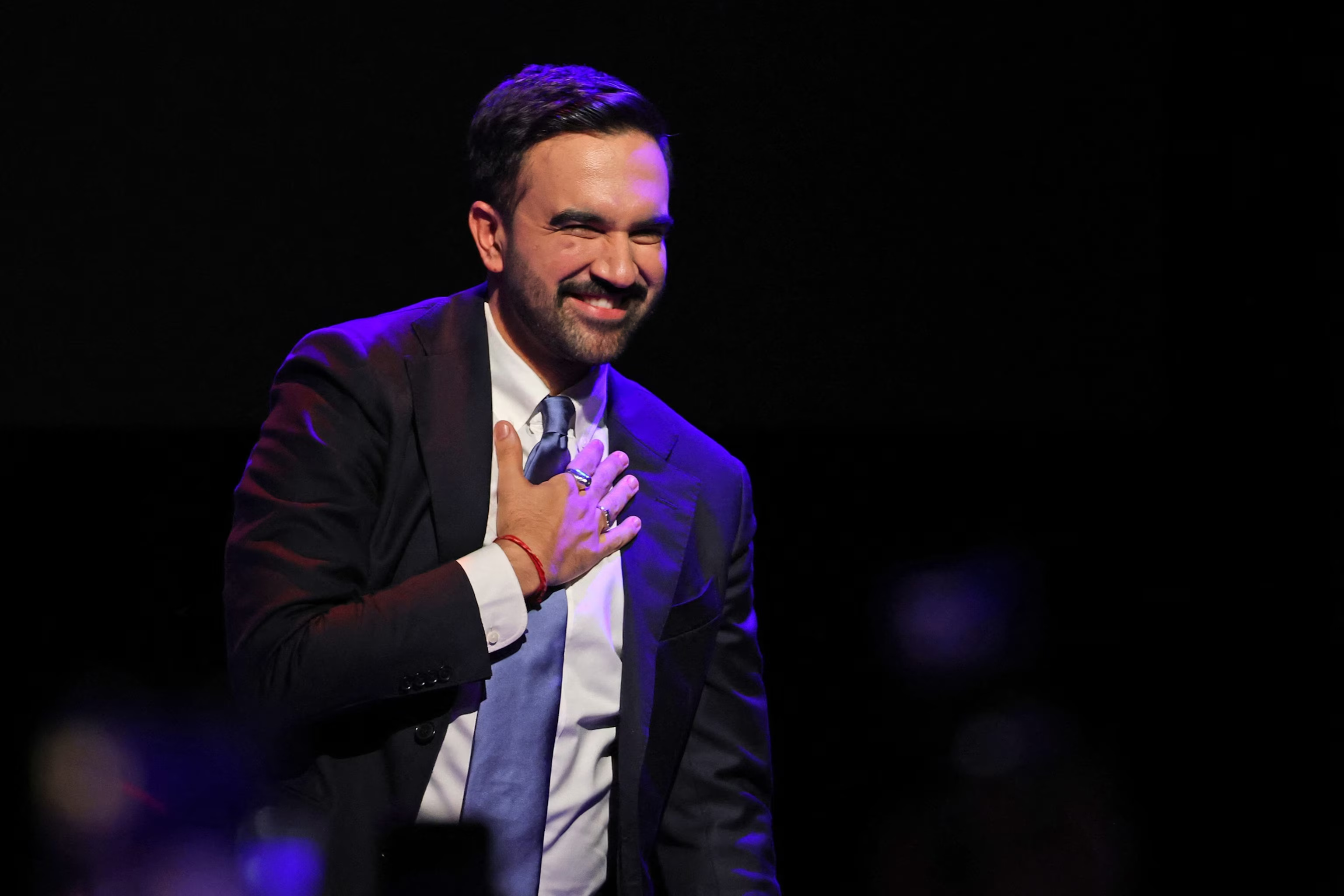
Before I ever thought about Mamdani’s policies, I noticed how he approaches people. Whether you agree with him politically or not, there’s something undeniable about his presence: he is unapologetically himself.
What impressed me wasn’t that he didn’t look like a “typical” politician, it’s that he never tried to.
His campaign leaned into art, music, poetry, comedy, and cultural storytelling. It felt authentic, not curated. He didn’t speak to people so much as speak as one of them. And in doing so, he expanded the group of people who feel seen and represented in politics.
The lesson I took from him is simple:
Your conviction is your compass, and your story is your asset. Own it!
Agree with him or not, Mamdani broadened the imagination of what a political campaign can look like.
What I Also Admire: Disagreeing Respectfully
There’s another part of Mamdani’s style that I’ve come to appreciate deeply: he disagrees without dismissing.
Some critics have compared his partisanship to that of Donald Trump; after all, both are “themselves loudly.” However, the comparison falls apart when examining how Mamdani handles disagreement.
Where Trump treats disagreement as disloyalty, Mamdani views it as a natural part of democracy.
He acknowledges that other perspectives exist.
He doesn’t assume bad intentions.
And even when he’s forceful, he’s rarely disrespectful.
In that sense, Mamdani reminds me more of John McCain than anyone else: firm in his convictions, but willing to look someone in the eye and say, “I see where you’re coming from.”
You don’t have to agree with him to appreciate that approach. And in today’s political climate, where outrage is a strategy and disrespect is often rewarded, his ability to stay grounded while holding strong views is a refreshing deviation from the norm. Personally, I long for the days when political disagreement didn’t dehumanize the other side.
The Code-Switching Penalty — And Why Mamdani Navigates It Well
There’s another layer to Mamdani’s presence that often goes unspoken, but is deeply familiar to anyone who grew up as an immigrant or a minority in America: code-switching.
Code-switching is the way we adjust our language, tone, expressions, references, and even our posture when we move between different cultural spaces. It’s not new. It’s not rare. And for many of us, it’s not optional.
I do it. Most minorities I know do it. It’s a survival mechanism long before it ever becomes a communication skill.
We see examples of the code-switching penalty everywhere:
Kamala Harris was mocked for adjusting her tone in different spaces. Her credibility was questioned because of her code-switching.
Key & Peele brilliantly captured the difference in how President Obama interacted with Black guests versus white guests.
Every day, professionals navigate it quietly in classrooms, boardrooms, and offices, often carrying themselves differently depending on the room.
Some people see code-switching as being “inauthentic.” But for many immigrants and minorities, it’s the opposite: it’s a way to belong without having to shrink who you are.
What stands out about Mamdani is not that he avoids code-switching; it’s that he does it well. He moves between immigrant families, transit activists, artists, donors, and formal political audiences, adjusting his language without ever abandoning his identity. He adapts to the room, but never erases where he comes from.
That balance is rare. And it’s part of what makes his authenticity feel earned rather than performed.
Ok, let’s talk econ…
The Economics: Where I Agree, Where I Diverge
Mamdani’s economic worldview is heavily influenced by government intervention. Mine leans more market-oriented. We meet in some places and diverge in others.
Where I Disagree: Rent Freezes
Rent freezes and strict rent controls sound appealing, but economically, they treat the symptom, not the underlying problem.
They can temporarily slow price increases, but long-term they:
Reduce new housing supply
Discourage building maintenance and upgrades
Push developers out of the rental market
If your goal is affordability, restricting prices without expanding supply never works in the long run. On this issue, I lean more market-based: You fix housing with more housing. Period.
Where We Meet in the Middle
Even though I don’t support rent freezes, Mamdani highlights something many economists agree on but policymakers often overlook: public infrastructure reduces private costs.
Reliable transit, safe streets, public amenities, these aren’t luxuries. They’re economic inputs.
The government doesn’t need to build every apartment; it needs to build the systems that make new construction feasible. That includes buses, subways, walkability, sanitation, and public safety.
In my work with economic development organizations, one thing has become clear: companies are drawn to places where their employees can live comfortably and get to work easily. Parks, reliable public transportation, and walkable neighborhoods are not just amenities; they are essential components of a thriving community. They function as economic infrastructure.
These kinds of investments help attract new businesses, retain talent, and strengthen local labor markets. That is why I see them as investments rather than government giveaways. I wish private companies would build parks or transit systems, but they rarely do because they have no financial incentive to do so. When something is essential for a community’s well-being but unprofitable for private firms, it becomes the government’s role to step in and fill the gap.
And here is one area where Mamdani gets the economics right:
Policing and Social Services
Mamdani argues that police should focus on crime-related work, while trained social service providers should handle mental health crises, homelessness, and addiction.
This is not a radical idea. It is simply efficient. Police are highly trained and expensive labor, and their expertise is in responding to crime. Social workers, on the other hand, are trained to address the underlying social and behavioral issues that often show up as crises. When each group focuses on what it does best, communities achieve better outcomes.
Mental health challenges, homelessness, and addiction are not crimes. As a society, we need to stop treating them as if they are. I also recognize that when these issues go untreated, they can increase the likelihood of crime. That is precisely why early support matters. Providing people with the services they need is not only humane, it is a practical way to reduce crime in the long run.
Let people do the work they are trained for. It’s more cost-effective and produces better outcomes for communities.
The Percentage Problem: What Mamdani’s Tax Proposal Teaches Us
One part of Mamdani’s platform caught my attention not because of ideology, but because of a data communication error that has spread across headlines.
He has proposed raising New York’s tax rate on incomes over $1 million from 3.9% to 5.9%.
Many commentators described this as: “a 2% tax increase on millionaires.”
It sounds tiny, almost nothing. And it’s wrong.
This is a textbook example of confusing percentage points with percent changes.
The Tax Debate: Getting the Numbers Right
1. A two percentage point increase
Because the rate goes from 3.9% to 5.9%.
2. A 51% increase in the tax rate
Because the growth relative to the starting rate is
(5.9 – 3.9) ÷ 3.9 = 0.51.
Both are mathematically correct.
Neither means “2% increase.”
This matters because the way we communicate numbers shapes how people understand policies. A 51% increase feels very different from “2%,” and voters deserve clarity.
This tax proposal offers a broader lesson: Economic communication matters just as much as economic analysis. And how we present data shapes the policies we get.
My Own View on Taxes
Public goods need funding. If we want more infrastructure, stronger social services, and safer streets, somebody has to pay for them. You can’t support airports and be against the taxes that build them. If you do not want to pay taxes, you are essentially asking to defund the services you may need.
One way or another, we will pay.
At the same time, taxes do influence behavior. People and businesses make decisions based on their after-tax return. Whether millionaires will actually leave New York is debatable, but the possibility isn’t irrelevant. Still, absent other revenue sources, the old saying holds:
Taxes are what we pay for a civilized society.
If you love New York and the opportunities it provides, then you have to help pay for the amenities that make the city what it is. This is especially true if you built your success on the back of New York’s infrastructure, talent, and markets. If the city had large alternative revenue sources, higher taxes would not be necessary. But it doesn’t. So New York has to think carefully about its income, its tax base, and what level of contribution is fair. The conversation about what to tax, how much to tax, and how to do it equitably is not only reasonable but essential for the city’s future.
The Bottom Line
Zohran Mamdani and I don’t occupy the same place on the economic policy spectrum. I’m more skeptical of heavy government intervention in markets, particularly in the housing sector. Also, I am not a fan of price "freezes”. However, I also value the way he pushes the government to step into roles that the private sector won’t, or can’t.
More importantly, Mamdani taught me a lesson that transcends policy:
Leading with authenticity builds trust. And our institutions are stronger when more people see themselves reflected in them.
We don’t have to share the same economic philosophy to learn from someone’s courage in showing up as themselves and fighting for what they believe. If you have a different view, make your voice heard by running for office and let the market (democracy) decide what it wants.
What do you think of Mamdani’s approach—politically or economically? I’d love to hear your thoughts.
I will limit my comment to one issue. The idea that the price of housing is based solely on supply and demand for housing is too narrow. If you look closely at the cities in the US that choose rent control -- New York City, San Francisco, Los Angeles, Washington, D.C. -- you can see an important pattern that affects the textbook model: there are there not easy options for increased supply. In L.A., it is clear that the main constraint is zoning and regulations that limit land use to single-family homes; in Washington, DC this is also true, starting with the federal Height Act; San Francisco is built on a narrow peninsula, and has strict zoning laws. New York has low land availability -- it is built on an island, as well as having zoning and permitting constraints. Chicago does not have rent control -- rents have been allowed to rise so long as tenants are informed. This has not led to lower rents, or even to increased housing -- in fact there has been a decline, due to a combination of factors -- a shift away from smaller buildings, rising rents, even as demand from lower-income renters has increased, according to the Institute for Housing Studies at DePaul University. This means that merely strengthening or suspending rent control is not enough intervention to increase the supply of housing -- especially the kind of low rent housing that is in most need in all of these cities. There would need to be a LONG-TERM regulatory commitment to policies, such as allowing taller buildings, making permits less onerous, enabling rents that reward investment -- but also -- in part because of constrained land availability -- there would need to be regulatory encouragement of lower-cost housing, such as for example requiring low-cost housing be included in every approved development. In addition, it would be beneficial for the ability of the city to house low-income workers that there be subsidized low-cost housing -- NOT the kind of ugly apartment blocks that marred cities and residents in the 70s, but integrated housing for all incomes with subsidized apartments for the people who wait on tables, haul trash and drive buses -- vital urban infrastructure.
I heard a good quote from Inside Economics last week that mirrors some of Mamdani's most prominent policies. He's proposed demand-side solutions for supply-side problems.