



A recent Washington Post article reported that Brown University received 50,000 applications for 1,700 first-year slots. Female applicants outnumbered male applicants by 2:1; men were admitted at 7% and women at 4.4%.
From the outside, it appears that males received preferential treatment, but this was due to enrollment management. For decades, colleges quietly adjusted acceptance rates to maintain gender balance on campus.
Now that practice is under threat.
Federal actions banning DEI in admissions aren’t limited to race. They explicitly discourage considering gender as well. And that means a group that once benefited from unspoken preferential treatment, male applicants, may be the ones most harmed by the shift.
The Economics
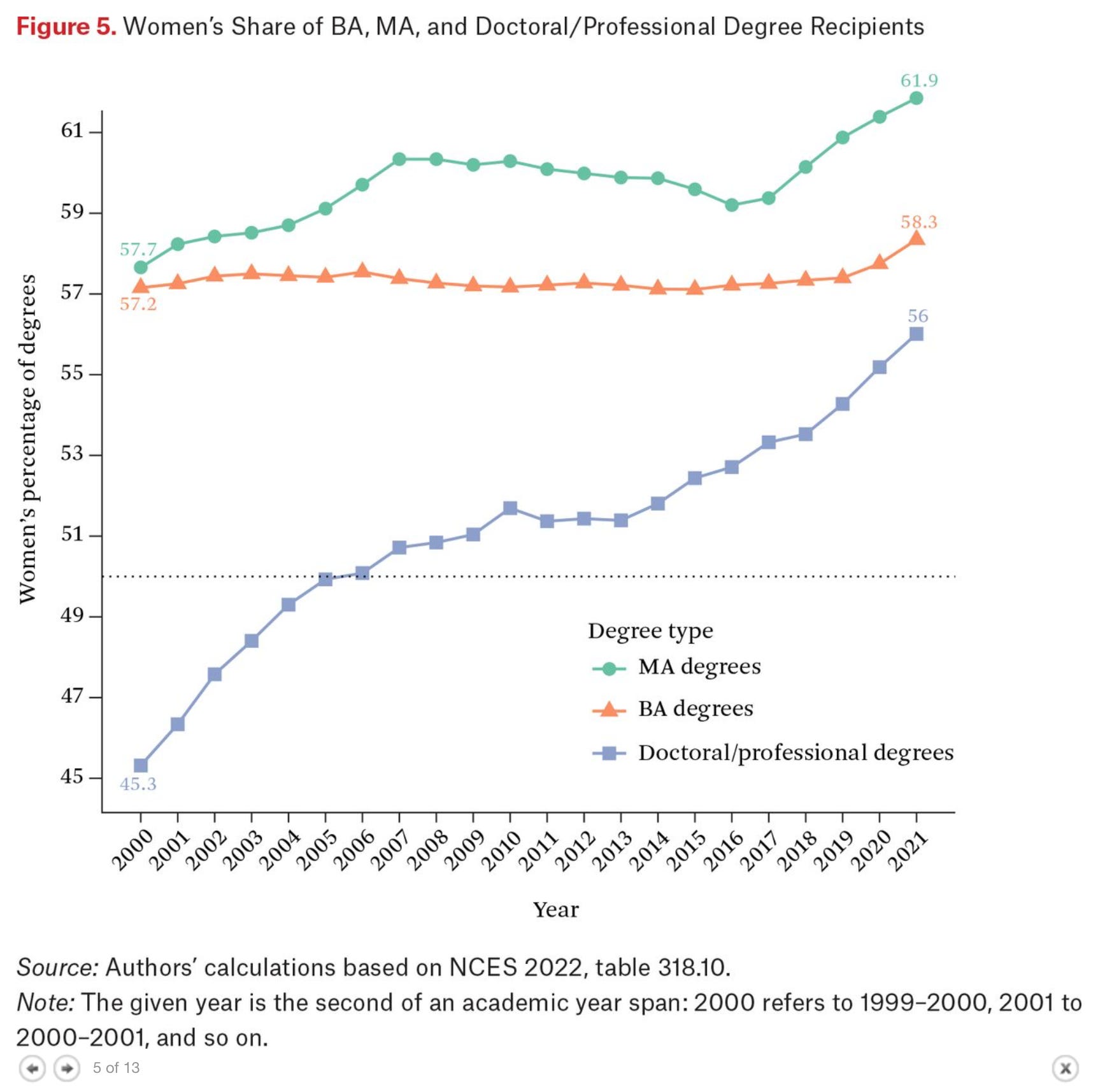
Here is the underlying tension: Men apply to college at much lower rates, and when they do, they tend to be less academically prepared than women.
Colleges compensated for this by admitting men at higher rates to avoid campuses becoming overwhelmingly female. But with DEI bans restricting the use of demographic factors, including gender, those compensatory practices are disappearing.
What the data shows
Insight into Academia reports that Women now outpace men in college completion rates. A 2024 Pew Research Center analysis finds that 37% of men aged 25 to 34 hold bachelor’s degrees or higher, compared to 47% for women. This gap has been increasing for the past four decades.
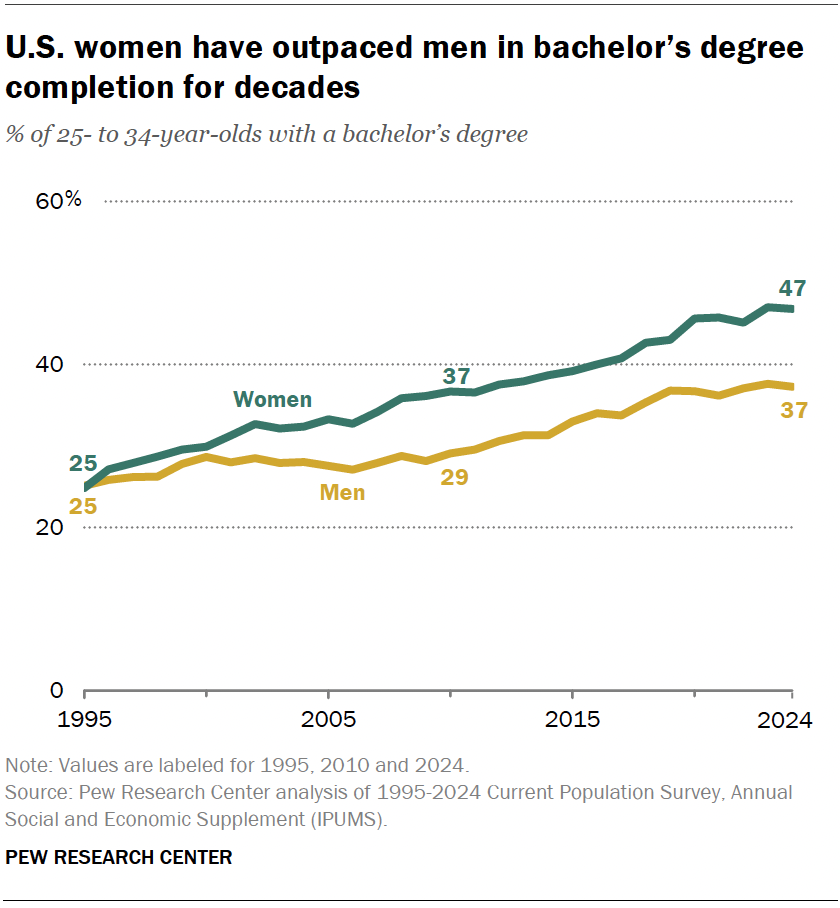
This shift has led to a growing concern among educators and policymakers who fear the gender imbalance could have lasting social and economic effects. The DEI ban will only exacerbate this trend.
Removing demographic levers doesn’t level the playing field; it exposes the structural disadvantages facing male students in the college pipeline.
What the DEI Ban Changes
Efforts to maintain gender balance were legal because federal anti-discrimination law blocked the use of race, but not gender. This allowed schools to admit men at higher rates even when women had stronger academic profiles.
But the Trump administration’s DEI guidance changed the landscape. It discourages the use of both race and gender in hiring and admissions decisions. Admissions officers have clearly interpreted the message: gender balancing is no longer protected.
As The Hechinger Report notes, men, never the intended target, have become an unexpected casualty of the crackdown.
The Bottom Line
There is another question we need to investigate: why do men apply at lower rates, and why are they academically unprepared when they do apply? But that is not this post. If you have ideas, please share them in the comments.
The DEI ban will not only affect racial representation on campus but also gender diversity. And because male students, statistically, enter the system with lower grades, lower test scores, higher absenteeism, and lower graduation rates, they are the group most exposed when demographic factors are removed.
Expect to see:
More campuses trending 70% female
Fewer male applicants overall, eventually
Larger gaps in graduation rates
Increased pressure on K–12 systems to address male underperformance long before senior year
In addition to it being a higher education issue, it’s also a workforce pipeline issue. The U.S. economy needs talent, and boys are falling behind at every stage of the education ladder. It is also a social issue, as it may affect marriage, fertility, and wealth-building, among many other social outcomes.
Further Reading
From Amazon
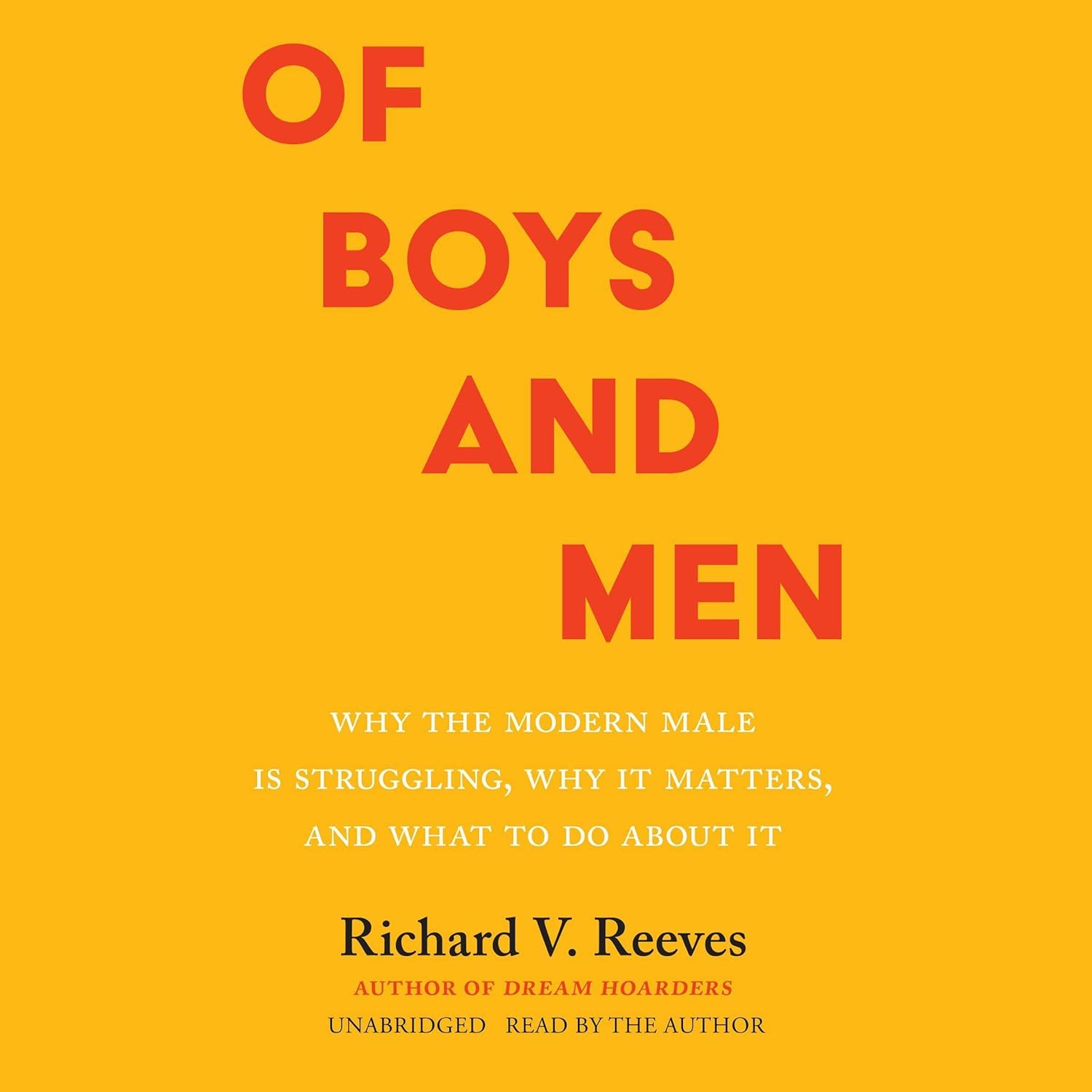
Of Boys and Men: Why the Modern Male Is Struggling, Why It Matters, and What to Do About It
A positive vision for masculinity in a postfeminist world
Boys and men are struggling. Profound economic and social changes of recent decades have many losing ground in the classroom, the workplace, and in the family. While the lives of women have changed, the lives of many men have remained the same or even worsened.
Our attitudes, our institutions, and our laws have failed to keep up. Conservative and progressive politicians, mired in their own ideological warfare, fail to provide thoughtful solutions.
The father of three sons, a journalist, and a Brookings Institution scholar, Richard V. Reeves has spent twenty-five years worrying about boys both at home and work. His new book, Of Boys and Men, tackles the complex and urgent crisis of boyhood and manhood.
Reeves looks at the structural challenges that face boys and men and offers fresh and innovative solutions that turn the page on the corrosive narrative that plagues this issue. Of Boys and Men argues that helping the other half of society does not mean giving up on the ideal of gender equality.
Cuppla things... One is that it is disproportionately White men who are applying to higher education in smaller numbers -- part of it is the ideological issue that has seen White men generally in the US more likely to vote for Mr Trump and MAGA -- they see higher ed as being "against them", when part of the change is the catch-up of students of color -- not being discriminated IN FAVOR, so much as no longer being discriminated AGAINST (as much), which of course was the entire point of DEI -- white men as a group, and MAGA in particular, still do not understand that.
What I have read suggests that the large increase in women in higher education to a great extent simply has to do with the fact that the fields of employment that have grown the most over the last, say, 30 years, are ones which disproportionately employ women. Healthcare and personal care, which are more likely to employ women, are expected to grow about 17% between 2024 and 2034. IT jobs also saw a large increase, but it is not nearly as people-dense -- and the effect of AI on this field is at this moment unclear.
Here is an article on employment by gender published by the American Institute of Boys and Men: https://aibm.org/research/jobs-by-gender/#:~:text=%E2%80%9CManagement%20in%20Business%2C%20Science%20and,%E2%80%9CThe%20HEAL%20Economy%E2%80%9D). -- I notice that Melinda French Gates was a prominent donor in 2024.
The opportunity cost of attending college is likely higher for men who tend to have more opportunities in blue collar fields. If men view college as one option, but not the only option, it seems reasonable they might invest less time preparing for college, too.