


A post by Antowan Batts
Every January, the world’s most powerful people travel to Davos, Switzerland for the World Economic Forum. This year’s theme was “A Spirit of Dialogue.” The message: let’s cooperate, listen, and build a better global economy together.
But many cultural and indigenous leaders were not invited.
That gap is not a small oversight. It cuts to the heart of stakeholder capitalism, the idea that businesses and institutions should serve employees, communities, and society, not just shareholders. Davos was built to champion that idea. Yet it routinely excludes the very people it claims to center.
The good news is that you do not have to make the same choice. But getting it right requires understanding what inclusion actually looks like.
From a Swiss Ski Town to the Center of Global Power

To understand what Davos is supposed to be, you must understand the man who built it. Klaus Schwab was born in Germany in 1938. He was trained as an engineer, he eventually earned a doctorate in economics from the University of Fribourg, and he eventually found himself studying at Harvard under Henry Kissinger. The combination of technical precision, economic theory, and realpolitik shaped everything he would go on to build.
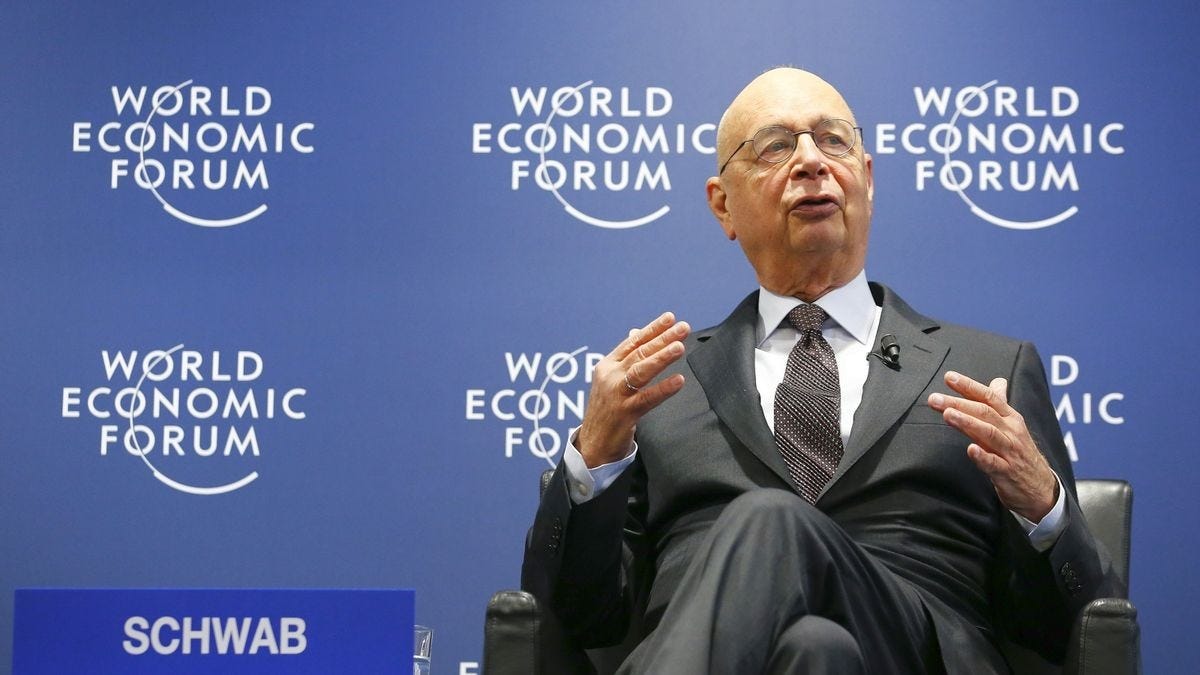
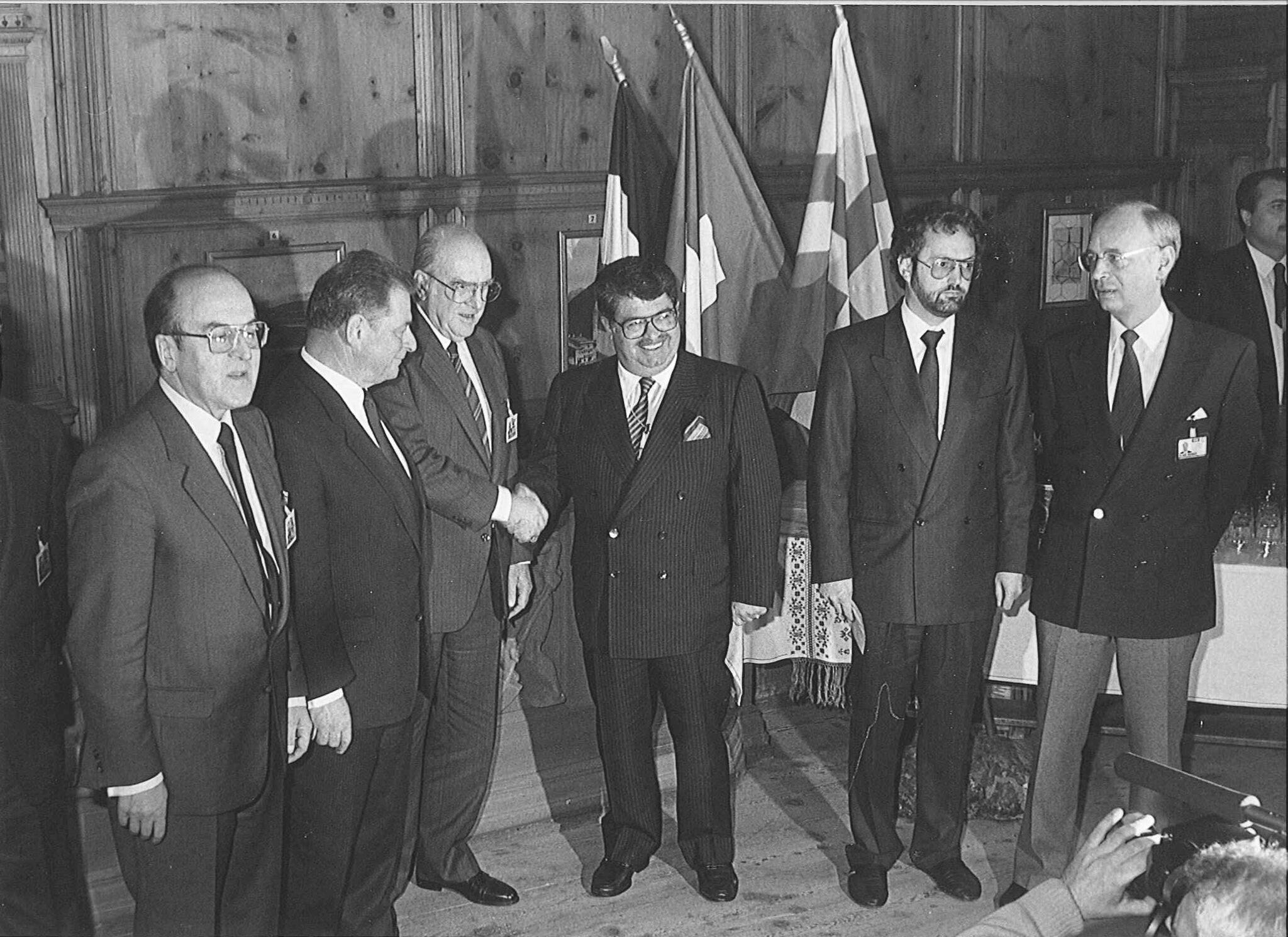
In 1971, Schwab founded what he called the European Management Forum. The core idea was simple: companies have an obligation not just to shareholders, but to every stakeholder in their orbit, including employees, suppliers, communities, and society at large. To advance that idea, he needed a platform. He chose Davos, a quiet Alpine town known for its ski slopes, and invited over 400 business and academic leaders to convene.
Nobody was sure anyone would show up.
Over the following decades, the European Management Forum became the World Economic Forum, and Davos became shorthand for global power. Heads of state, central bankers, CEOs of the world’s largest corporations, and Nobel laureates all make the pilgrimage to the Swiss Alps each January. By the time Schwab published Stakeholder Capitalism in 2021, the idea he had championed for fifty years had gone fully mainstream. The U.S. Business Roundtable formally endorsed it in 2019. ESG metrics spread across boardrooms. The language of stakeholder inclusion was everywhere.
And yet here is the central irony: the institution built to champion stakeholder inclusion became one of the most exclusive gatherings on earth. The price of admission, literally and figuratively, filters out the very voices the framework claims to center. Schwab retired from the Forum in 2025, but the tension he never resolved remains. You cannot solve exclusion from within a structure that depends on it.
So What Actually Is Stakeholder Capitalism?
At its core, stakeholder capitalism is a rejection of one simple idea: that a business exists only to make money for its owners. Economist Milton Friedman made that case most famously in 1970, arguing that a company’s sole social responsibility is to increase its profits. For decades, that thinking dominated how corporations made decisions, allocated resources, and measured success.
Stakeholder capitalism pushes back on that idea. It argues that a company sits at the center of a web of relationships, employees, customers, suppliers, communities, and the environment. The health of those relationships determines the long-term health of the business. Ignore your workers, and your talent dries up or their productivity falls. Damage your community, and local support dries up. Strip the environment without restraint, and you eventually destroy the inputs your business depends on. The argument is not purely moral, though the moral case exists. It is also practical.
The model has four key players: governments, civil society, private companies, and the international community. No one operates in isolation. When any one of them serves only their narrow interests, the system begins to suffer. Durable prosperity requires all four working together, with accountability flowing in multiple directions, not just up to a board or down to a quarterly earnings report.
It sounds reasonable. The problem, as Davos illustrates year after year, is the gap between theory and practice.
What Genuine Stakeholder Inclusion Actually Looks Like
If you run a business, lead a team, or have any decision-making authority at all, here are some ways to leverage your stakeholders:
Map your actual stakeholders, not the convenient ones. Most companies list customers and investors and stop there. Go further. Who lives near your facilities? Who supplies your inputs and under what conditions? Which communities bear the cost of your decisions?
Create feedback channels. A survey that goes nowhere is not inclusion. It is theater, and we see a lot of that in the market. Stakeholders need channels that demonstrably influence decisions. That means putting community voices into planning processes before decisions are made, not after.
Pay people fairly and on time. This sounds basic because it is. Your employees are your most immediate stakeholders, and most businesses treat them as cost lines first and people second. No stakeholder framework survives that contradiction.
Be transparent about trade-offs. Stakeholder capitalism does not mean everyone gets everything they want. It means everyone understands the reasoning behind decisions that affect them. Transparency builds trust. Communication is key to building a strong community.
Hire for the communities you claim to serve. If your leadership table doesn't reflect your stakeholders, you aren’t leveraging them. In a world where DEI gets a bad reputation, you should be asking about stakeholder representation. It is a quality-control mechanism that keeps you from making decisions about people without those people in the room.
Measure what matters, not just what is easy. Revenue and margin are necessary metrics. They are not sufficient. Track employee retention, community investment, supplier health, and environmental impact with the same rigor you apply to your bottom line.
Choose to Be Better
Davos did not fail stakeholder capitalism. Davos revealed something about human nature that every organization eventually confronts: it is far easier to adopt the language of inclusion than to bear the cost. Genuine stakeholder capitalism requires giving something up, control, speed, and short-term margin in exchange for durability, trust, and legitimacy. Most institutions are not willing to make that trade.
The businesses that will define the next generation are not the ones that optimized hardest for shareholder return. They are the ones who figured out early that the community, the worker, the supplier, and the environment were never liabilities to be managed. They were the business. Treat them accordingly, and your business will thank you for it.

This is a well constructed argument Antowan...
Illusory Superiority ("I know better than you bias") distorts people's perception of their or others abililites. It's a close relative of Dunning-Kruger, separated by the actual ability level of the person making the judgement. (Dunning-Kruger assumes low-ability.)
Davos has become a cult of personality rather than a true forum for thought leadership.
*My example would be Ray Dalio. I've read all his material, twice given the density with which he includes math that requires note taking. There's a level of arrogance and ego at play, most would reference Chicken Little with his constant rhetoric about the market collapsing later that day. Yet he speaks at every forum and has been right on a every 10 years table. "Principles" was a collection of toxic workplace guidelines with such buy-in that the open mental health struggles of staff were vilified or laughed at.
Something that needs to be considered in this discussion is business schools, the disparities between what they purport to do and what they actually do -- especially at the elite level. Business schools purport to teach how to manage businesses. In my observation, they do what universities used to do before World War II and the GI Bill made them more egalitarian -- they are places where the scions of wealthy families mingle and form life-long relationships. I recently saw (and posted on FB) a video made by Elvira Bary, a Soviet-born US-based novelist and commentator of Russia, and lately the world -- consciously non-partisan. Bary talks about the Russian concept of "blat" -- connections, networks -- as something that is also found in the US. She talks about how we have misunderstood what Epstein was selling -- did not primarily sell sex, he primarily sold "blat" -- connections -- to the high elite of the United States and the UK. The A-listers in his "files" were people who wanted access at the highest level, which included an extraordinary number of top businessmen and politicians who have ended up at Davos. Bary's point is that the horror Americans have expressed is encouraging -- we ought to be horrified -- but what we need to understand most clearly is that such networks, which bypass and mock the ideals that the American elite promote in public, but mostly sidestep in practice, must be destroyed as symbols of power to mock the law and to laugh at actual merit -- all the cocktail parties and golf games and exclusive islands. It is not people we need to criticize, but the systems that enable such execrable people to maintain power.