



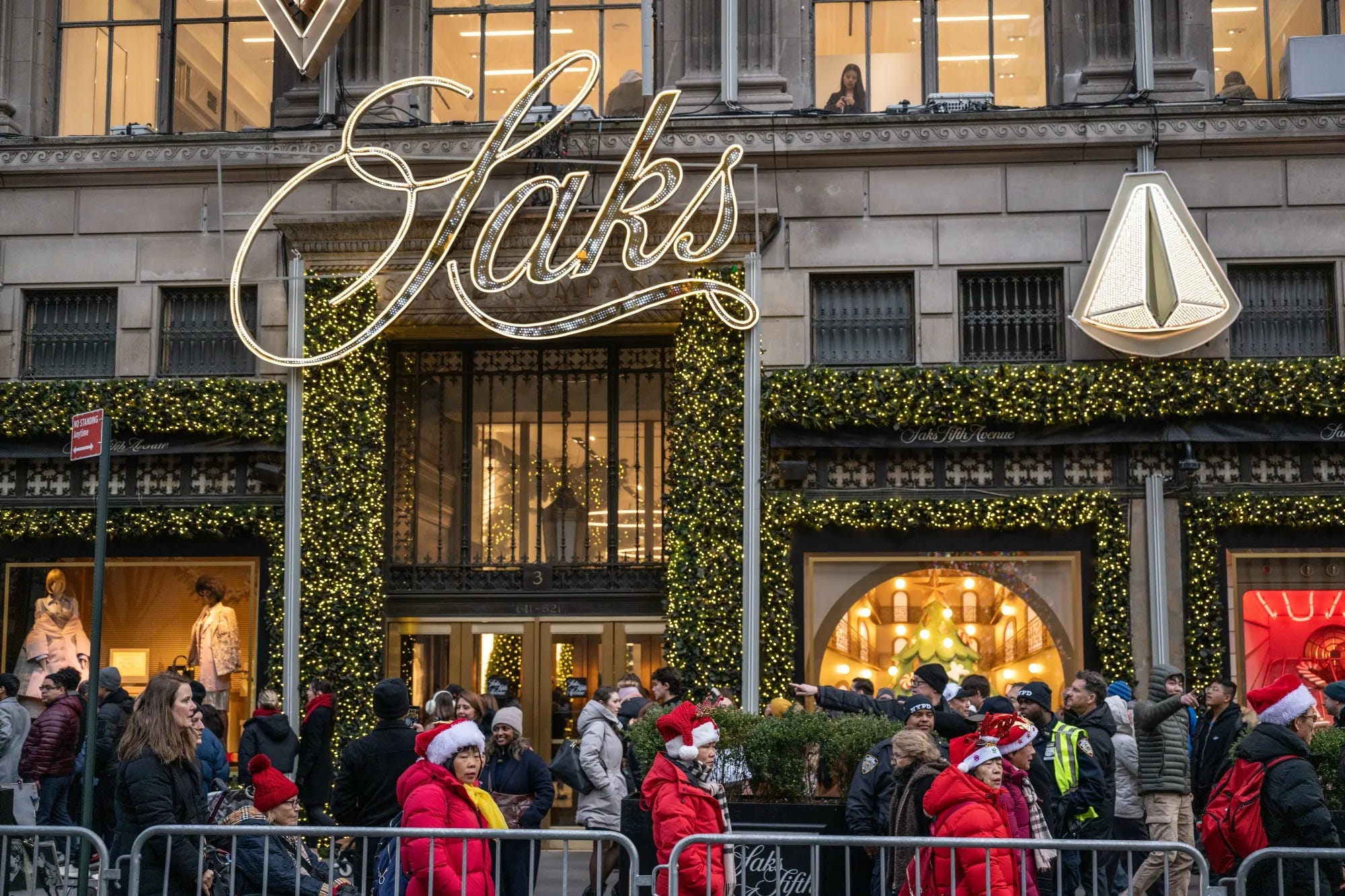
One of our favorite New York rituals is walking down Fifth Avenue. We always stop at Saks Fifth Avenue, not just to shop, but because it feels like New York luxury.
That’s why we were disappointed to hear that Saks Global, the parent company, filed for Chapter 11 bankruptcy in January 2026.
But this isn’t a story about luxury dying. It’s a story about how luxury is sold, taking on too much debt, and why the department store model is breaking down.
The Problem: Bankruptcy Without Collapse
Saks didn’t file for bankruptcy because shoppers stopped buying luxury goods. In fact, global luxury spending has begun to rebound after a weak 2024.
The problem was debt. In 2024, Saks Global acquired its competitor Neiman Marcus in a $2.7 billion deal financed largely with high-yield (junk) debt. That debt load quickly became suffocating.
To conserve cash, Saks stretched vendor payments. Brands responded by withholding inventory. Empty shelves followed. Something we noticed during my last visit in October. Other customers noticed too and left.
Bankruptcy, in this case, is not an ending. It’s an attempt to restructure to keep stores open while renegotiating debt and obligations.
The Economics: When the Middleman Loses Power
For decades, department stores were the gateway to luxury. If you wanted high-end fashion, you went through Saks, Neiman, or Bergdorf.
That role no longer exists. Luxury brands have learned they don’t need a middleman. Selling directly through their own boutiques and online channels means higher margins, better customer data, and tighter control over the brand experience.
As Jenna Rennert of Vogue put it,
“The Saks bankruptcy isn’t really about luxury declining. It’s about the department store model overall struggling,”
“Department stores really used to be the gateway to luxury, Today, they’re kind of the middleman that luxury brands no longer need.”
This explains why brands like Louis Vuitton and Hermès are performing well. Their stores are full. Their pricing power is intact. Their relationship with customers is direct.
Saks, meanwhile, is stuck in between, neither cheap nor truly exclusive, carrying massive fixed costs while competing with brands that control their own distribution.
The Bottom Line: This Isn’t About Taste—It’s About Structure
Saks’ bankruptcy is company-specific, but the lesson is structural.
Department stores are being squeezed from both sides:
Consumers prefer boutiques and online shopping.
Brands prefer selling directly to consumers.
Debt magnifies every mistake.
If you’re thinking about the broader economy, this story matters because it shows how business models, not just demand, determine who survives. Even iconic brands can stumble if they’re built for a world that no longer exists.
The takeaway: When the middleman stops adding value, the market moves on. Always think about the business model and how it needs to adjust to market dynamics. This is another reason why we argue that Entrepreneurship and Economic education work well together. But we might be biased!

I subscribe because of your bias!
So sad to hear about those department stores. We were there together last October. I will miss those iconic stores. They were special . You mentioned briefly the boutique stores . In a fashion post I read the Asians are no longer excited about buying those designer brands as they used to and started appreciating local made goods. I wonder what economists think ? I hope you will say something about it .