


I grew up in Kentucky, the center of the college basketball universe. I went to the University of Louisville for my undergraduate degree and to the University of Kentucky for my Ph.D. In Kentucky, March means basketball. For the next three weeks, everything revolves around March Madness.
It turns out I am not alone, and it is costing businesses real money.
Analysts estimate that March Madness costs the U.S. economy up to $20 billion in lost productivity each year. In a survey of 3,000 college basketball fans, 40% admitted to calling in sick just to watch a game. Workers stream games, fill out brackets, and check scores, all on company time.
So today, we are discussing what is actually going on here? And is it as bad as it sounds? and how to join our Bracket Challenge.
The Economics of Shirking
Economists call this behavior shirking. It happens when an employee puts in less effort or lower-quality work than agreed when they were hired. The result is reduced productivity, economic inefficiency, and increased costs.
Think of it this way. Your employer is paying for eight hours of focused work. If you spend two of those hours watching highlights and texting about your bracket, they are paying for something they are not getting. Multiply that across millions of workers, and you get a $20 billion problem.
One traditional solution is monitoring, and some firms go this route during March. HR Watchdog suggests restricting internet access, reinforcing workplace internet policies, and advising employees not to stream games without authorization.
“To help manage workplace distractions, employers can control employees’ Internet usage time and the ability to stream games to their work systems. They should also reinforce their policies on what’s acceptable and unacceptable for workplace Internet use. Encourage employees to turn off their phones and record their favorite teams’ games and advise them not to watch games live while at work — in office or otherwise — without authorization.”
The Economics of Employee Treatment
But monitoring has costs too. It takes time and resources to enforce. It can create resentment and lower morale. And, as it turns out, morale matters for productivity.
Shared experiences, like filling out a bracket with your coworkers, build social capital. That means stronger relationships, more trust, and better collaboration over time.
A firm that lets employees participate in March Madness and creates a bracket challenge might lose a few hours of output this week. But it could gain months of goodwill in return.
At Decode Econ, we are leaning in. We built a bracket challenge, and we want you to join us. What’s on the line? How about a Decode Econ Mug for the 1st- and 2nd-place winners?
Research on March Madness
Workplace productivity and managerial support issues associated with March Madness. [Link]
For my Miami University friends, Evidence of bias in the NCAA tournament selection and seeding. [Link]
Making an NCAA run helps universities improve peer assessments in the US News Ranking. NCAA March Madness and Academic Peer Rankings. [Link]
Use the NCAA style tournament to teach the History of Economic Thought. The Most Interesting Economist in History Using an NCAA-Style Tournament Assignment to Teach the History of Economic Thought. Journal of Economics Teaching [Link]
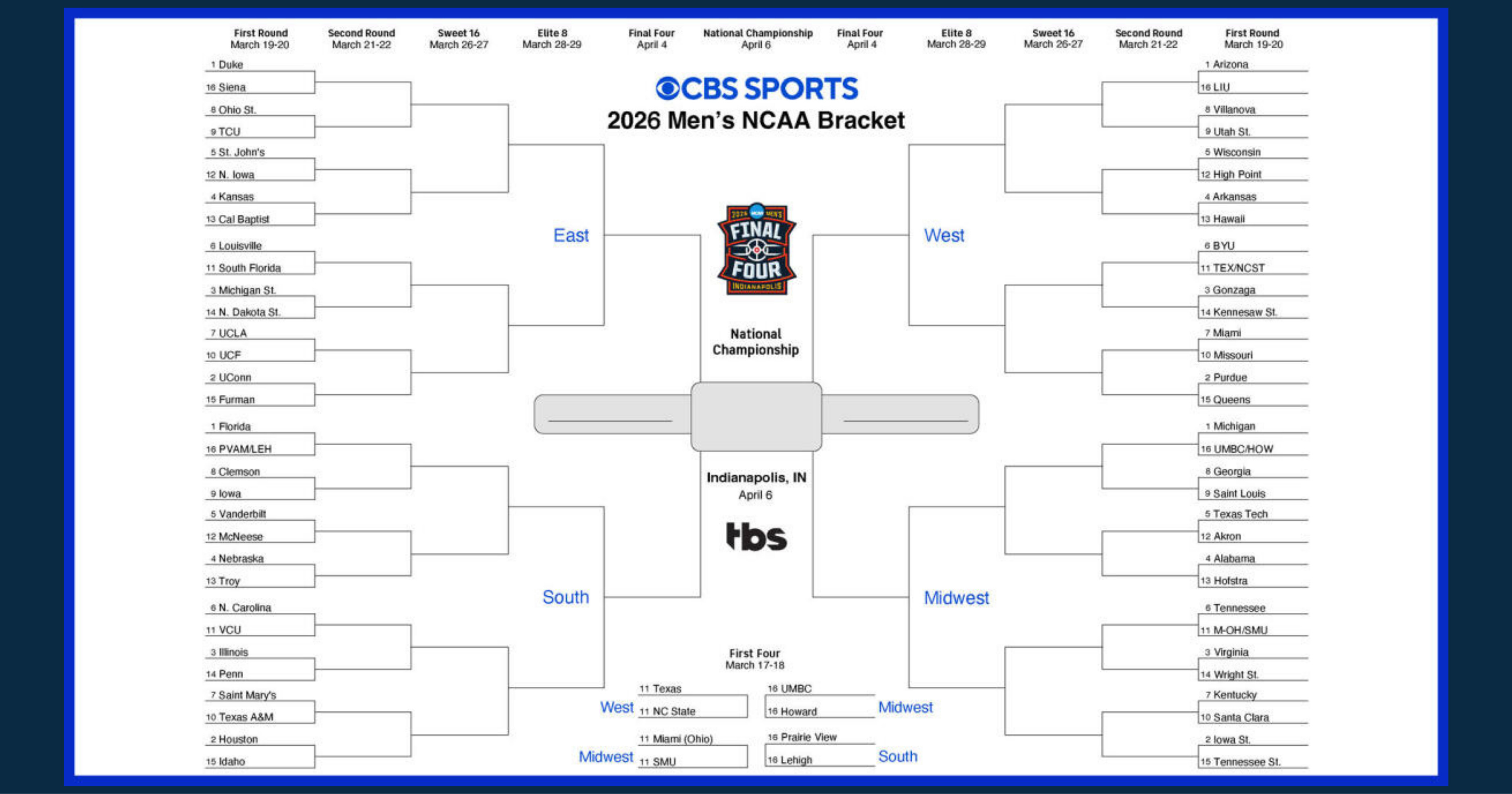
Toy Model Time!!!
Duke probablity of making it to Round of 8
Round of 64 against 16th ranked Sienna - 0.99
Round of 32 against 8/9 ranked "?" - 0.85
Sweet 16 against 4/5 ranked "?" - 0.75
P= 0.99*0.85*0.75 = 0.63
Louisville probability to round of 8
Round of 64 against 11th ranked USF - 0.65
Round of 32 against 3rd Seed Michigan St. - 0.40
Sweet Sixteen against 2nd Seed UConn - 0.30
P= 0.65*0.40*0.30 = 0.078
Final Probability
Duke v. Louisville = 0.63*0.078 = 0.04914
≈ 4.9% or a 1-in-20 chance!
MS from Duke... Go Blue Devils!!!
*Cost for me to go to Capital One Center in D.C.? Too much, I'll watch from home. ($400 a ticket for dual session on Thursday in the rafters.)
Interesting information. Even though I spent 3 years at the graduate school at the University of Louisville but never knew this.