


One of the quietest threats facing the U.S. economy right now is this: Americans are having fewer children than ever before. The fertility rate fell to another all-time low in 2024—just 1.599 children per woman—according to recent CDC data.
In the early 1960s, we were at 3.5. We haven’t been near replacement rate (2.1) since 2007, right before the Great Recession.
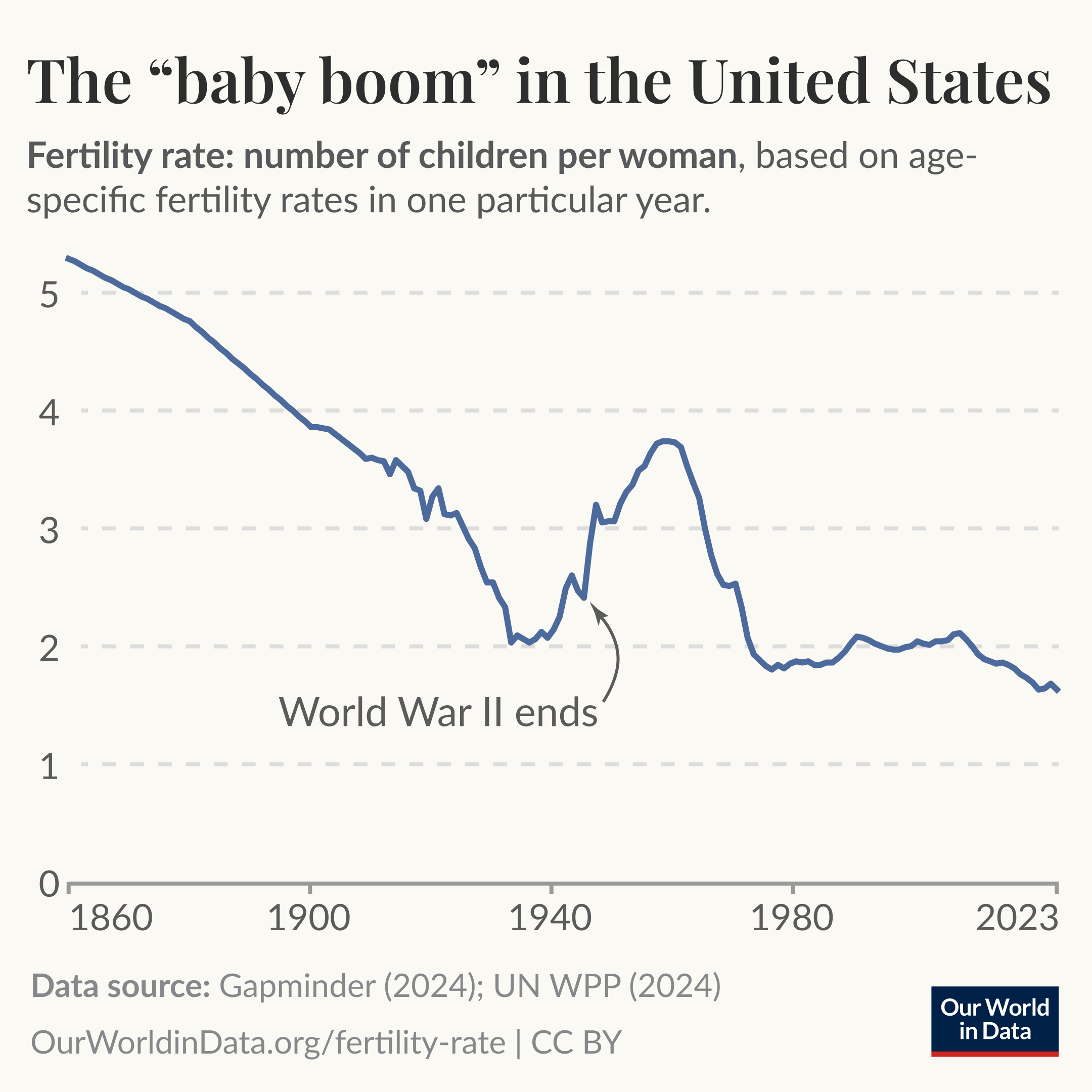
The decline in the fertility rate is a long-term demographic slide driven by cost pressures, economic uncertainty, delayed marriage, student debt, and a labor market that feels more unstable for young adults.
And the reasons people give for not having kids? Two come up over and over again: hopelessness and the cost of childcare.
Let’s talk about the economics of making babies.
The Economics
Delayed Marriage and Changing Households
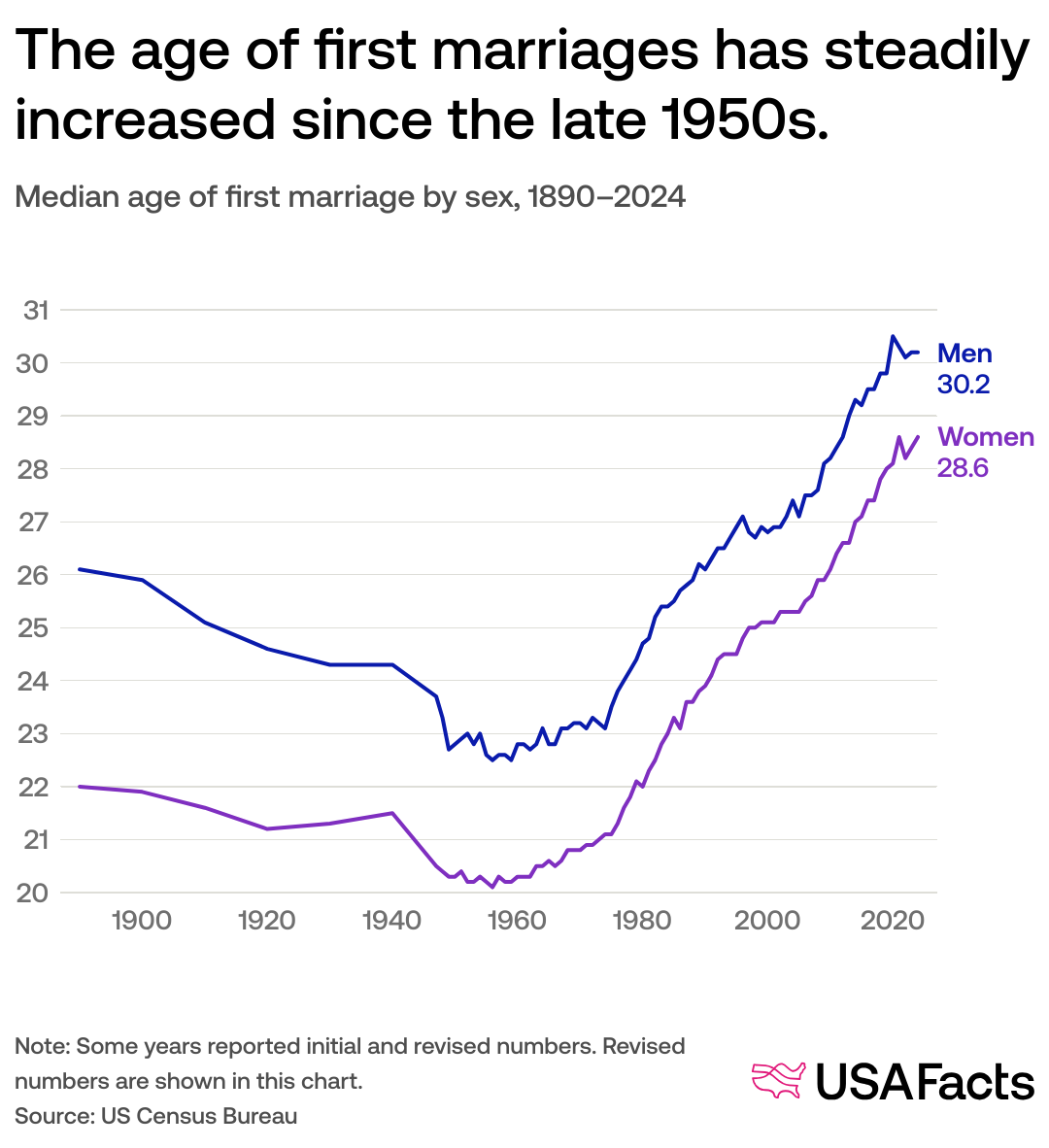
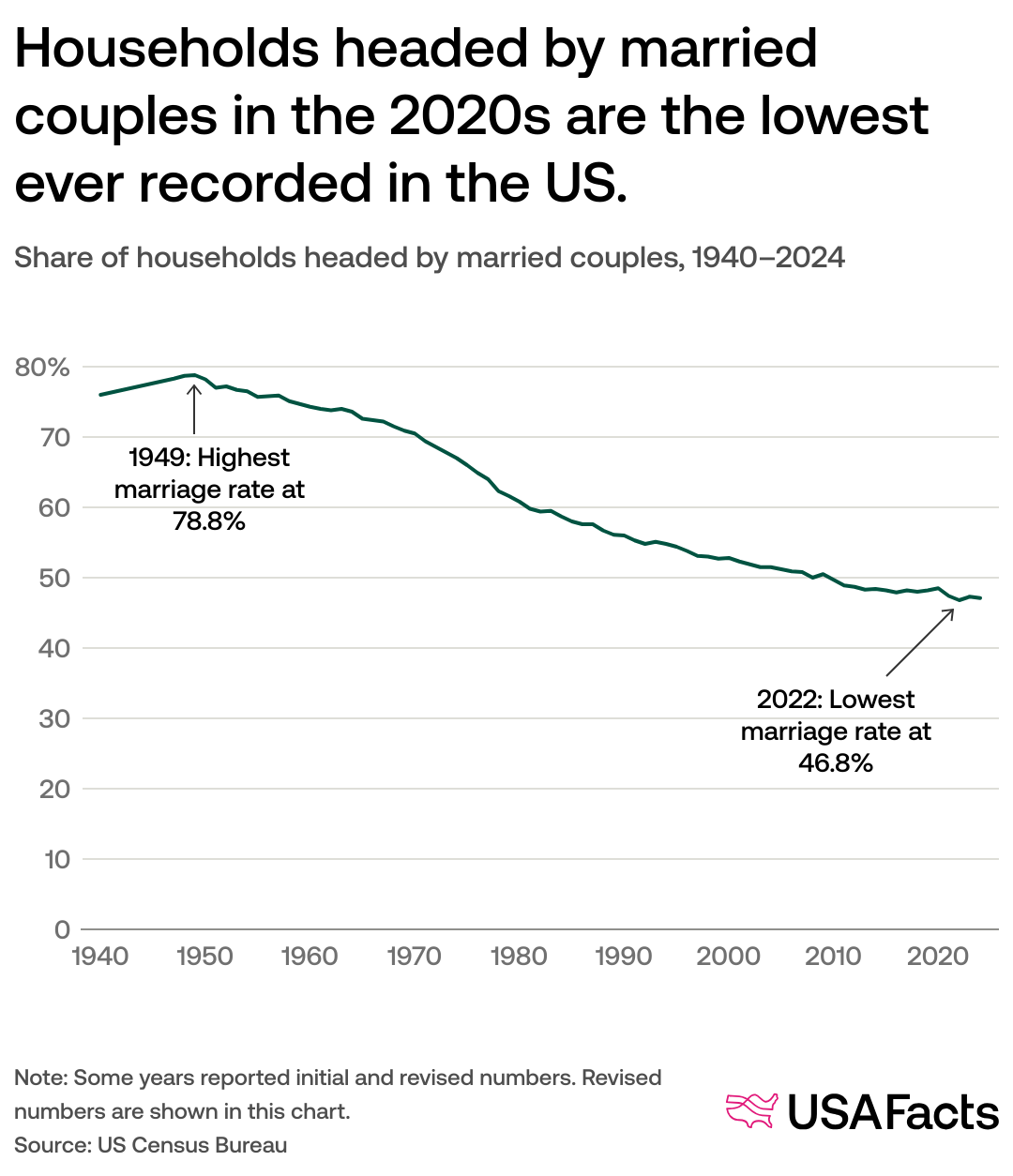
Americans are marrying later, or not marrying at all. Census data shows the median age of first marriage rising to 30.2 for men and 28.4 for women in 2023. And married-couple households now make up just 47.1% of U.S. households, down from nearly 79% in 1949.
Family formation is being pushed further into the future, and often, it never arrives.
Student Debt Burden
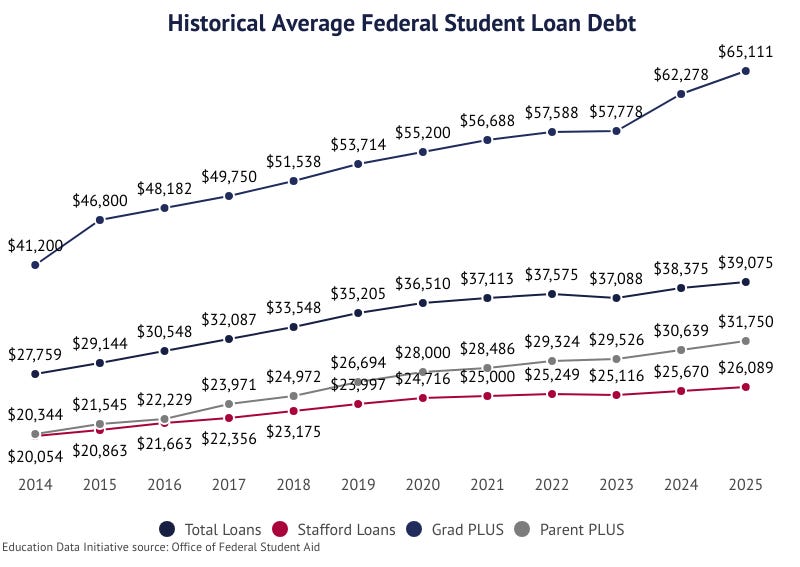
Student loans remain a major drag1. According to EducationData.org:
The average federal student loan borrower owes $39,075.
The average student borrows over $30,000 for a bachelor’s degree.
Borrowers often spend up to 20 years paying off loans.
And 42.5 million Americans hold federal student loan debt.
The accumulated debt delays other life decisions, marriage, homebuying, and yes, having children.
Reduced Returns to Higher Education
New research from the Federal Reserve Bank of Cleveland, discussed on Marketplace, shows that college still helps—but not as much as it used to.
A college graduate once found work in about 2 to 2.5 months. Today? The advantage is shrinking. Finding a “good job” takes longer and feels less certain.
Bariş Kaymak at the Cleveland Fed lays out the growing mismatch: AI, pandemic disruptions, uncertainty and market cycles are reshaping job access. As Harvard economist David Deming notes, some of this is simply “changing economic tides.”
When young adults can’t find stable early-career footing, they delay long-term commitments, including having kids.
Childcare Costs Are Out of Control
According to the U.S. Department of Labor, families spend 9%–16% of income on childcare for one child. That’s $6,552 to $15,600 annually.
Even part-day care for school-age kids can cost $5,943 to $9,211.
Put differently: childcare now costs as much as rent in many parts of the country.
When having one child feels like taking on a second housing payment, fertility rates fall. It’s simple economics.
The Bottom Line
A declining birth rate reshape families, and impacts the entire economy. Fewer births mean, fewer college students, fewer workers, fewer future tax payers. innovators, entrepreneurs and increasing fiscal burden on those who are around.
But the story isn’t about people choosing “selfishness” over family life; it’s about economic constraints. When hopelessness rises and affordability falls, fertility declines.
Demographics don’t change overnight, but our policies can. If we care about the future of the U.S. economy, we need to address childcare affordability, student debt, and career mobility, not just fertility statistics. This is also a reminder that immigration can help reduce this burden. The U.S needs more immigrants, not fewer.
Hanson, Melanie. “Average Student Loan Debt” EducationData.org, 2025-08-15,
I could never for the life of me understand why the government wanted to make a profit on student loans. They should be interest free in my opinion. Also the child care part is insane. I have friends that wanted multiple children but after having the 1 they felt satisfied because of the cost.