


Welcome back to Decode Econ. We took a short break, stepped back, and started mapping out what 2026 should look like.
This time of year always pulls me backward before it pushes me forward. I appreciate the reflective pause between Christmas and New Year, especially for those of us who value the goal-setting nature of January 1.
My reflection this week took me back 20 years. In 2005, I was working in the mortgage industry. I loved the work. I loved the pace. But I missed academic life in a way that was hard to explain to people who hadn’t lived it. I missed the slow and deep thinking. I missed the long arguments you could have with a subject. I missed being part of a community that cared deeply about ideas for their own sake.
That was the year I started applying to Ph.D. programs.
What I didn’t realize at the time was that I wasn’t just looking for a degree. I was looking for people.
I found them, unexpectedly, on Marginal Revolution (MR).
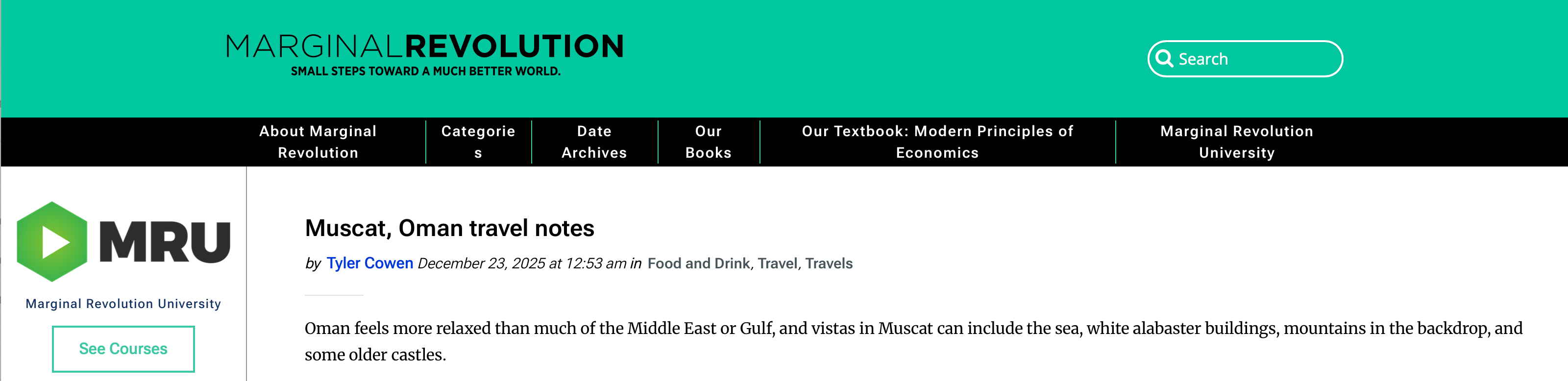
Back then, we were in the early days of blogs. MR already looked much like it does today. Simple. Sparse. No polish. But what stood out immediately was the rhythm. Tyler Cowen and Alex Tabarrok wrote every day. Sometimes it was a single link. Sometimes a longer essay. Sometimes just a question.
And the comments, they were always alive.
I met people there. I learned with them, and I learned from them. I watched economists, students, and curious readers wrestle with ideas in real time. It felt like a seminar that never adjourned.
I remember waking up early to catch up on what I'd missed at MR and in the comments.
That experience has been on my mind a lot lately.
When I shifted Decode Econ from weekly to daily posting, I genuinely worried that I was making a mistake. I fear abundance. If I posted every day, wouldn’t each post be less valuable? Was I committing an extreme case of diminishing marginal utility—flooding the market with my thoughts until none of them mattered? Will readers feel overwhelmed by the frequency of posts and start ignoring the emails?
I still grapple with that question.
But this past week, I found myself back on Marginal Revolution, reading Tyler’s travel notes about his visit to Muscat—my hometown. The post wasn’t flashy. It wasn’t long. It wasn’t optimized. It was observant, curious, and human.
And once again, the comments were alive.
That’s when it clicked.
The value wasn’t in any single post. The value was in showing up, in creating a space for people to belong. Decode Econ is our space to think and engage. It is no different from my classes, lectures, and the Haile Research Lab: I create the space, and you show up—we are all better off.
Daily writing isn’t about maximizing attention per post. It’s about building a place where people know they can return. A place where ideas accumulate. Where conversations layer on top of one another. Where community forms not despite abundance, but because of it.
Humans of New York
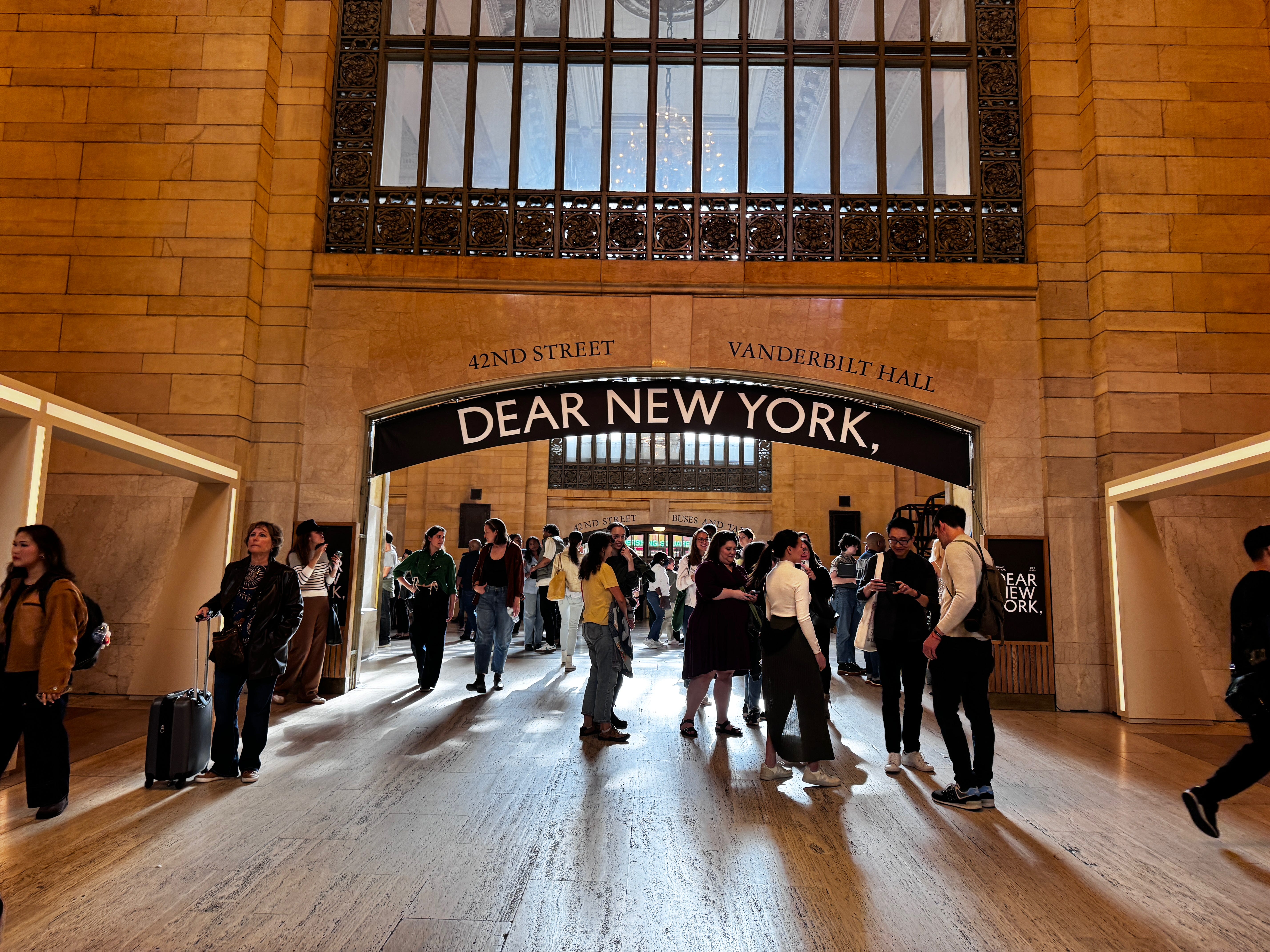
In October, I took a trip to New York to visit family. By chance, it was also the final week of Dear New York, the Humans of New York takeover of Grand Central Station. The terminal had been cleared of advertisements. In their place were thousands of portraits and stories.
Humans of New York is the work of Brandon Stanton, who began the project in 2010 by photographing New Yorkers and sharing short excerpts from their conversations. One post at a time, he built something much larger than a photography blog. Over fifteen years, those individual moments accumulated into a shared archive of humanity. Today, millions follow his work not because any single post is extraordinary, but because the project has built a community through consistency.
Standing in Grand Central, what struck me wasn’t the scale of the installation. It was the reminder that trust and connection are built slowly. One story. One face. One day at a time.
That’s the same thread I see in Marginal Revolution. And it’s the same lesson I keep coming back to with Decode Econ.
Community doesn’t form because content is scarce or perfectly optimized. It forms because people know where to return. Because someone keeps the lights on. Because the space is there when they need it.
The Bottomline
Back in 2005, I didn’t know that a blog could shape the trajectory of my academic life. I just knew it made me feel less alone in my thinking.
As we close out 2025, that’s the lesson I’m holding onto.
The goal isn’t perfection. It’s presence.
The goal isn’t scarcity. It’s connections.
And sometimes, the marginal post, the one you almost don’t write, is the one that helps someone else feel like they’ve found their people. \
I’m grateful you’re here.
Twenty years from now, someone will look back and realize that Decode Econ helped them find their path—just as others once did for me.
What are you reflecting on this season?
Great post Dr. A; TBH, I don't read every post, but I read every subject line and title. Some draw me in deeper, some don't. As I commented on @Jadrian's post, so much good content. I am stubborn, in that I refuse to listen to academic content. I prefer to read, on paper, but alas, tradeoffs. As a new blogger, I too worry about DMU, so for now I only post once a week as I find my voice, niche and audience. I find that the time I spend researching, reading, writing and revising The "Knotty" Economist to be my favorite non-classroom time. Thank you for your thoughtful posts and guidance. Looking forward to a bountiful 2026 for all, especially our students.
One of my resolutions for the fall is to set aside time to show up for others and make sure they know I'm listening and supporting them.