
The Economy Runs on What You Think Will Happen Next
The short version
- The 2026 Nobel Prize in economics went to Robert E. Hall and Michael Woodford for showing that the economy runs on expectations.
- What a central bank says about the future can matter more than what it does today.
- That's why credibility, and clear forward guidance, matter for your mortgage rate and for the Fed.
What if the most powerful thing a central bank does isn't changing interest rates? What if it's changing what you believe it will do next?
That is exactly what this year's Nobel Prize is awarded for.
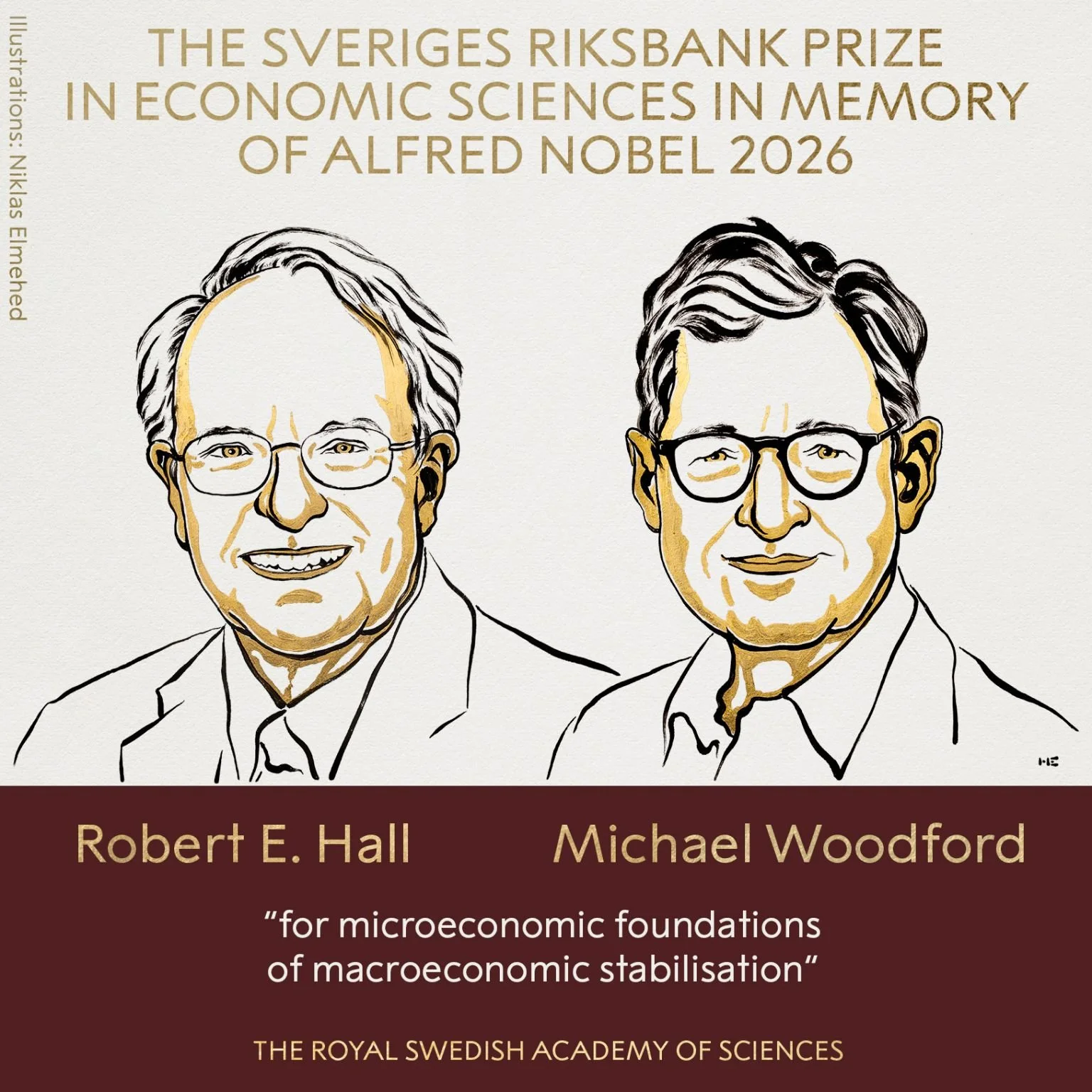
On Monday, the Royal Swedish Academy of Sciences awarded the 2026 prize in economics to Robert E. Hall of Stanford and Michael Woodford of Columbia "for microeconomic foundations of macroeconomic stabilisation."
The simple concept is that you can smooth out the business cycle by adjusting people's expectations. Another way of looking at it: you can't stabilize an economy if people do not believe you.
This matters today for two reasons:
- We are seeing a gap between the data and what people expect.
- The Fed chair has made it clear he doesn't believe forward guidance, telling people what to expect, is good economic policy.
The Nobel Prize committee disagrees.
What broke in the 1970s?
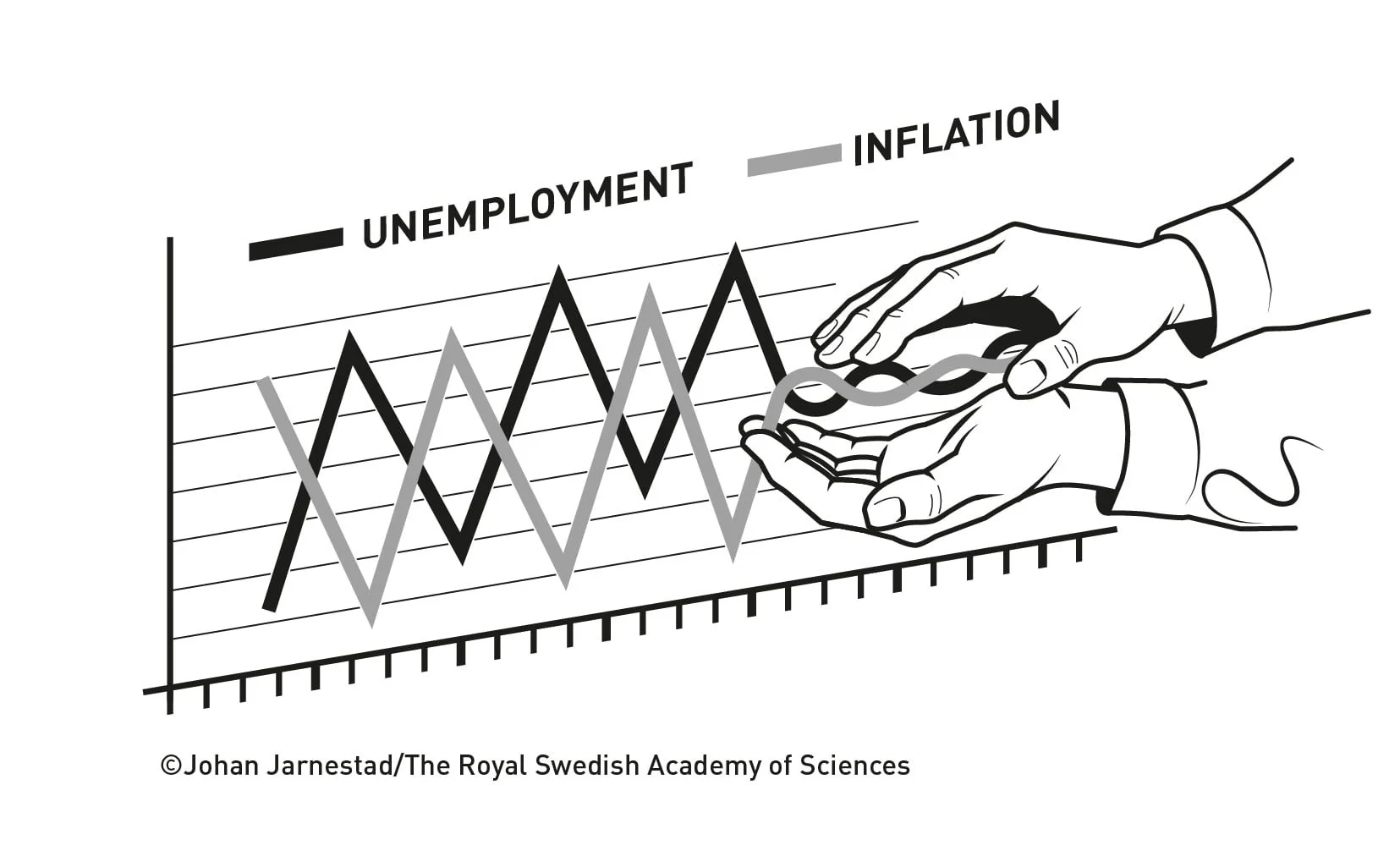
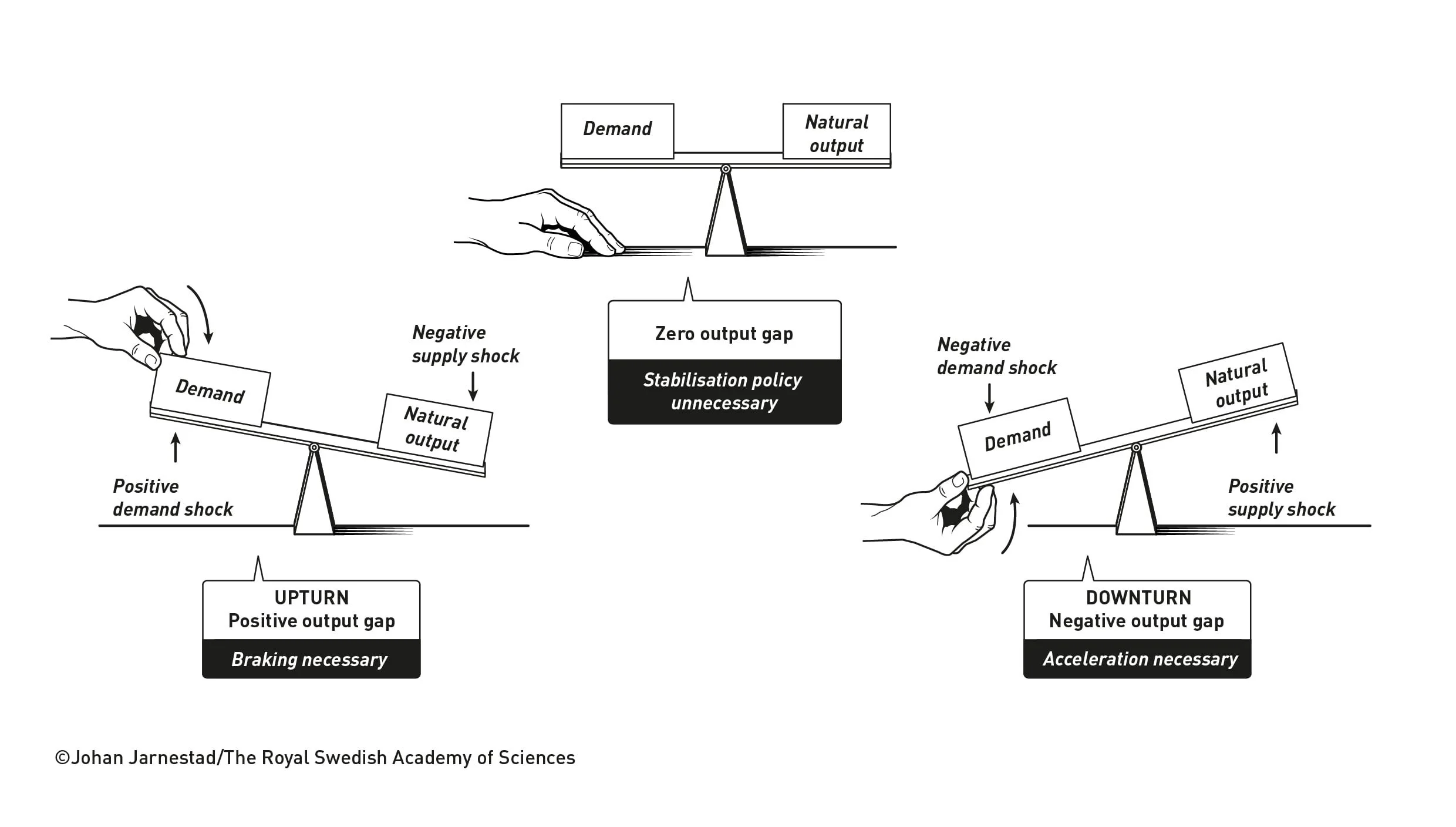
For decades after Keynes, our policy was to cut rates and spend more when the economy slows. When it overheats, do the opposite. Economists built big models on statistical patterns. One example was the observed tradeoff between inflation and unemployment: if you want fewer people out of work, accept a little more inflation. This mostly held.
Then the oil shocks of the 1970s hit. Governments tried to stabilize the economy, but their policies stopped working. Unemployment stayed high, and inflation kept climbing. We spent the '70s with high unemployment and high inflation. Economists concluded that stabilization policy was doing more harm than good.
Here's what the old models missed: people learn.
They start to anticipate. Regardless of your policy, if people expect inflation to persist, they will start asking for bigger raises, employers will raise prices to cover higher costs, and inflation takes over.
What did Hall and Woodford actually do?
They rebuilt macroeconomics from the ground up. They started at the micro level, with the individual. If you understand the individual, you can better understand the household, the state, the region, and the country as a whole. Their approach was to rely on micro-level analysis to understand the macroeconomy.
Their models relied on the idea that households and businesses look forward. They don't just react to today. They act on what they expect tomorrow to look like.
Only surprises move you
Hall showed early on how far this goes. If people base their spending on what they expect to earn over their whole lives, changes in spending should be almost impossible to predict from past data. Anything you could see coming, you already acted on.
That has implications. A one-time government check moves your spending far less than a raise you expect to keep.
Expectations drive the central bank
Woodford took the same logic to the central bank. His 2003 book, Interest and Prices, built the framework a generation of central bankers learned from.
His core insight is that what the central bank does today matters less than what people expect it to do over the next few years.
Think about what actually drives your borrowing costs. Your mortgage rate, your car loan, and a company's decision to build a new plant all depend on where rates are expected to go. That's what makes communication and forward guidance so important for effective monetary policy.
Where have we seen this work?
"An extended period"
The Fed cut rates to essentially zero and ran out of room. It couldn't cut any further, so it started leveraging expectations. First it told markets rates would stay low for an "extended period." Woodford had argued for exactly this kind of commitment about the future, and the Fed leaned into it.
"Whatever it takes"
The president of the ECB promised to do "whatever it takes" to hold the euro together. Borrowing costs in Spain and Italy fell sharply. The ECB built a bond-buying program to back up that promise, but it never used it.
Individuals react to expectations.
Why should you care?
Say you're 32 and deciding whether to lock a mortgage rate now or wait.
Your quote moves when the Fed chair hints at future cuts, sometimes weeks before the Fed changes anything. We are seeing this play out in bond markets right now. Interest rates are moving up because people expect that inflation will be persistent.
That's why credibility is everything. If people stop believing the central bank will keep inflation in check, they act like it won't. They push for bigger raises, raise prices sooner, and spend faster.
The 1970s weren't a policy failure. They were a credibility failure.
Dr. A's Take
I've been saying this for months, and this prize settles it for me: the Federal Reserve's job is communication policy. Setting the rate is the easy part. The job is telling people where rates are headed, and being believed.
That's why I've been critical of Kevin Warsh. At his first meeting as chair, the Fed cut its statement roughly in half, removed forward guidance, and stopped publishing the chair's own rate projections. At the press conference that followed, he declined question after question about where policy is going.
I understand the argument. Warsh believes forward guidance made the Fed slow to raise rates in 2021 and 2022. He's right that a promise can box a central bank in. But the answer to bad guidance is better guidance, not silence.
Hall and Woodford spent their careers showing that people act on what they expect. A Fed that refuses to tell you what to expect isn't allowing the market to make its own decision; it's giving up its most powerful tool.
For the classroom: Hall argues a one-time government check moves spending far less than a raise you expect to keep. Why? Use that idea to explain why the Fed's words about future rates can move mortgage rates before the Fed changes anything.
Resources
- Press releaseThe Royal Swedish Academy of Sciences announcement
- Popular informationThe prize explained for general readers
- Scientific backgroundThe technical summary of Hall and Woodford's work
 Watch this podcast
What Is Kevin Warsh Doing at the Federal Reserve?
Watch on YouTube
Watch this podcast
What Is Kevin Warsh Doing at the Federal Reserve?
Watch on YouTube