The Decode Econ Podcast
Economics for the decisions you actually make
Each episode, I sit down with economists, educators, and people doing the work to decode what's happening in the economy and what it means for you. The jobs report. Mortgage rates. What to major in. Why the pretzels don't come with butter anymore.
No jargon. No partisan spin. Just clear thinking you can take on your commute.
Listen wherever you are
I joined Brian Lamar and Andrew DeCilles of ROI Rocket on Signal and Noise to talk about why the economy feels weird, whether AI is a bubble, and why “we’re investing in AI” has become the easy answer for not hiring.
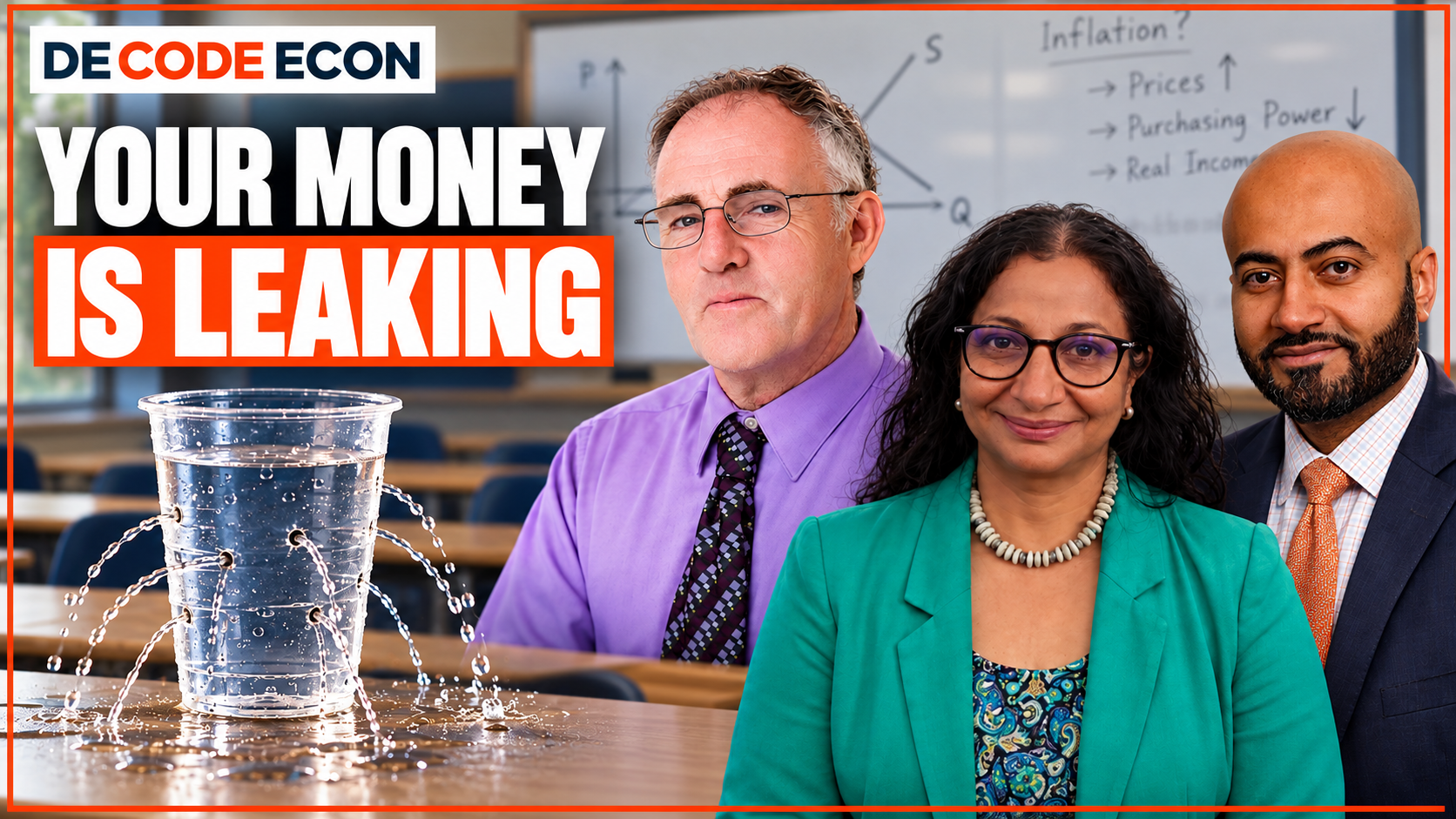
Meena Beri and Brian Lynch teach inflation with leaky cups and supply and demand with pool noodles and crochet hooks. They explain why community college students need strong foundations and support, and why relevance and rigor are not enemies.
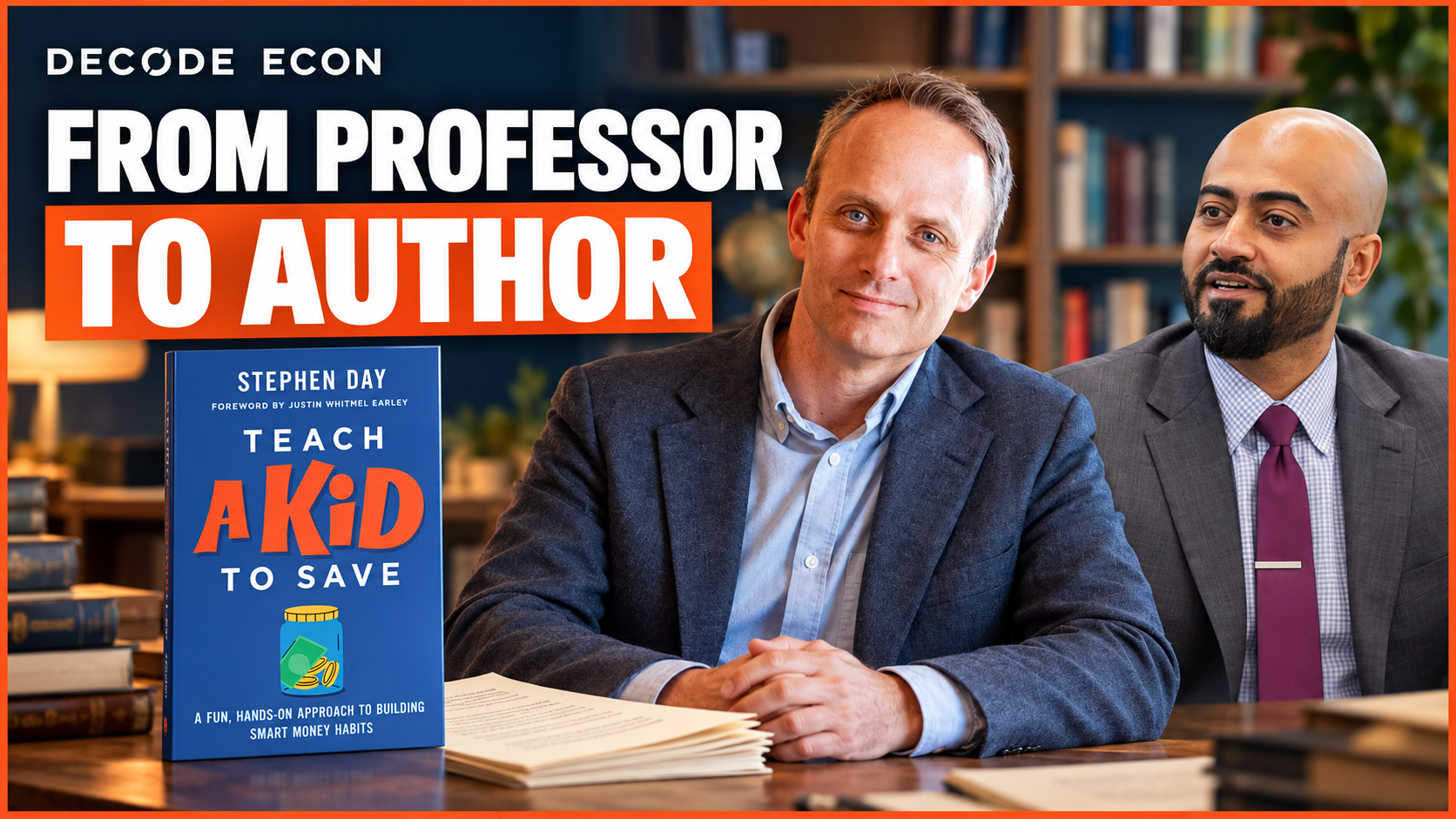
Financial literacy hasn’t moved in eight years. Dr. Stephen Day, author of Teach a Kid to Save, explains why habits beat information and how a play-money economy at home helps kids practice money decisions early.
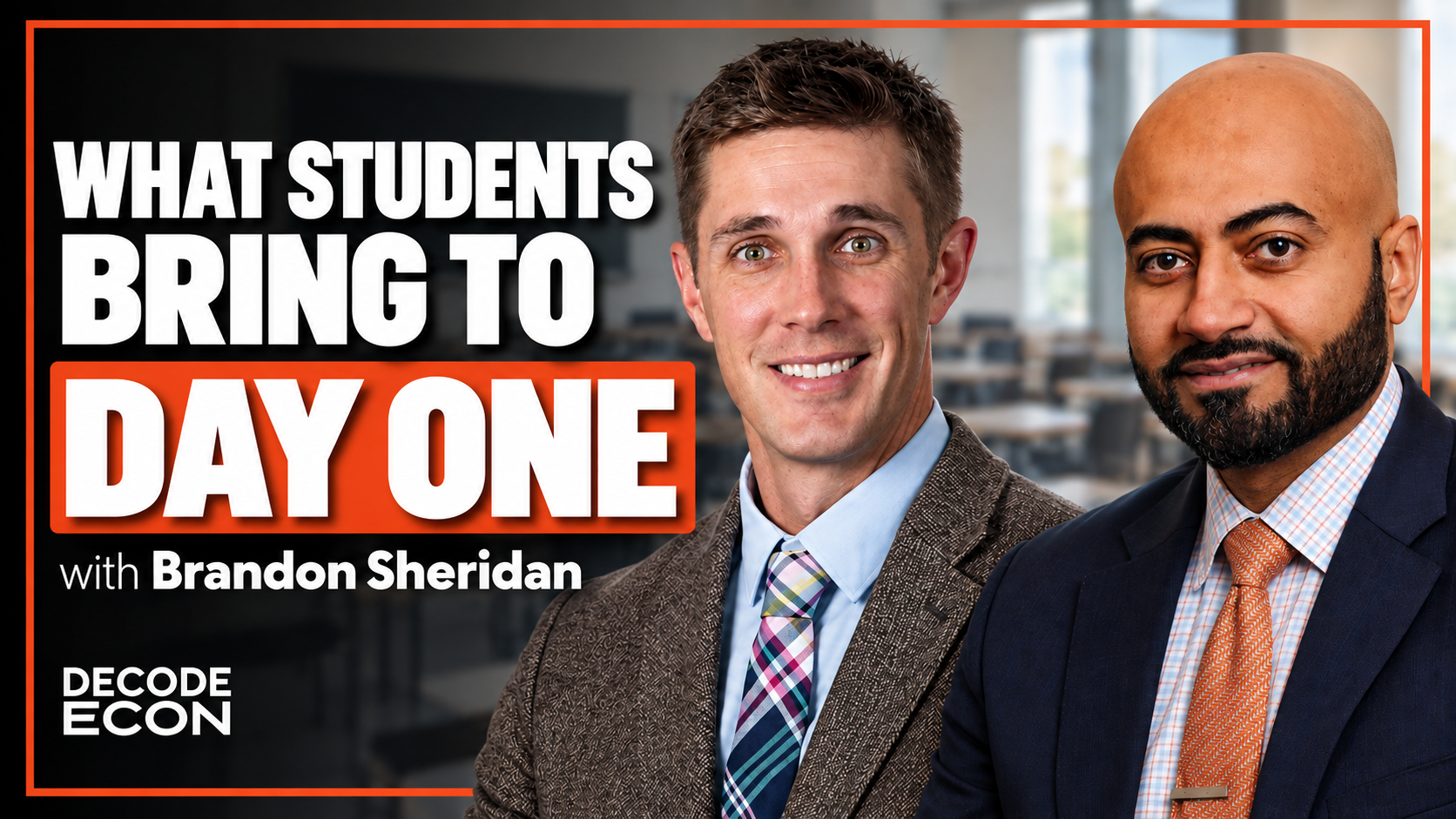
The economy is still moving sideways. Brandon Sheridan on the Fed, classroom headlines, and new research showing who walks into Econ 101 already doubting they belong.
Econ is a top-10 earning major, and its grads end up almost everywhere. Matt Holian on what the data say about where economics majors work and what they earn.
This week, Dr. Jeni Al-Bahrani joins me to talk about the job market on the ground. Jeni teaches the senior capstone at Miami University. In fall 2024, about 80% of her seniors had a job lined up before graduation. This fall, it's about 30%. You are probably seeing the same at your university.
In a classroom, I can teach you how the world is supposed to work. Study abroad shows you how it actually works. Dr. Darshak Patel on taking students to Kenya to see universal basic income up close.
Dr. A, Brooklyn Stephens and Frannie Staley, three links in one mentoring chain, on why the first job stopped training new grads and what professors and students can do about it.