
Every founder is solving a problem that lives somewhere in the economy. If you don't understand that market, what money costs right now, and what customers will actually pay, you're guessing.
Three takeaways
- Pricing is where student founders get burned. As a TA, Sarah watched teams set prices off competitors and secondhand numbers without ever asking a customer what they'd pay. Price sets the ceiling for everything else: what you can spend to acquire a customer, your margins, and your runway.
- A record funding year can still skip you. Startups raised a record $285.5 billion in the first quarter of 2026, but OpenAI's $122 billion round was more than 40% of the total and about 80% went to AI. When a T-bill pays a safe return, investors get pickier, so a founder outside AI needs stronger validation and a tighter story.
- "If we just capture 1%" is not a plan. Investors want to know who your first customer is, how you'll reach them, and what it costs to get them. That's your serviceable obtainable market, and if you can't answer it, you don't understand your customer yet.
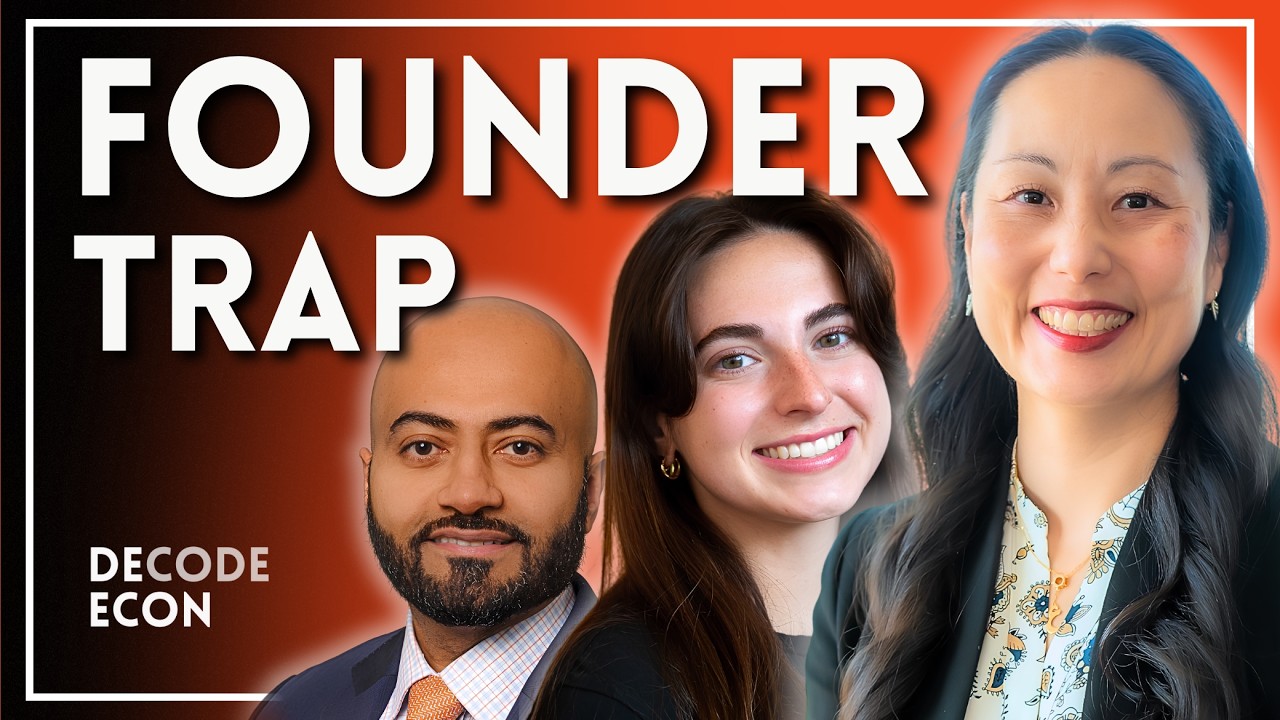
About this episode
A professor who teaches economics and entrepreneurship wrote in with a question: what should entrepreneurship students learn about the economy? I'm an economist, so you can guess my answer. I wanted to hear it from people who teach and live entrepreneurship, so I brought in Dr. Jeni Al-Bahrani from Miami University and one of her students, Sarah Bosse.
We get into the places where students get burned (pricing, mostly), what higher interest rates and a record funding year mean for a founder who isn't building an AI company, and how TAM, SAM and SOM are economics questions dressed up as a marketing slide. Then we take a detour I didn't plan. Jeni's "circle talk" led to a conversation about the skills my own profession tends to wave off as soft, and why I think economists need to take them seriously. Jeni calls them durable skills. I'm calling the goal "life ready."
Our guests
Dr. Jeni Al-Bahrani is an assistant teaching professor of entrepreneurship at Miami University's Farmer School of Business. She teaches a value creation and capture course built around designing a food truck from the ground up, and the senior New Ventures capstone, where students build high-growth startups and pitch to real investors. She also coaches founders through her consulting practice, and her research covers entrepreneurship ecosystems, economic development and workforce readiness. Connect with Jeni on LinkedIn
Sarah Bosse is a senior at Miami University majoring in human capital management and leadership, with a co-major in entrepreneurship and a minor in sport management. She took Jeni's introductory entrepreneurship course, came back the next semester as its TA, went through the Altman Scholars internship readiness program, and spent this past summer as a human capital intern. Connect with Sarah on LinkedIn
What we cover
- 00:00A listener's question, and Jeni and Sarah introduce themselves
- 07:15Why entrepreneurs need to understand the economy, and risk as an input
- 12:00Where students get burned: pricing without asking the customer
- 14:15Interest rates, the cost of capital and what investors are asking
- 18:00A record funding quarter that mostly went to AI
- 20:50Teaching students to tell the story behind their numbers
- 24:00Circle talk, and why economists marginalize "soft" skills
- 29:50TAM, SAM, SOM and the 1% mistake
- 37:35Balancing a founder's audacity with reality
- 39:05Sarah on learning it, then teaching it
- 41:15Workforce ready or life ready?
- 47:05Takeaways, and advice for first-year students
For the classroom and your conversations
- If you were starting a business tomorrow, how would you find out what customers would actually pay before you set a price?
- When a safe Treasury bill pays a solid return, why would an investor think twice about funding a startup? What would you have to show them?
- Startups raised a record amount of money this year, but most of it went to a handful of AI companies. Is that good news for a student founder or not?
- Think of a big decision you made this year: a major, a job, a friendship. Did you pivot or persevere, and how did you decide?
Sarah and Jeni both told first-year students to get involved early and find their people. What's your tip for a student starting college this week? Leave it in the comments.
Instructor resources
Use it Monday
Activity · 10 minutesHave pairs pick any product they'd like to sell and write one sentence: "If we capture just 1% of this market, we'll make $___." Then give them five minutes to answer three questions: who is our very first customer, how do we reach that person, and what will it cost to get them? Ask a few pairs to share. Most will find the 1% sentence was easy and the questions weren't, which is the gap between a TAM and a SOM.
Pair it withCrunchbase's breakdown of how concentrated Q1 2026 venture funding was, for the "is this market open to us?" follow-up. Get it
Research and data mentioned in this episode
Crowdfund Insider. (2026, April). Venture capital hits record highs in Q1 2026 as AI dominance continues. Reports CB Insights' count of $285.5 billion in global venture funding for the quarter. Read it
Crunchbase News. (2026, April 1). Q1 2026 shatters venture funding records as AI boom pushes startup investment to $300B. Crunchbase's count is higher than CB Insights', and it puts AI's share at 80%. Read it
Al-Bahrani, J., & Al-Bahrani, A. (2026). How does innovation happen? Incorporating entrepreneurship into economic education. Journal of Economics Teaching. The paper Jeni mentions on using the How I Built This podcast in class. Read it