
How a Can of Water Escaped the Commodity Trap
The short version
- Bottled water is about as close to a commodity as it gets. Economic theory says a new brand should make zero economic profit.
- Liquid Death put water in a tallboy can, sold it like a heavy metal band, and now charges two to three times what generic water costs.
- The lesson for you: when you pay extra for a brand, you're telling the company how little you'd switch. Economists call that elasticity.
Water might be the most boring product in the grocery store. It's everywhere, dozens of companies sell it, and most of us buy whatever's cheapest. If you'd asked an economist in 2017 whether anyone should start a new bottled water company, the answer would have been a polite no. There's no money in it.
Mike Cessario started one anyway. He called it Liquid Death, gave it a skull logo and the tagline "Murder Your Thirst," and built it into a company valued at about $1.4 billion. The water inside the can is ordinary. What he figured out about economics is anything but.
Why is selling water so hard?
In economics, the toughest market to make money in is called perfect competition. Every seller offers basically the same thing, no customer is loyal to any brand, and nobody can charge more than the going price. If you try, buyers walk to the next shelf.
In that kind of market, prices get pushed down until they barely cover costs. Economists say firms earn zero economic profit. That doesn't mean they go broke. It means they earn just enough to stay in business and nothing extra.
Generic bottled water fits that description almost perfectly. One plastic bottle of water is chemically the same as the next, and the prices sit within a few cents of each other. Any company competing on the water itself is in a slow race to the bottom.
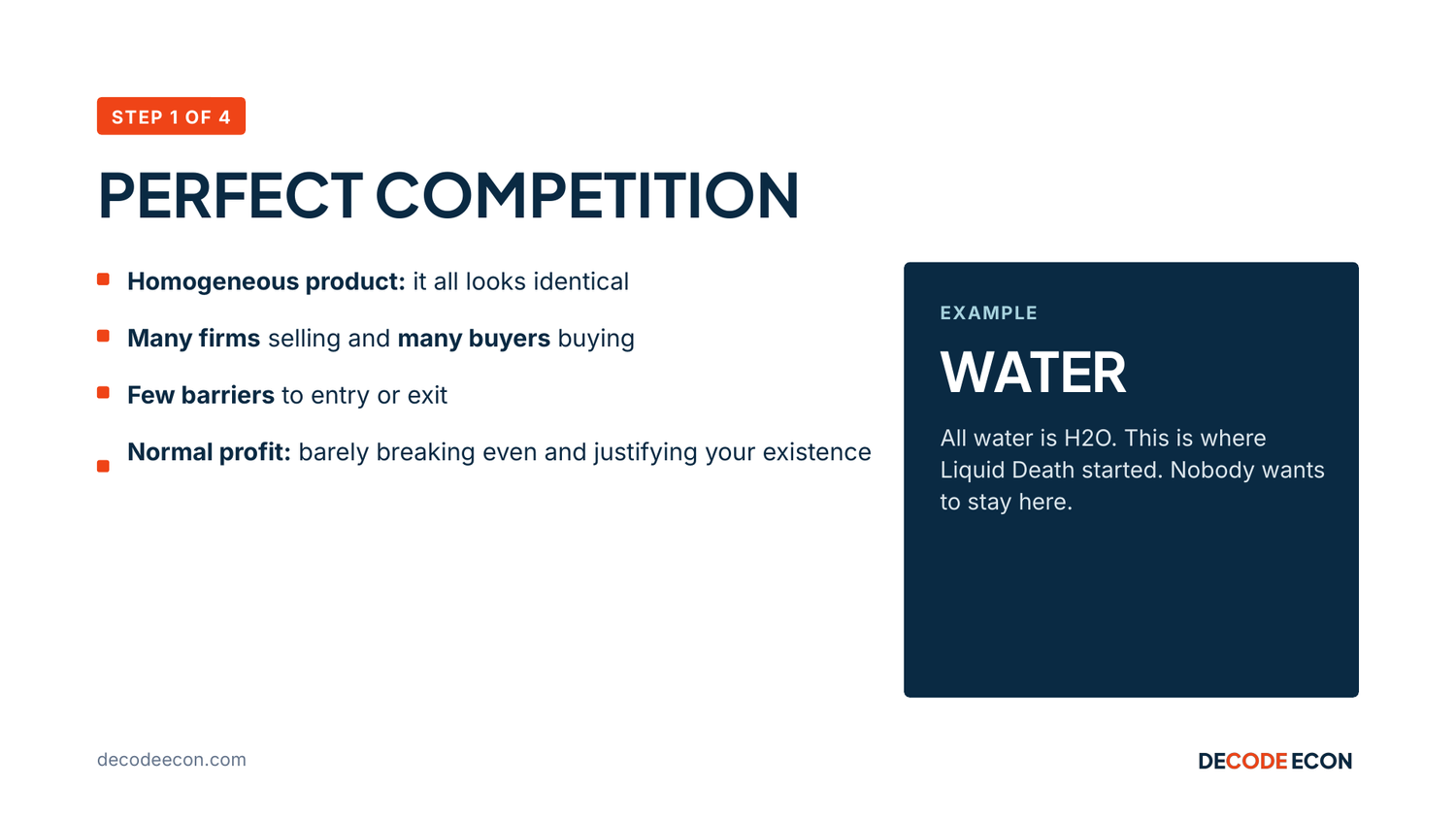
If your product is the same as everyone else's, you will eventually earn zero economic profit. A company's first job is to find a way out.
How do you climb out?
Cessario's insight had nothing to do with the water. He decided Liquid Death wasn't competing with Dasani or Aquafina. It was competing for attention, identity and a place in your social media feed.
Look at the can. Water in a tall aluminum can looks like beer or an energy drink. That one choice moved the product into a different category with a different personality: loud, funny and a little rebellious.
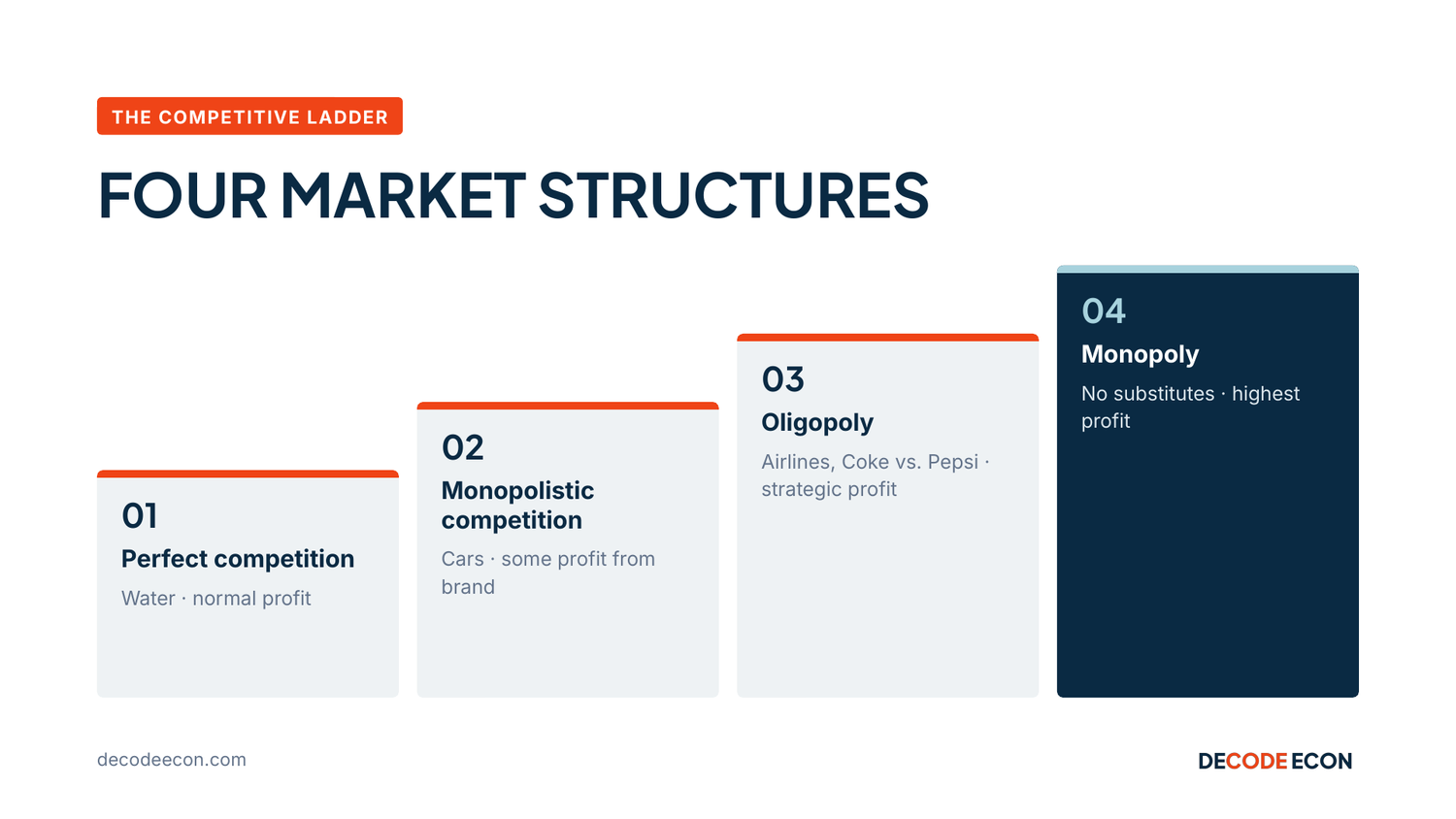
Economists call this moving from perfect competition to monopolistic competition. Lots of firms still sell similar products, but each one feels a bit different to buyers. That small difference gives a company a little pricing power, because some customers won't switch the moment a cheaper option shows up.
Economists sort markets into four rungs. The higher a company climbs, the fewer substitutes its customers have, and the more pricing power it holds.
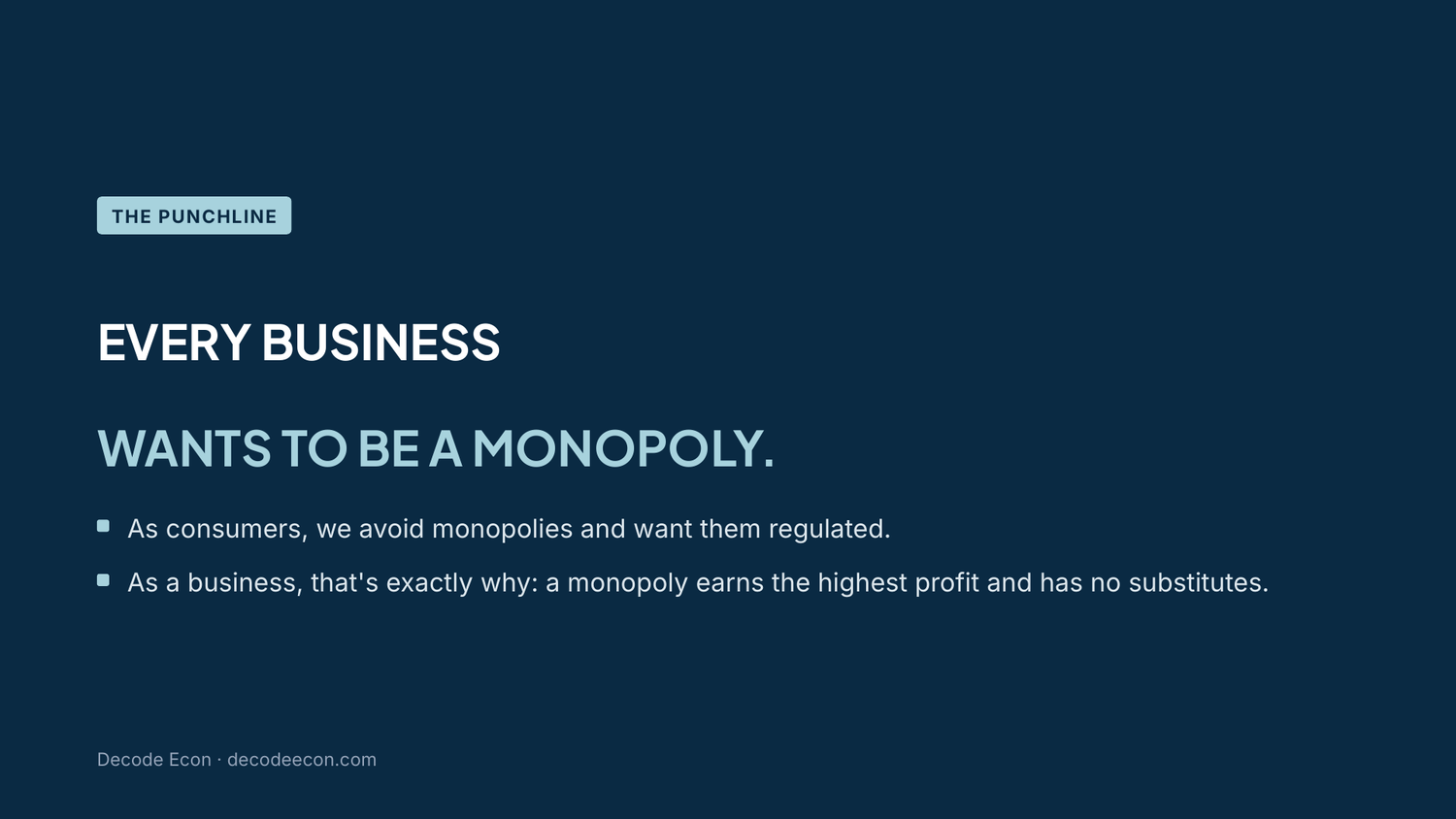
Which is why I tell my MBA students that every business wants to be a monopoly. As consumers, we avoid monopolies and want them regulated. As a business, that's exactly the goal: the highest profit and no substitutes.
What stops everyone else from copying it?
Nothing, at first. Anyone can put water in a can, and store brands can copy a look. That's why most brands end up competing their profits away. What makes Liquid Death interesting is how deliberately it built protection into a market that doesn't come with any.
Entertainment
Liquid Death acts more like a media company than a drink company. It hired comedy writers from Adult Swim and runs an "always-on content machine." You can't buy 14 million followers with a check. You build them over time.
Identity
Switching to a generic water starts to feel like a statement about who you are. It's the same pull that keeps people on iPhones when an Android costs less.
Fans
The company reposts fan content and puts ad money behind it. The more people show off the can, the stronger the brand gets, and the cheaper it is to reach the next customer.
So what does elasticity have to do with it?
All three moves do the same thing. They make customers less sensitive to price. Economists call that sensitivity price elasticity of demand.
Generic water has very elastic demand. Raise the price a little and people grab the cheaper bottle next to it. A brand with loyal fans has less elastic demand. People keep paying the premium because the brand gives them something a generic bottle can't.
When Liquid Death charges two to three times what generic water costs, that price isn't a mistake. It's the payoff from every video, campaign and inside joke the brand has invested in.
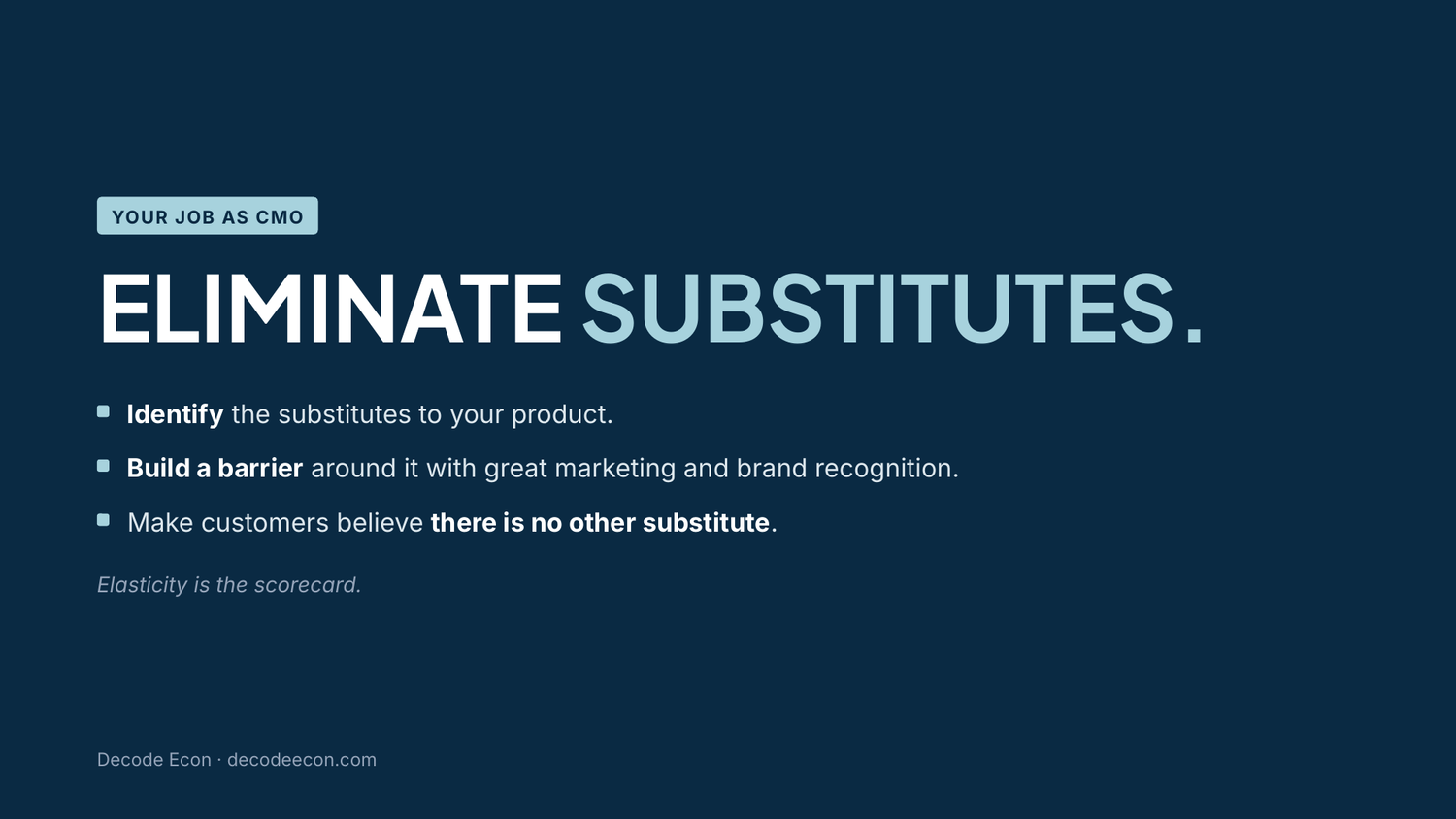
Elasticity is the scorecard. If customers leave the moment you raise prices, your brand isn't as different as you think.
What this means for you
The next time you pay $2 for a can of water, or stick with a phone, a coffee shop or a pair of sneakers that cost more than the alternative, ask yourself what you're actually buying. Usually some of it is the product. The rest is how the brand makes you feel, and the company has done the math on exactly how much that's worth to you.
If you run a business, flip the question. Where are you on the ladder? How easy would it be for your customers to switch? What could you build that a competitor couldn't copy next month?
For the classroom and your conversations
- What's one brand you'd keep buying even if the price went up 20%? What would it take for you to switch?
- Liquid Death sells water. What else in your fridge or pantry is mostly identical to the store brand? Why do you still pay more for some of it?
- Is paying extra for a brand irrational, or are you buying something real? What exactly?
- Pick a local business. Where does it sit on the ladder: perfect competition, monopolistic competition, or a protected position? What could move it up?
Read and listen more
Liquid Death Is Worth $1.4 Billion Because of This (Entrepreneur) Read it
Liquid Death Is an Entertainment Machine With a Water Brand Attached (Marketplace) Read it
How I Built This: Liquid Death with Mike Cessario (Guy Raz) Listen
Guy Raz on Liquid Death (TikTok) Watch
What's a brand you pay extra for, and why? Tell me in the comments.